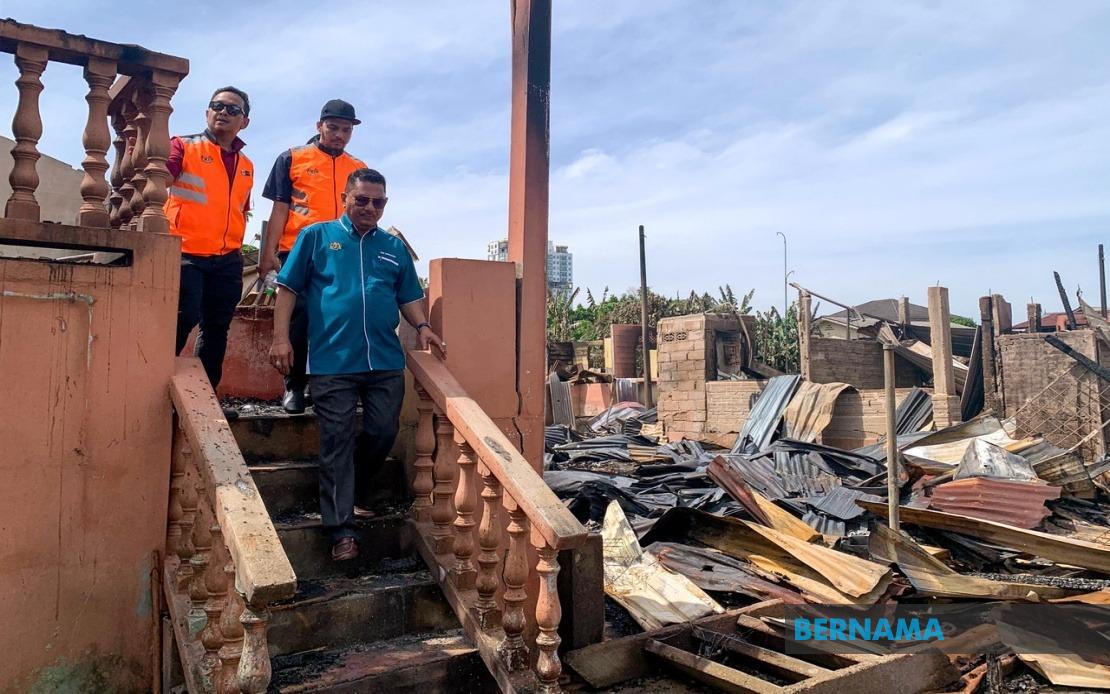
A catastrophic fire that swept through Kampung Gok Kapur in Kota Bharu on June 8 has been definitively traced to a careless indoor burning practice, according to findings released by Kelantan's Fire and Rescue Department. The investigation concludes that someone used a gas lighter to ignite a pile of papers directly inside the kitchen of a residential property, an act of negligence that would ultimately reduce 27 homes to rubble and displace more than a hundred villagers from their community.
Kelantan Fire and Rescue Department director Farhan Sufyan Borhan detailed the investigation's conclusions, revealing how the chain of events unfolded with tragic consequences. The forensic analysis conducted by the department's Fire Investigation Forensic Unit established that the initial flame source came from direct application of a gas lighter to combustible paper materials in the kitchen environment. This methodical investigation combined physical evidence gathered from the fire scene with recorded witness statements to construct a clear picture of how the disaster began.
The mechanism of the fire's spread demonstrates how quickly a small source can become uncontrollable in a residential setting. Once the papers ignited in the kitchen area, the flames rapidly engulfed surrounding flammable materials that naturally accumulate in household spaces. The intensity and trajectory of the fire quickly breached the boundaries of the initial structure, jumping to neighbouring properties in the densely populated village. This lateral spread, characteristic of fires in kampung settings where houses stand in close proximity, transformed what might have been a contained kitchen incident into a neighbourhood-wide catastrophe.
Investigators concluded unequivocally that negligence formed the core of the incident. The burning activity was not carried out with appropriate safety measures, proper location, or adequate supervision. Using an open flame source to dispose of papers inside a kitchen—surrounded by cooking materials, gas appliances, and stored household goods—represents a dangerous practice that violates basic fire safety principles widely understood across Malaysia. The department's findings suggest no deliberate intent to cause harm, but rather a failure to exercise reasonable care and judgment regarding fire risk.
The human toll of this single moment of carelessness extended far beyond the destroyed structures. A total of 110 villagers, representing numerous families and multiple generations within the Kampung Gok Kapur community, were rendered homeless by the blaze. The immediate aftermath saw these displaced residents seeking emergency shelter at the Mukim Banggol Mosque, which was hastily converted into a temporary evacuation centre. While the community was fortunate that no lives were lost in the incident, the material and emotional loss experienced by those families remains substantial, with residents facing the lengthy process of rebuilding lives and homes.
The incident underscores a persistent challenge in fire safety awareness within Malaysian communities. Despite decades of public education campaigns, preventable fires caused by negligent burning practices continue to occur with alarming regularity. The kitchen remains one of the most common sources of domestic fires, yet the practice of using open flames for waste disposal persists in some households, particularly in rural and semi-urban areas. This reflects either gaps in safety messaging or the challenge of translating awareness into consistent behavioural change among all segments of the population.
Kelantan, as a state with significant rural populations and traditional settlement patterns, faces particular challenges in fire prevention and management. The close proximity of houses in kampung environments means that fires spread rapidly and unpredictably, transforming isolated incidents into mass disasters. The vulnerability of wooden or semi-permanent structures common in villages further accelerates fire propagation. These structural and spatial factors make individual negligence especially consequential, as a single person's careless action can affect dozens of families within minutes.
The Fire and Rescue Department indicated that investigation findings will be forwarded to police and other relevant authorities for consideration of further action. This procedural step suggests potential legal consequences for the resident whose actions sparked the fire, though the department's public statement emphasised the negligence rather than any criminal intent. The referral to authorities represents an important element of accountability, reinforcing the principle that personal carelessness resulting in mass displacement carries serious implications.
Department director Farhan Sufyan Borhan used the incident as an opportunity to issue public guidance on fire safety practices. His statement specifically cautioned Malaysians against using open flame sources for any purpose and warned strongly against conducting any burning activities inside residential areas or in proximity to homes. This advisory reflects a deliberate strategy by fire services to leverage high-profile incidents as teaching moments, attempting to prevent similar occurrences by raising awareness among the broader public about dangerous practices they might not have previously considered.
The Kampung Gok Kapur fire serves as a sobering reminder that major disasters often originate from simple, seemingly minor actions that escalate through neglect of basic safety principles. For Malaysian households, particularly those in villages and traditional settlements, the incident reinforces the critical importance of proper waste disposal methods and the absolute prohibition on indoor burning. The 110 families displaced from their homes and the 27 destroyed properties represent the concrete cost of such negligence, making this a cautionary tale that communities throughout Kelantan and beyond would benefit from heeding.