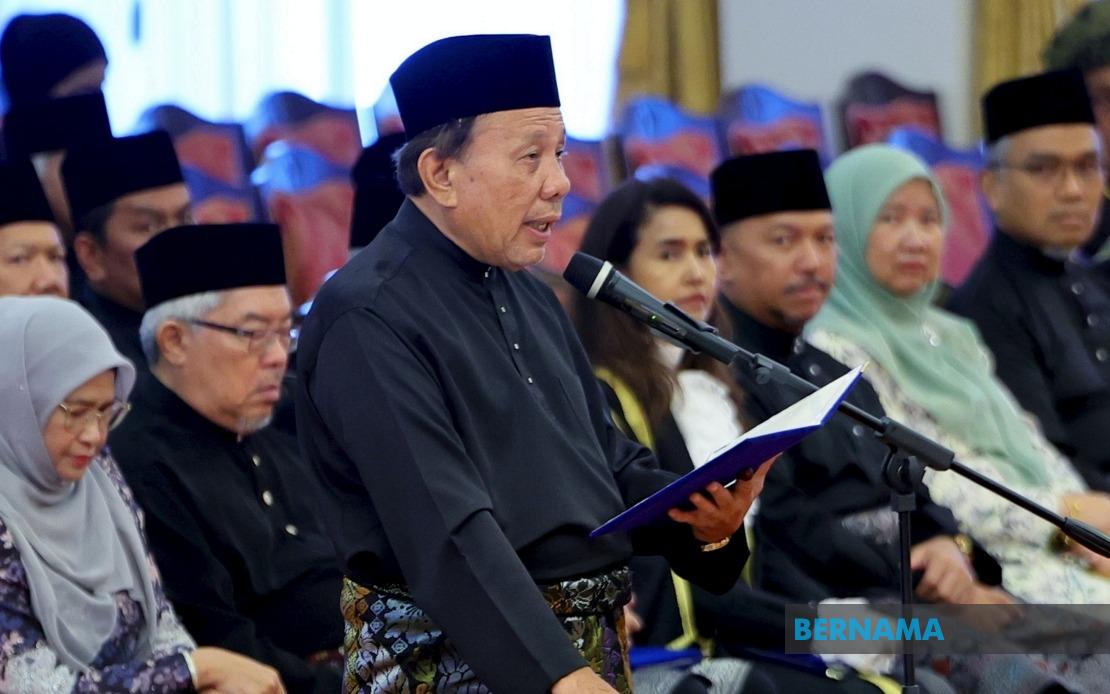
Datuk Ismail Lasim has taken the oath of office as Negeri Sembilan's new Menteri Besar, pledging to discharge his duties with fairness, transparency and effectiveness in service of the state's development and public welfare. Speaking during his swearing-in ceremony before the Yang Dipertuan Besar of Negeri Sembilan, Tuanku Muhriz Tuanku Munawir, at Istana Besar Seri Menanti, Ismail framed the electoral mandate he received in the 16th Negeri Sembilan State Election as both an honour and a profound responsibility that demands unwavering commitment to the people's aspirations.
The new Menteri Besar articulated a vision of governance grounded in listening to constituents and acting decisively on their concerns. He emphasised that public trust represents far more than ceremonial recognition—it constitutes a binding obligation to prove through concrete administrative action that the government will work diligently, remain responsive to citizens' needs, and execute its functions with integrity and openness. This framing signals a departure from transactional politics toward governance anchored in demonstrable accountability to the electorate.
Ismail's inaugural address placed considerable emphasis on constitutional propriety and institutional respect. He committed to upholding the sovereignty of the Yang Dipertuan Besar, safeguarding the dignity of the royal institution, and defending both the Federal Constitution and Negeri Sembilan's state constitution. He pledged further to receive and act upon the ruler's counsel and guidance in all matters of state administration, positioning the monarchy as an integral partner in governance rather than a ceremonial figurehead. This approach reflects the constitutional framework underpinning Malaysia's system of constitutional monarchy and parliamentary democracy.
A distinctive element of Ismail's policy agenda involves the preservation and active integration of Adat Perpatih, the customary legal system unique to Negeri Sembilan. He stressed the importance of maintaining and transmitting to future generations the principles embedded in this tradition—consensus, justice, unity and wisdom—while ensuring these values inform contemporary governance. By anchoring his administration in this historical and cultural foundation, Ismail positions Negeri Sembilan's development within a framework that respects local traditions rather than imposing uniform national approaches.
Economic development and social progress feature prominently in Ismail's stated priorities. He committed the state government to strengthening the economy, securing quality investments, generating employment opportunities and raising living standards across the population. Beyond these conventional economic metrics, he emphasised the importance of advancing education, healthcare, housing, agriculture and social security measures. The breadth of these commitments suggests an administration attempting to balance growth-oriented policies with investments in human capital and social infrastructure.
Ismail's conception of progress extends beyond conventional indices of development. He contended that true advancement cannot be reduced to infrastructure projects and gross domestic product growth alone, but must encompass public welfare, social cohesion, robust institutions and genuine citizen confidence in government systems. This framing carries implications for how state resources will be allocated and how performance will be measured—suggesting a potential emphasis on quality-of-life indicators alongside traditional economic metrics.
Sustainability and inclusivity emerge as guiding principles for Negeri Sembilan's development trajectory under Ismail's leadership. He pledged to pursue development that is sustainable, comprehensive and distributed equitably between urban and rural communities. This commitment addresses a persistent challenge in Malaysian governance: the tendency for development benefits to concentrate in urban centres while rural areas lag in infrastructure, services and economic opportunity. By explicitly committing to inclusive development, Ismail acknowledges the political and social costs of uneven regional progress.
Ismail emphasised the foundational importance of institutional integrity and professional civil service conduct. He committed to maintaining principles of trust, integrity, efficiency and transparency throughout the administration while ensuring state civil servants remain dedicated, professional and conscious of their public responsibility. This focus on institutional culture suggests recognition that policy effectiveness ultimately depends on the quality and commitment of those implementing programmes. By publicly calling for civil service excellence, Ismail signals expectations he intends to enforce.
The new Menteri Besar highlighted consensus-building and constructive criticism as essential governance tools. He underscored the importance of soliciting diverse viewpoints, listening to concerns from across society, and accepting well-intentioned criticism for the long-term benefit of the state and future generations. This approach acknowledges that sustainable governance requires buy-in from multiple stakeholders rather than top-down directive authority. It also suggests openness to opposition input—a posture that could enhance the quality of policy deliberation.
Ismail committed to strengthening relationships among multiple governance tiers and stakeholders: the royal institution, state government, federal authorities, the civil service, the private sector, community leaders and the general populace. This emphasis on inter-institutional harmony and coordination reflects understanding that state-level progress depends on constructive relationships with federal agencies and business sectors beyond direct government control. For Malaysian readers, this points toward pragmatic federalism and public-private cooperation.
In acknowledging his predecessor, Datuk Seri Aminuddin Harun, Ismail signalled respect for continuity in governance. He credited Aminuddin's contributions to state development and framed his own administration as building upon existing foundations rather than attempting wholesale institutional rupture. This approach typically facilitates smoother transitions and allows incoming administrations to retain capable personnel and proven programmes while introducing new priorities.
The appointment comes amid Negeri Sembilan's evolving political landscape and broader conversations about governance quality across Malaysian states. How effectively Ismail translates these commitments into sustained administrative performance will significantly influence public confidence in state institutions and shape perceptions of governance effectiveness across the region. His emphasis on transparency, inclusivity and constitutional propriety establishes benchmarks against which his administration will inevitably be measured.

