The contest for Negeri Sembilan's political future formally commenced today with the opening of nomination proceedings across eight centres throughout the state, marking the beginning of what promises to be a closely watched electoral battle in the peninsula's heartland. Prospective candidates had a narrow window until 10 am to lodge their nomination papers with Returning Officers before the Election Commission (EC) would release the definitive roster of eligible contenders, a procedural gateway that determines who may proceed to the campaign stage. With nearly 464 nomination forms already distributed and 70 prospective candidates having paid their election deposits, the field appears competitive and substantially mobilised, suggesting strong appetite among party machines to contest this election.
The formal campaign period will span 14 days, stretching from the moment candidate lists are announced through 11.59 pm on July 31, according to EC schedules. Early voting commences on July 28, allowing military personnel, police officers and other eligible voters to cast ballots before general polling day arrives on August 1. This compressed timeline means political parties must execute their ground strategies with precision, translating weeks of candidate selection into voter engagement and messaging within a fortnight. The entire election machinery was triggered following the dissolution of the Negeri Sembilan State Legislative Assembly on June 5, formally consented to by the Yang Dipertuan Besar of Negeri Sembilan Tuanku Muhriz Tuanku Munawir.
The electorate potentially deciding this contest comprises 889,490 registered voters across diverse categories. Ordinary voters constitute the vast bulk with 867,151 names on rolls, though the election also encompasses 16,884 military personnel and their spouses plus 5,455 police officers and their dependents, segments typically considered more conservative in their voting preferences. The inclusion of security force voters within state elections represents a distinctive feature of Malaysia's federal structure, one that can occasionally shift outcomes in closely contested seats, particularly those proximate to military barracks or police installations. The sheer scale of the electorate—approaching 900,000 voters—underscores Negeri Sembilan's importance within Malaysia's electoral geography, making this state contest more than merely local in significance.
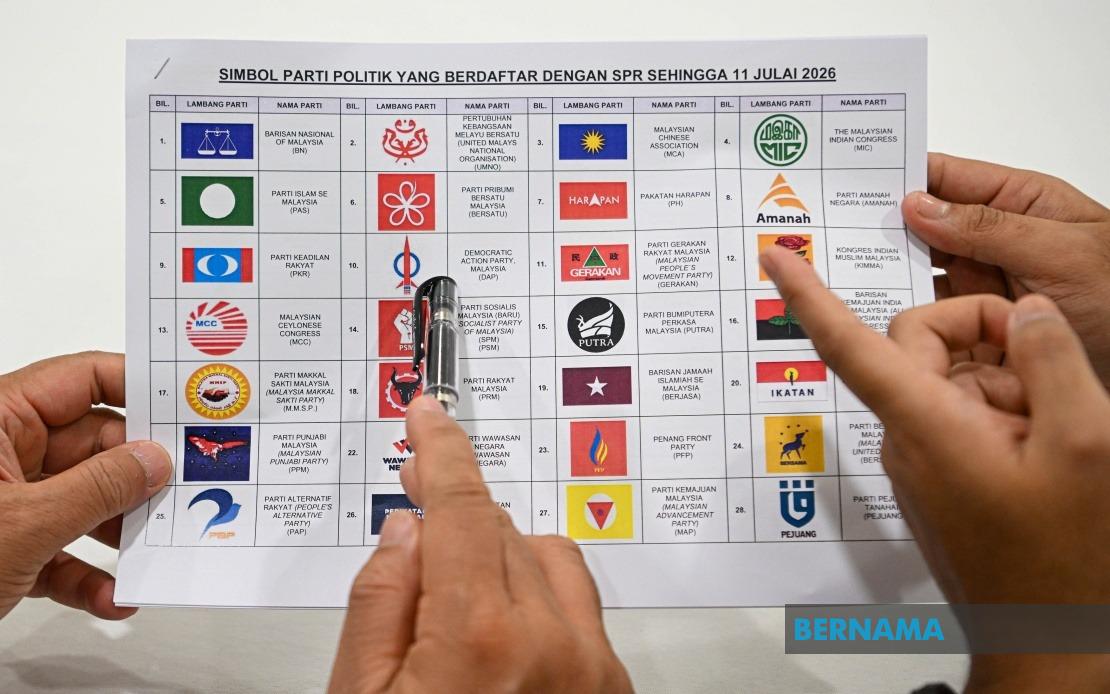
Packatan Harapan has positioned itself ambitiously by contesting all 36 state seats, signalling confidence in its ability to govern comprehensively across the state. Barisan Nasional has adopted a more selective strategy, fielding candidates in 25 seats and implicitly conceding certain constituencies. Perikatan Nasional, meanwhile, maintains a narrower footprint with nominations in 11 seats, reflecting either resource constraints or deliberate strategic focus on winnable ground. Additionally, smaller parties including Parti Orang Asli Malaysia, the Socialist Party of Malaysia and Parti Barisan Jemaah Islamiah Se-Malaysia each field single candidates, while Parti Pribumi Bersatu Malaysia fields 24 candidates including two individuals contesting under Urimai's banner but using Bersatu's party symbol. This fragmented competitive landscape contrasts with the three-way dominance characterising recent Malaysian politics at federal level.
Context from the previous 2023 state election reveals the competitive dynamics likely shaping this contest. Pakatan Harapan secured 17 seats, Barisan Nasional captured 14, and Perikatan Nasional won five, figures suggesting Negeri Sembilan remains a genuine battleground rather than a locked-in fiefdom for any single coalition. That election delivered a PH government lacking the overwhelming majorities sometimes seen in other states, meaning even modest swings in voter sentiment or seat allocation could alter the outcome materially. The fact that PH is now contesting all 36 seats rather than adopting the selective approach of rivals suggests either enhanced confidence in its ground operation or determination to contest aggressively and establish party presence across all constituencies.
Security arrangements underscore the Election Commission's determination to ensure orderly proceedings despite nomination day's anticipated chaos. The Negeri Sembilan police have deployed 4,800 officers and personnel, supplemented by another 1,373 from Bukit Aman headquarters, creating a substantial uniformed presence designed to manage crowds while preventing provocation or disruption. Nomination days routinely attract fervent party supporters, prominent political figures and candidates accompanied by enthusiastic retinues, creating scenes of controlled carnival mixed with serious political intent. The EC has explicitly reminded all candidates and supporters that compliance with regulations and avoidance of inflammatory conduct remains mandatory, signalling that while competition is legitimate and vigorous, the boundaries of acceptable political conduct remain non-negotiable.
Weather forecasting adds a mundane but genuine practical dimension to today's proceedings. The Malaysian Meteorological Department anticipated generally fair conditions across most areas during morning hours, though Port Dickson and Seremban specifically expect rainfall. Afternoon thunderstorms are forecast statewide, meaning nomination centres must accommodate potentially heavy foot traffic and candidate convoys amid tropical downpours that characterise July's monsoon season. Wet weather, while uncomfortable, rarely suppresses turnout at nomination proceedings, as party workers and candidate entourages arrive regardless of conditions. These logistical realities highlight how Malaysian elections operate within environmental contexts that shape ground-level implementation regardless of strategic planning.
The 16 seats up for grabs must be understood within Malaysia's broader post-2022 political realignment. Negeri Sembilan's election occurs amid ongoing struggles between Pakatan Harapan's coalition partners, Barisan Nasional's renaissance under new leadership, and Perikatan Nasional's regional strongholds. State-level contests increasingly serve as laboratories testing coalition stability and voter sentiment, with results rippling through to federal dynamics. A decisive PH victory would validate its governance narrative, while BN resurgence would further confirm its rehabilitation following the 2022 federal defeat. PN gains might indicate regional consolidation trends that contradict federal voting patterns. For Southeast Asian observers monitoring Malaysia's democratic health, Negeri Sembilan's election represents data on whether Malaysian democracy remains genuinely competitive and whether voters retain meaningful choice.
The path forward requires candidates to navigate compressed campaign schedules while building credible local narratives capable of connecting with voters' concrete concerns—economic opportunity, infrastructure, education and healthcare quality. Incumbents enjoy name recognition and track records to defend or celebrate, while newcomers must establish relevance and trustworthiness within weeks. Party machinery across all organisations must deploy volunteers, financial resources and strategic messaging simultaneously across multiple constituencies, with early voting commencing within ten days. The election's outcome will emerge on August 1 following what promises to be Malaysia's most intensely fought state contest in recent memory, potentially reshaping political alignments affecting not merely Negeri Sembilan but reverberating through Malaysian federalism itself.

