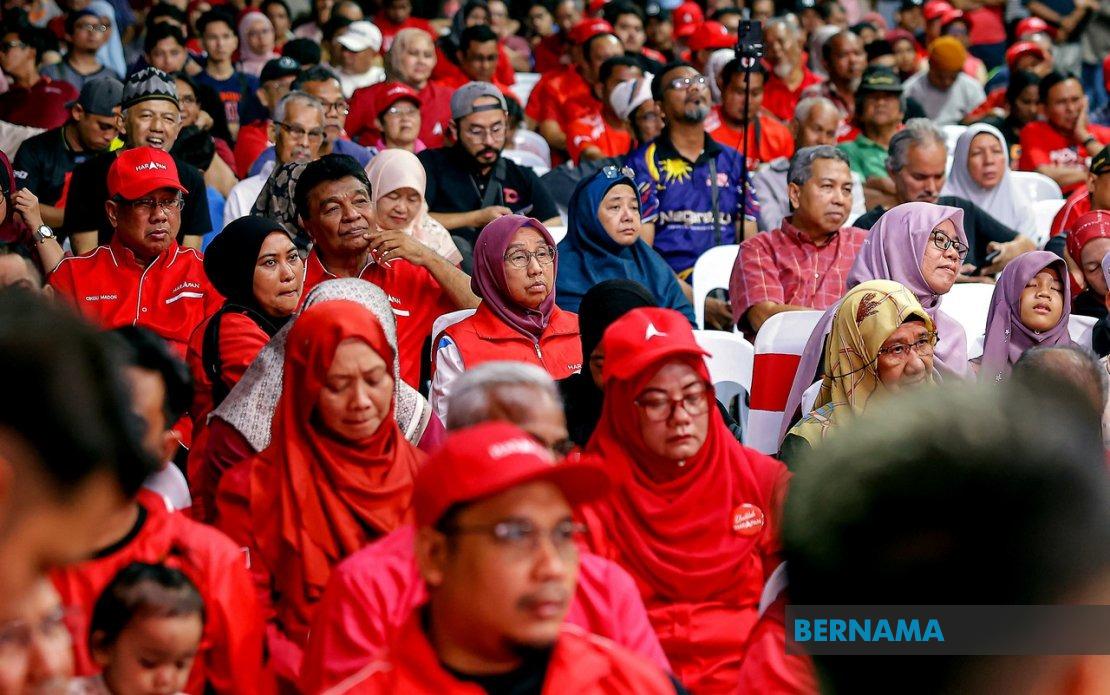
The 16th Negeri Sembilan state election campaign has crystallized a fundamental demand from the electorate: political representatives must be genuinely accessible and capable of translating pledges into tangible outcomes. As the campaign enters its latter stages, with early voting scheduled for July 28 and polling day on August 1, survey findings reveal that constituents across the state are less concerned with party affiliations than with the calibre and approachability of individual candidates seeking their mandate.
The shift in voter priorities reflects a broader maturation of electoral consciousness in Malaysia. Rather than accepting hierarchical, distant political figures, voters in Negeri Sembilan are articulating a refreshing pragmatism: they expect leaders to be reachable, responsive, and capable of solving problems that directly impact household finances and community welfare. This expectation transcends traditional demographic divisions and speaks to a generation of voters fatigued by empty campaign rhetoric and unfulfilled promises.
Kamarulzaman Ab Aziz, a 64-year-old retired educator, exemplifies this voter mentality. His willingness to support a candidate from outside his constituency, provided that individual demonstrates genuine warmth and active community engagement, challenges the long-held assumption that geographical origin determines electoral viability. This perspective suggests that contemporary Negeri Sembilan voters have moved beyond parochial concerns, instead evaluating candidates on their demonstrated capacity for human connection and service orientation. The implication is significant for political parties across the spectrum: organizational machinery and campaign budgets matter far less than fielding individuals whom ordinary residents perceive as authentic and accessible.
Economic anxiety dominates voter sentiment across the state, particularly among those running small enterprises or managing household budgets on modest incomes. Nurulainee Hamidon, a 37-year-old food trader operating in Linggi, articulates the grinding pressure facing Malaysia's informal economy. Her dilemma—unable to absorb cost increases without raising prices that anger customers—reflects the impossible mathematics facing countless small business proprietors nationwide. The cost of living issue transcends typical left-right political categorization; it represents a material reality that affects voter behaviour far more decisively than party ideology or campaign slogans.
Rural communities and estate residents express particular apprehension that development agendas may prioritize urban centres while marginalizing peripheral populations. Housewife M. Manisha's concern mirrors anxieties heard across Southeast Asia's smaller towns and countryside districts: that infrastructure investment, social services, and economic opportunities concentrate in metropolitan areas, leaving rural populations perpetually disadvantaged. This geographic inequality has emerged as a critical political flashpoint, and whichever coalition forms the next Negeri Sembilan government must demonstrate concrete commitment to bridging developmental disparities.
Young voters entering the electoral process for the first time are prioritizing employment security and wage adequacy. Mohammad Najmi Aiman, a college student preparing to cast his ballot in the Paroi constituency, demands that political leaders address the persistent mismatch between formal educational attainment and workplace compensation. This generation has witnessed underemployment despite educational credentials becoming increasingly common across Malaysia, and they expect their representatives to tackle structural labour market failures rather than offering platitudinous encouragement.
Beyond specific policy concerns, observers note a significant appetite among Negeri Sembilan voters for campaign conduct that upholds democratic norms and avoids personal character assassination. Lim Kian, a private sector employee, advocates for political competition characterized by substantive policy debate rather than machine-orchestrated attacks on individual candidates. This sentiment reflects recognition that campaign behaviour foreshadows post-election governance quality; voters understand that parties demonstrating civility during contests more likely govern inclusively afterwards.
The electoral dynamics are shaped by an eligible voter roll totalling 889,490 registered participants, encompassing 867,151 regular voters alongside 16,884 military personnel and their families, and 5,455 police officers and dependents. The competition involves 103 candidates pursuing 36 state assembly seats, ensuring competitive races across most constituencies. This candidate-to-seat ratio suggests meaningful electoral choice and prevents the coronation dynamics that sometimes characterize uncontested or lightly contested contests elsewhere in Malaysia.
The emphasis on leader accessibility and delivery capacity carries implications extending beyond Negeri Sembilan's state boundaries. Malaysian voters across peninsula and East Malaysia increasingly demand the same standards: politicians who acknowledge constituent concerns without bureaucratic intermediation, who maintain regular community presence, and who produce measurable improvements in service delivery and economic opportunity. This shifting political culture represents a democratization of expectations that political elites cannot safely ignore.
The economic grievances articulated by small business operators, rural residents, and first-time young voters reflect structural challenges that no single state government can fully resolve independently. Federal policies around monetary conditions, import-export dynamics, and labour market regulation significantly constrain state-level capacity to address cost of living pressures or employment adequacy. Yet Negeri Sembilan voters are correctly signalling that they expect their state representatives to advocate forcefully within federal forums and to implement whatever localized interventions remain within state authority. This expectation underscores the interdependence between state and federal governance in Malaysian federalism.
Campaign conduct and voter sentiment in Negeri Sembilan offer important bellwethers for upcoming electoral contests. If voters continue prioritizing leader accessibility, economic substance, and inclusive development planning, political parties nationally must recalibrate their approaches accordingly. The era of personality-driven politics and personality cults appears to be yielding to more transactional, merit-based electoral competition where politicians succeed by demonstrating genuine problem-solving capacity rather than organizational dominance or historical incumbency advantages.

