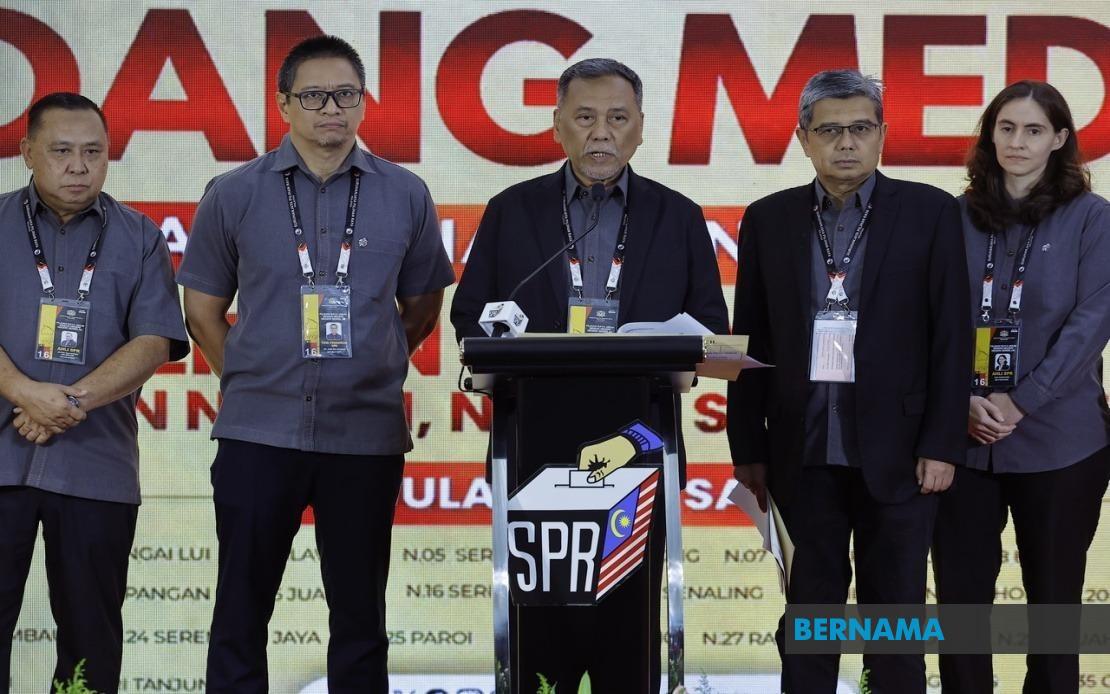
The 16th Negeri Sembilan state election is shaping up as a closely fought contest after the Election Commission confirmed on July 18 that 103 candidates are eligible to stand across the state's 36 assembly seats. The verification process concluded following the noon deadline for candidate submissions at eight nomination centres, setting the stage for what promises to be a complex and multifaceted electoral battle on August 1, with early voting scheduled for July 28.
Election Commission chairman Datuk Seri Ramlan Harun announced the final tally at a press conference in Seremban, revealing a field dominated by Pakatan Harapan, which has secured nominations for all 36 available seats. This comprehensive coverage underscores the coalition's confidence in the state and its determination to retain control following the 2018 election, when it first broke Barisan Nasional's decades-long grip on the assembly. Barisan Nasional, seeking to regain lost ground, has fielded 25 candidates, while the newer political players Bersatu and Perikatan Nasional have entered 24 and 11 candidates respectively.
The emergence of fringe parties and independent candidates adds layers of complexity to the contest. Berjasa, ASLI, and PSM have each fielded a single candidate, while four independent contenders are running without party affiliation. This fragmentation is particularly notable in the context of Malaysian electoral politics, where regional politics increasingly resist the neat binary contests that characterised earlier periods. The presence of these smaller forces, though unlikely to dramatically alter the overall outcome, may influence individual seat contests and could prove decisive in marginal constituencies.
The Election Commission's data reveals that the competitive landscape will be far from uniform across constituencies. Twenty-one seats are anticipated to feature three-cornered contests, while eleven seats will see straight one-on-one battles between two candidates. Most dramatically, Nilai and Sri Tanjung will each witness five-cornered fights, while Jeram Padang and Rahang are set for four-way clashes. These numbers suggest that in many constituencies, votes could fragment significantly, potentially allowing candidates to win with reduced vote shares and introducing greater unpredictability into the election outcome.
Demographically, the candidate pool reflects Malaysia's broader political representation challenges. Of the 103 candidates, 94 are male and only nine are female, highlighting the persistent gender imbalance in electoral politics despite growing advocacy for greater female participation. The age range spans from a 23-year-old Bersatu candidate contesting Sri Tanjung to a 70-year-old Pakatan Harapan hopeful in Gemencheh, demonstrating both generational diversity and the continued influence of established political figures in candidate selection processes.
The electoral register for Negeri Sembilan comprises 889,490 eligible voters, a substantial constituency by Malaysian state standards. This comprises 867,151 ordinary voters alongside 16,884 military personnel and their spouses, and 5,455 police officers. These figures underscore the importance of security force voting patterns in determining outcomes, as military and police votes can tip marginal contests. The inclusion of these organised constituencies reflects the structured nature of Malaysian electoral administration and the particular influence of state institutions in determining political outcomes.
The state assembly's dissolution on June 5 triggered the election machinery, following the political turbulence that has characterised Negeri Sembilan in recent years. The state has experienced considerable political volatility since the 2018 Pakatan Harapan victory, with various defections and coalition manoeuvres affecting the composition of the assembly. This election provides an opportunity for voters to render judgment on both the Pakatan Harapan administration's performance and Barisan Nasional's pitch to return to power, even as newer coalitions and splinter groups compete for attention and support.
For Malaysian observers and regional political analysts, the Negeri Sembilan contest offers important insights into electoral dynamics in an increasingly multipolar political landscape. The rise of Bersatu and Perikatan Nasional as significant electoral forces represents a fundamental shift from the two-coalition binary that dominated Malaysian politics for decades. The substantial number of three-cornered and multi-cornered contests reflects this fragmentation, and the outcome will likely indicate whether Malaysian voters in this state are consolidating around traditional coalitions or dispersing their support across newer political alternatives.
The timing of the election also merits consideration within Malaysia's broader political calendar. Following the Dewan Rakyat elections in November 2022 and the Selangor and Terengganu state polls in August 2023, the Negeri Sembilan vote will provide current indicators of electoral sentiment and any shifts in voter preference as the nation moves toward the next federal election cycle. The state's relatively balanced demographics and competitive political culture make it a bellwether for broader Malaysian political trends and a testing ground for coalition strategies and campaign messaging.
Logistically, the Election Commission has overseen a complex administrative process to verify all nominations within the prescribed timeframe. The requirement for eight separate nomination centres reflects the geographic spread of the state and the need to facilitate accessibility for candidates and party representatives across the territory. The successful completion of the verification process within schedule demonstrates institutional readiness for the conduct of polls, though the significant number of contested seats and multi-cornered battles will present challenges for election observers and officials seeking to ensure orderly and transparent voting procedures.
As campaigning intensifies in the coming weeks, the dynamics of these contests will become clearer. The presence of 103 candidates across 36 seats means that on average each seat will see approximately 2.9 candidates, confirming that clustered competition in certain constituencies will coincide with cleaner contests elsewhere. Strategic considerations about where parties concentrate resources and messaging will likely play a significant role in determining which candidates emerge victorious. The outcome on August 1 will not merely determine Negeri Sembilan's government but will also signal broader patterns in Malaysian electoral behaviour and the trajectory of the nation's political evolution.

