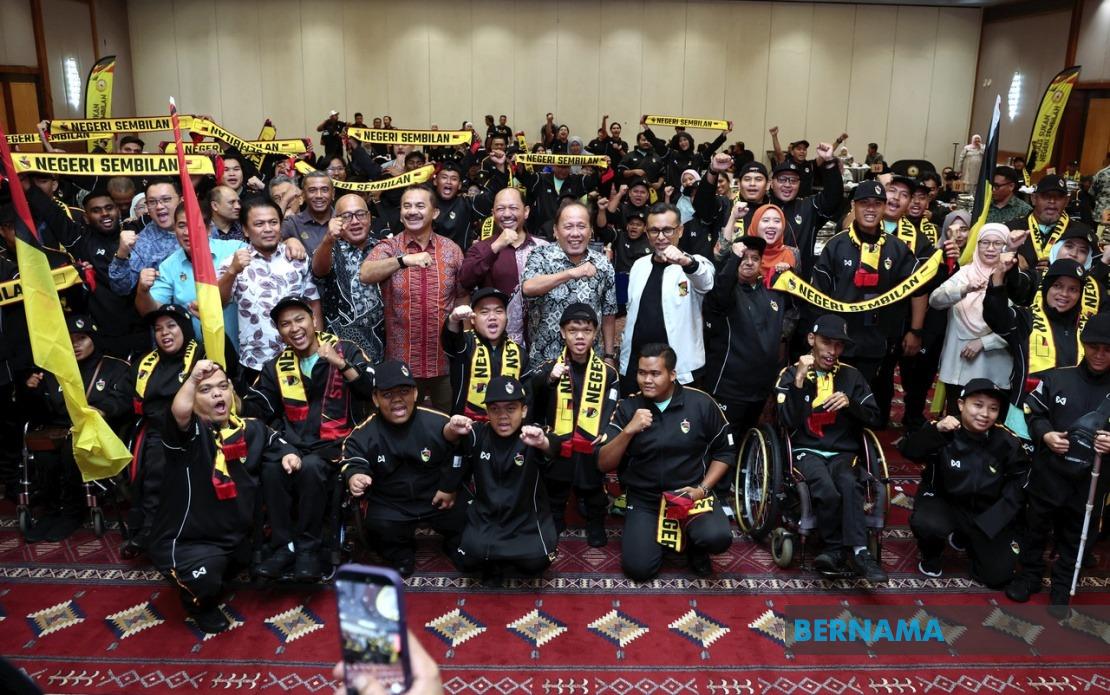
Negeri Sembilan has set its sights firmly on capturing 12 gold medals at the 2026 Para Malaysia Games (Para SUKMA), which commences on September 5 in Selangor. The state will field a contingent of 80 para athletes in pursuit of this objective, representing a renewed commitment to excellence after a difficult showing at the regular SUKMA 2026 competition that concluded on Monday. Menteri Besar Datuk Ismail Lasim articulated the significance of this medal haul during a flag handover ceremony, emphasising that the target reflects more than mere numerical ambition but rather symbolises the collective dedication invested by athletes during their preparation phases.
The Negeri Sembilan delegation encountered substantial disappointment at the preceding SUKMA 2026 Games, where the state contingent secured only seven gold medals from a total haul of 48 medals. This performance represents a marked decline compared to SUKMA 2024, when the state claimed 19 gold medals alongside 56 total medals. The magnitude of this regression has clearly galvanised state leadership into recalibrating expectations for the Para SUKMA competition, viewing it as an opportunity to demonstrate the state's sporting prowess through athletes competing in disability categories.
Lasim conveyed confidence that the 12-gold-medal target remains within reach, contingent upon each athlete maximising their potential and demonstrating the technical proficiency honed during rigorous training regimens. He underscored that para athletes exemplify exceptional resilience and competitive spirit, qualities he believes will prove instrumental in restoring Negeri Sembilan's standing within the broader Malaysian sports ecosystem. The Menteri Besar's remarks carried implicit acknowledgment that the regular SUKMA campaign fell short of expectations, necessitating a psychological and strategic recalibration heading into the Para SUKMA arena.
Historical performance provides context for evaluating the current target's feasibility. At the 2024 Para SUKMA Games held in Sarawak, Negeri Sembilan's para athletes delivered substantially stronger results, accumulating 14 gold medals alongside 19 silver and 20 bronze medals for a combined 53-medal performance. Viewed against this precedent, the 12-gold-medal objective represents a modest reduction from recent historical achievement, suggesting that state officials have calibrated their expectations with pragmatism whilst maintaining confidence in their athletes' capacity to perform competitively.
The state government has reinforced its commitment through tangible incentive structures, pledging monetary or other rewards to medal-winning athletes. This mechanism aims to crystallise motivation and acknowledge the sacrifices undertaken during training phases. The presence of State Youth and Sports Development Action Committee chairman Datuk Mustapha Nagoor and Negeri Sembilan Sports Council director Marhizah Abdul Razak at the flag handover ceremony signified institutional alignment around this objective, demonstrating that elite-level sports administration remains a priority within state governance frameworks.
For Malaysian para-sports enthusiasts and stakeholders, the Negeri Sembilan campaign carries broader significance within the competitive landscape. Para SUKMA competitions serve as crucial platforms for identifying and nurturing talent within Malaysia's disability sports sector, fostering inclusive athletic development across the federation. The participation of 80 athletes from a single state underscores the maturation of para-sports infrastructure and talent pipeline development. Success at this Games could establish templates for other states seeking to enhance their para-sports programmes and demonstrate that disability-inclusive competition receives adequate resourcing and institutional support.
The September 5 commencement date provides athletes with limited additional preparation time, placing heightened emphasis on the quality of existing training protocols and coaching expertise. State sports officials must ensure that technical support, sports science resources, and logistical arrangements facilitate peak performance. The concentration of focus on 12 gold medals, rather than total medal accumulation, suggests a deliberate strategic choice to prioritise competitive disciplines where Negeri Sembilan possesses traditional strength or where athlete talent clusters exist.
Comparative performance across Malaysian states at Para SUKMA 2026 will establish crucial benchmarks for evaluating Negeri Sembilan's trajectory. Stronger-performing states will likely exceed this target, while the state's ability to approach or exceed 12 gold medals will determine whether recent SUKMA disappointment catalyses productive reorientation or signals broader systemic challenges within the state's sports ecosystem. Depending on outcomes, the performance may influence funding allocation decisions and coaching personnel evaluations heading into subsequent competitive cycles.
For Malaysian and regional para-sports audiences, the Negeri Sembilan contingent represents one among multiple state delegations pursuing gold medals within a competitive environment. The diversity of participating states and athletes ensures that Para SUKMA 2026 will showcase disability sports capabilities across Malaysia whilst promoting inclusive athletic participation. Negeri Sembilan's campaign, underpinned by institutional support and athlete commitment, contributes to the broader narrative of para-sports development within Southeast Asia's most populous region.

