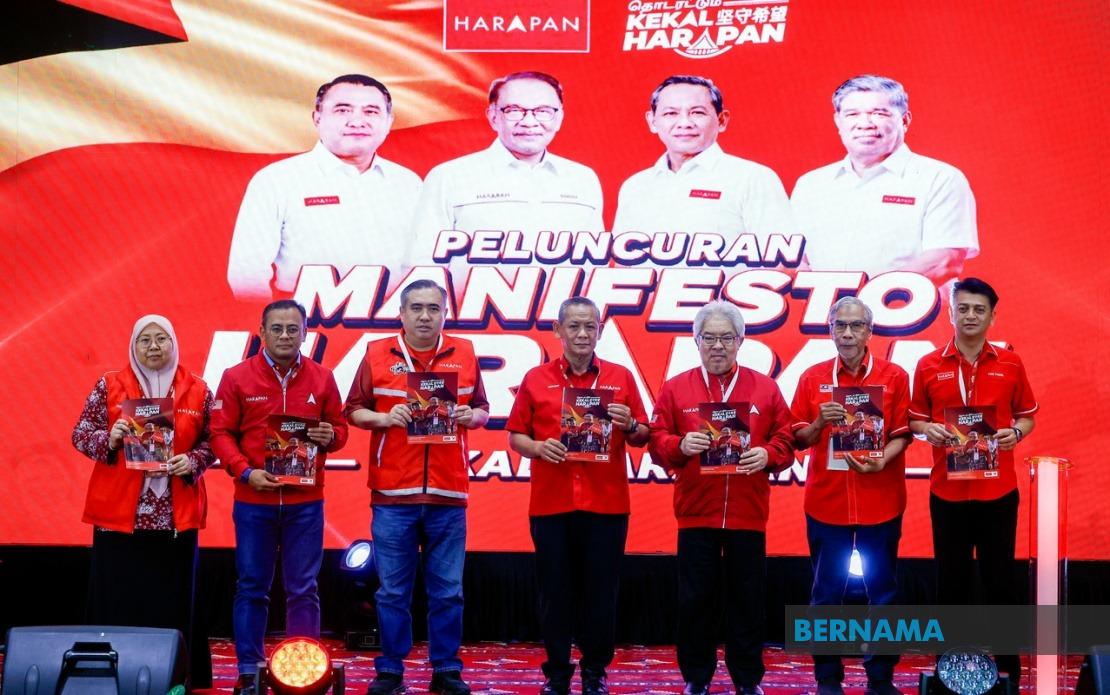
Datuk Seri Aminuddin Harun, Pakatan Harapan's Negeri Sembilan chairman and sitting Menteri Besar, has positioned the coalition's upcoming state election manifesto as a substantive policy document grounded in practical implementation rather than aspirational political messaging. Speaking in Seremban on July 20, Aminuddin distinguished PH's approach by emphasizing that campaign promises would be anchored in the coalition's demonstrated track record across eight years of state administration, signalling a strategic shift from ambitious rhetoric toward consolidated, incremental progress.
The manifesto launch, held under the banner 'Negeri Sembilan Kekal Harapan' (Negeri Sembilan Stays With Harapan), represents a calculated messaging strategy by the governing coalition. Rather than presenting an entirely new agenda, PH has framed its electoral platform as an evolution of existing programmes, with the coming five-year term dedicated to deepening initiatives already underway. This approach reflects a broader political calculation: in an electoral environment where voter scepticism toward unfulfilled campaign pledges runs high across Malaysia, emphasizing continuity and proven execution can be more persuasive than promising transformative change.
Aminuddin's emphasis on building "a strong foundation for Negeri Sembilan that can benefit future generations" suggests PH is attempting to reframe state elections around legacy and institutional durability rather than immediate gratification. This messaging appeals particularly to centrist and older voters who prioritize stability, though it may present challenges in energising younger constituencies seeking more dramatic policy shifts. The distinction he drew between past focus on "what we wanted to implement" and current concentration on "improving and strengthening those initiatives" implicitly acknowledges that some previous commitments may not have been fully realised, or that their execution requires refinement.
The manifesto comprises ten key commitments, though the specific details of these pledges were not elaborated in Aminuddin's initial presentation. This selective disclosure mirrors a common electoral strategy whereby parties release detailed policy documents progressively to maintain media momentum throughout the campaign period. For Malaysian voters accustomed to comprehensive manifestos that sometimes contain contradictions or uncosted proposals, PH's emphasis on deliverability may serve as implicit criticism of opposition parties' campaign messaging, positioning Harapan as the more fiscally responsible, pragmatic governing force.
Aminuddin's personal contest for the Linggi state seat adds weight to his manifesto presentation, anchoring him to a specific constituency and creating accountability for the promises made. This personal stake in the election outcome underscores that PH's leadership is placing individual credibility behind the coalition's pledges, a symbolic gesture that carries particular resonance in Malaysian political culture where personal trust between elected representatives and constituents remains influential in voting decisions.
For Negeri Sembilan specifically, the emphasis on incremental strengthening of existing programmes reflects the state's particular governance context. As one of Malaysia's smaller states with a population of around 1.1 million, Negeri Sembilan operates within tighter fiscal constraints than larger states such as Selangor or Johor. PH's pragmatic framing acknowledges these resource limitations while positioning the party as a competent steward of constrained budgets, a messaging angle that resonates in an era of post-pandemic economic recovery and mounting fiscal pressures on state governments.
The coalition's strategic positioning also carries broader implications for Malaysian politics beyond Negeri Sembilan. If PH's "deliverable versus rhetoric" messaging gains electoral traction in the state, it may influence how the coalition frames its national campaign platform ahead of the next general election. Conversely, if opposition parties successfully challenge the credibility of PH's claim to have delivered on past promises, or if voters perceive the "no grand promises" approach as lack of ambition, the strategy could backfire by reinforcing perceptions that the coalition lacks visionary direction.
Regionally, Negeri Sembilan's election timing positions the state as a potential barometer for voter sentiment across Southeast Asia's broader political landscape. Malaysia's peninsular states have witnessed fluctuating electoral support for incumbent coalitions in recent years, reflecting wider patterns of voter volatility observed in countries like Thailand, Indonesia, and the Philippines. PH's attempt to stabilise its support through a deliverables-focused platform may offer lessons for other regional governing coalitions attempting to consolidate voter bases amid economic uncertainty and pandemic recovery challenges.
The manifesto's emphasis on institutional continuity and programme enhancement also reflects international best practices in electoral politics, where incumbent governments increasingly emphasise competence and delivery over transformative promises. This represents a maturation of PH's electoral messaging compared to the coalition's 2018 general election campaign, which centred on promises of systemic reform and anti-corruption initiatives. The shift suggests PH has internalised lessons about the political costs of unmet expectations and is attempting to calibrate promises more carefully to achievable outcomes.
Ultimately, the success of PH's Negeri Sembilan strategy will depend on whether voters perceive the coalition as genuinely delivery-focused or whether they interpret the emphasis on existing programmes as evidence of exhausted ideas. The state election serves as a crucial test case for whether Malaysian voters reward governing parties for competent management of expectations or prefer opposition parties offering bolder policy visions, a dichotomy that will likely shape electoral competition in the coming years.

