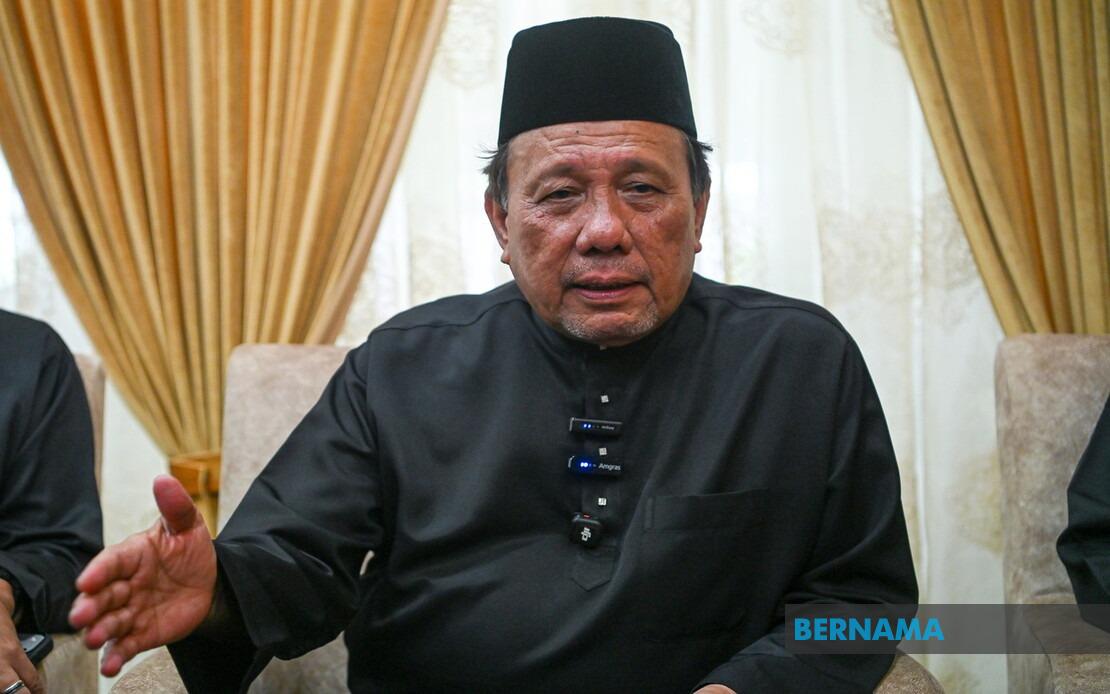
Datuk Ismail Lasim, the Menteri Besar of Negeri Sembilan, has assumed the chairmanship of Negeri Sembilan Football Club (NSFC) effective immediately, marking a significant leadership transition for the state's premier football institution. The appointment comes following the departure of Datuk Seri Aminuddin Harun, creating an opportunity for fresh strategic direction at a critical juncture for Malaysian football development.
The decision was announced by Tunku Besar Tampin Tunku Syed Razman Tunku Syed Idrus Al-Qadri, president of the Negeri Sembilan Football Association (PBNS), who emphasized Ismail's deep roots within the state's football ecosystem. Rather than bringing an outsider to lead the organization, the appointment represents a homecoming of sorts for someone whose contributions to the sport span multiple decades and various capacities, demonstrating the association's preference for continuity and institutional knowledge.
Ismail's football credentials are substantial and deeply embedded in Negeri Sembilan's sporting heritage. During the 1990s and early 2000s, he served as manager of the state football team, a period that encompassed crucial development years for Malaysian football at the state level. His subsequent tenure as vice-president of PBNS in 2010 further solidified his understanding of the administrative and strategic dimensions of football governance, positioning him with comprehensive insight into both operational and organizational challenges.
According to Tunku Syed Razman's statement, the appointment recognizes Ismail's familiarity with the club's foundational values and identity. The PBNS president expressed confidence that Ismail's combination of practical experience and leadership capability will provide the institutional direction necessary to navigate contemporary challenges facing Malaysian football clubs. This confidence reflects not merely in his past achievements but in his demonstrated ability to understand the specific context and culture that define Negeri Sembilan football.
The transition occurs at a moment when Malaysian football clubs face mounting pressures related to professionalization, financial sustainability, and competitive performance within regional frameworks. Ismail's mandate extends beyond mere custodianship; he is tasked with steering the club toward comprehensive development across multiple dimensions. The PBNS has articulated clear expectations regarding strategic direction, professional standards, and sustainable growth trajectories that will define his tenure's success.
One critical aspect of Ismail's role involves strengthening institutional relationships and stakeholder coordination. The appointment is positioned as facilitating enhanced cooperation between NSFC, PBNS, the Negeri Sembilan state government, and various commercial and community stakeholders. This multi-directional engagement is essential for Malaysian football clubs operating within limited resource environments, where maximizing stakeholder support directly influences organizational capacity and competitive capability.
The club's developmental agenda, as outlined by the PBNS president, encompasses several interconnected priorities that will likely consume substantial attention during Ismail's chairmanship. Player development systems require systematic enhancement to ensure consistent talent pipeline quality. Simultaneously, club structural improvements must create institutional frameworks capable of supporting professional operations without compromising financial viability. Commercial development represents another crucial dimension, as revenue diversification increasingly determines survival and competitiveness within Malaysian football's evolving landscape.
Community engagement and supporter relations constitute additional pillars of the envisaged development model. Malaysian football clubs increasingly recognize that sustainable success requires deep community embedding and passionate supporter networks. NSFC's strategic emphasis on strengthening these connections under Ismail's leadership reflects contemporary understanding that football clubs function as community institutions beyond merely competitive entities, with social and cultural dimensions that enhance legitimacy and institutional resilience.
Ismail's appointment carries broader implications for Malaysian football governance. The selection of a high-ranking state government official as club chairman underscores the political and strategic importance assigned to football within state development frameworks. This positioning potentially creates advantages through enhanced government resource access and priority attention, yet simultaneously raises governance questions regarding institutional independence and decision-making autonomy in football management contexts.
The transition also reflects confidence in political-sports integration as a governance model within Malaysian football. Rather than operating as purely independent commercial entities, state football clubs frequently benefit from government backing and leadership that leverages political authority to advance institutional interests. Ismail's dual role as Menteri Besar and NSFC chairman exemplifies this approach, though success ultimately depends on effective separation between governmental and sporting administrative functions.
Looking forward, Ismail's effectiveness will be measured against tangible outcomes in player development quality, competitive performance within national football competitions, and institutional financial health. Malaysian state football clubs operate within increasingly competitive environments where neighboring states and private clubs challenge their traditional dominance. Achieving sustainable improvement requires not merely administrative competence but strategic vision capable of modernizing operations while preserving institutional identity and community connection.
The appointment carries significance extending beyond Negeri Sembilan's borders within Malaysian football's broader ecosystem. Success in professionalizing and developing NSFC under Ismail's leadership could establish models applicable to other state clubs navigating similar challenges. Conversely, difficulties would highlight systemic obstacles facing Malaysian football at regional level, informing broader policy discussions regarding state football club sustainability and competitive viability within regional and domestic competitive frameworks.

