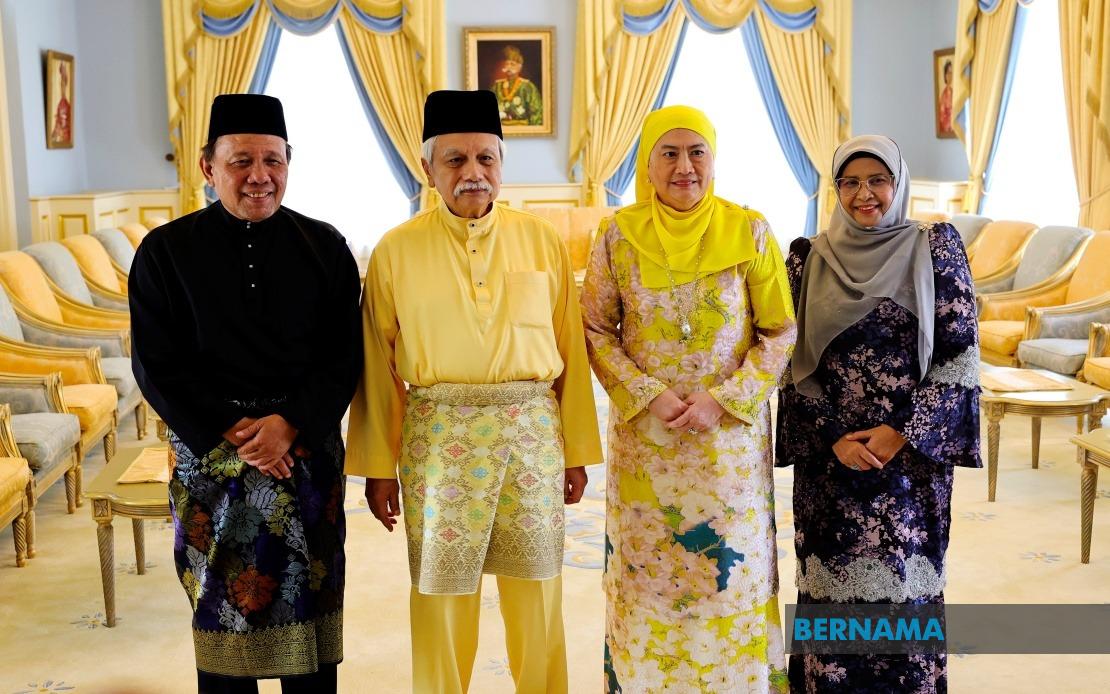
Negeri Sembilan has a new administrative leader in Datuk Ismail Lasim, who was sworn in as Menteri Besar before the Yang Dipertuan Besar Tuanku Muhriz Tuanku Munawir at Istana Besar Seri Menanti. In his inaugural remarks delivered in Kuala Pilah, the Juasseh assemblyman articulated a vision firmly rooted in institutional continuity and constitutional propriety, signalling that his administration would place the royal institution at the centre of governance.
The preservation of Negeri Sembilan's royal framework represents more than ceremonial protocol for the incoming administration. Lasim framed the protection and elevation of the monarchy as a foundational civic responsibility that extends to every resident of the state, not merely government functionaries. This emphasis reflects a broader recognition across Malaysia's political landscape that the institution of the Ruler remains constitutionally central to state legitimacy, particularly in the nine hereditary sultanate states where the Yang Dipertuan Besar holds significant reserve powers and symbolic authority.
In practical terms, Lasim's commitment entails dual obligations: first, fostering widespread public understanding of Negeri Sembilan's distinctive customs, protocols, and traditions that have evolved across generations, and second, embedding respect for the royal institution into the daily operations of state administration. This formulation suggests an intentional educational and cultural dimension to governance, wherein officials at all levels would internalize and demonstrate deference to constitutional monarchical structures. The Menteri Besar characterised this as essential groundwork for maintaining harmony between the state's executive arm and its hereditary leadership.
Conflict minimization emerges as a practical concern underpinning this institutional pledge. Lasim acknowledged that tensions occasionally arise between government operations and royal prerogatives, requiring deliberate management and diplomatic sensitivity. By publicly committing to find "the most appropriate ways to minimise conflicts and related issues," he signalled awareness that the relationship between elected officials and the Ruler demands ongoing attention and goodwill. This reflects lessons learned from constitutional disputes in other Malaysian states, where administrative friction has occasionally escalated into public controversy or institutional strain.
The incoming Menteri Besar simultaneously positioned his administration within Malaysia's current federal power arrangement, emphasizing that Negeri Sembilan's Barisan Nasional component remains integrated into the Unity Government coalition at national level. This framing serves multiple purposes: it legitimizes continued cooperation between state and federal authorities regardless of partisan considerations, signals stability to investors and civil servants, and demonstrates that localized political outcomes need not disrupt the broader consensus architecture established at Putrajaya. Lasim's assertion that such cooperation merits continuation "for the benefit of the people of Negeri Sembilan" grounds practical federalism in utilitarian rather than ideological terms.
The question of policy continuity with the previous administration received considerable attention during Lasim's press conference, revealing a pragmatic approach to governance transition. Rather than sweeping away prior initiatives for symbolic purposes, the new Menteri Besar indicated that programmes demonstrating tangible public benefit would be retained and enhanced. This stance suggests confidence in his administration's ability to build upon existing foundations rather than requiring complete structural renewal, and reflects recognition that abrupt policy reversals often impose unnecessary disruption on established programmes, civil service operations, and citizen expectations.
For Malaysian observers tracking governmental transitions, Lasim's emphasis on institutional preservation carries particular significance in Negeri Sembilan's context. As one of the states whose Yang Dipertuan Besar participates in the Conference of Rulers—Malaysia's collective monarchical body—the state's royal institution operates within both local and national constitutional frameworks. The Menteri Besar's deference to these structures positions his administration within constitutional orthodoxy while potentially differentiating Negeri Sembilan's governance approach from states where elected officials have sometimes tested the boundaries of executive authority relative to royal prerogatives.
The invocation of state "customs and traditions" as administrative pillars warrants particular attention for regional readers assessing Malaysia's approach to cultural governance. Unlike the federal constitution's explicit acknowledgment of Islam's special position, Negeri Sembilan's traditions derive substantially from its distinctive adat perpatih customary law system and the historical role of its Menteri Besar Council in mediating between the Ruler and elected representatives. By anchoring his administration in these localized constitutional traditions, Lasim positions governance as embedded within the state's historical and cultural specificity rather than as merely instantiating generic democratic principles.
The coordination between Negeri Sembilan's state-level Barisan Nasional component and the federal Unity Government represents an ongoing feature of Malaysia's federalist architecture, though one that occasionally generates complexity. The Menteri Besar's unremarkable characterization of this cooperation—describing it as lacking "anything unusual"—reflects an established pattern wherein BN, despite its reduced national prominence, maintains administrative presence in multiple state governments. This continuity suggests that Malaysia's transition toward coalition politics following the 2018 elections has produced enduring institutional arrangements rather than temporary expedients.
Lasim's public positioning across these multiple registers—institutional reverence, federal cooperation, policy pragmatism, and administrative continuity—sketches a profile of cautious, consensus-oriented leadership. Whether this approach generates sufficient dynamism to address Negeri Sembilan's development priorities or economic challenges remains to be assessed through subsequent policy announcements and budgetary allocations. The Menteri Besar has signalled that his administration will operate within established constitutional and political frameworks rather than pursue transformative reform, positioning stability and institutional harmony as primary values guiding his tenure.

