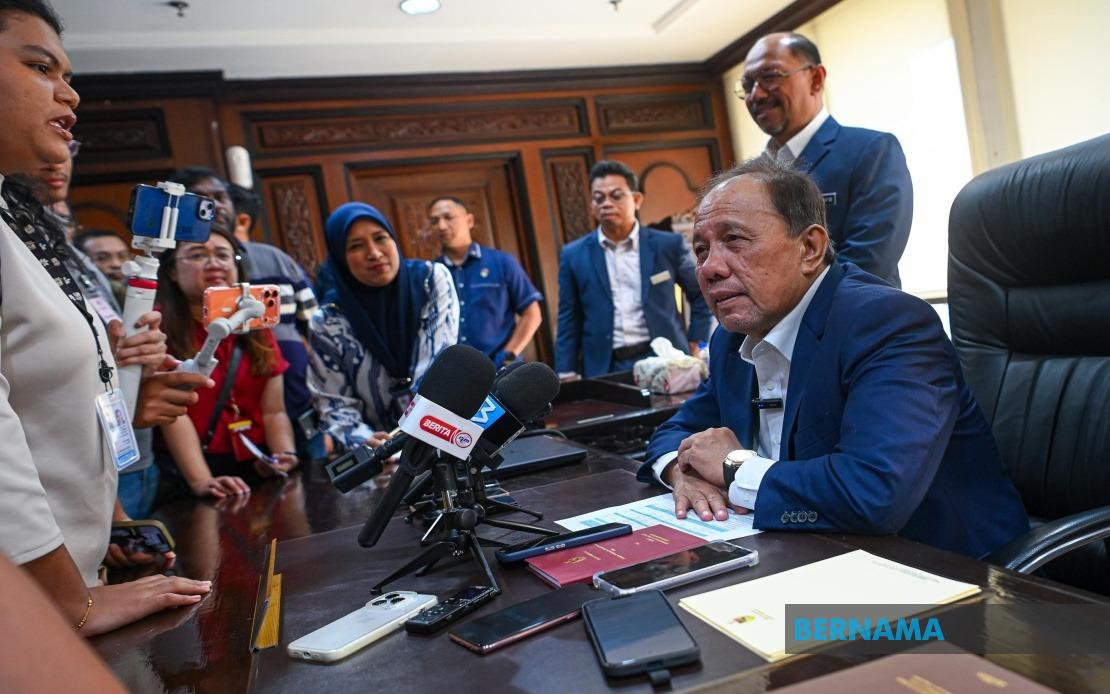
Negeri Sembilan's newly inaugurated Menteri Besar Datuk Ismail Lasim has signalled plans to expand the state administration's structure by introducing Deputy Executive Council positions across multiple portfolios, a move designed to manage competing interests within the ruling coalition while maintaining operational efficiency. Speaking at Wisma Negeri in Seremban, Ismail acknowledged that the cabinet composition constraints necessitate creative solutions, with the fresh architectural approach reflecting the practical realities of coalition governance in the state.
The proposal emerges from a demographic reality facing the state administration: the number of available Exco appointments appears insufficient to satisfy all members of the coalition's assemblyman contingent. By creating deputy-level positions, the government can offer meaningful roles to representatives from Barisan Nasional component parties alongside PAS and Parti Wawasan Negara (Wawasan), thereby distributing patronage and power-sharing obligations more widely. This stratification strategy resembles approaches adopted in other Malaysian states managing unwieldy coalitions, where deputy posts provide portfolio-specific responsibility without full cabinet status.
Ismail, who assumed office as the Juasseh state assemblyman after being sworn in before Yang Dipertuan Besar Tuanku Muhriz Tuanku Munawir at Istana Besar Seri Menanti, clocked in for his inaugural working day at the Menteri Besar's Office at 9 am, receiving formal welcome from State Secretary Datuk Mohd Zafir Ibrahim and departmental heads. The ceremonial transition underscores the administrative handover process, with institutional machinery responding to the new political dispensation established through recent electoral outcomes.
The electoral arithmetic underpinning this configuration provides both opportunity and constraint. The Negeri Sembilan state election delivered Barisan Nasional eighteen seats and Perikatan Nasional seven, together commanding a two-thirds parliamentary majority that permits governing without external support. This comfortable margin theoretically allows the coalitions flexibility in cabinet design, yet the concentration of seats within two large groupings paradoxically creates distributional challenges. Pakatan Harapan's eleven seats occupy the opposition benches, establishing a clear left-right divide rather than a fragmented spectrum requiring constant negotiation.
While the deputy appointments represent the immediate structural innovation, Ismail has not finalised the full complement of senior positions either. The possibility of establishing Senior Exco roles remains under consideration, though provisions already exist within the governmental framework to accommodate such appointments. This hesitation likely reflects ongoing negotiations within and between the coalition partners, with faction dynamics and political horse-trading determining which personalities receive elevated status. The decision-making timeline itself carries symbolic weight—the announcement was expected Friday or Monday at the latest, suggesting measured but deliberate movement toward administrative closure.
For Malaysian political observers, this approach encapsulates broader trends in state-level coalition management. The multiplication of portfolio positions without proportional expansion of constitutional cabinet size represents a pragmatic adaptation to Malaysia's first-past-the-post electoral system, which frequently produces multiparty results requiring accommodation mechanisms. Negeri Sembilan's blueprint may influence comparable circumstances in other states, particularly where mixed-coalition arrangements prevail and patronage distribution demands creative structuring.
The timing of Ismail's tenure also matters within the broader political calendar. As the state moves forward under renewed governance structures, the administrative appointments will establish working relationships between the Menteri Besar's office and departmental bureaucracies. Early clarity regarding portfolio responsibilities benefits implementation of policy initiatives, budgetary allocation, and programme delivery. Any delays in finalising the cabinet architecture risk creating interim ambiguity affecting departmental engagement with political direction-setting.
For practitioners of Malaysian federalism, the Negeri Sembilan arrangement illustrates how states navigate the tension between constitutional cabinet size constraints and contemporary coalition politics. The deputy model disaggregates portfolio responsibility from cabinet rank, permitting broader representation while preserving constitutional proportionality. Whether this innovation becomes precedent across other states or remains jurisdictionally specific depends substantially on coalition outcomes in upcoming elections and the relative political sophistication of successive administrations.
The practical implications for service delivery and economic management remain contingent on implementation quality. Whether deputy-level appointments enhance or obstruct administrative efficiency depends on clarity of delegation, inter-portfolio coordination mechanisms, and the capabilities of appointed individuals. The state secretariat and departmental permanent staff will substantially shape the effectiveness of the expanded structure through their institutional knowledge and management practices, potentially rendering formal cabinet architecture secondary to actual working relationships.
Moving forward, Negeri Sembilan residents and business stakeholders will watch how the expanded administrative structure translates into tangible governance outcomes. Portfolio clarity, response times on state development initiatives, and inter-departmental coordination will signal whether the deputy innovation strengthens or complicates decision-making. The coming weeks will reveal not merely the names filling these positions but the underlying political accommodations and hierarchies that the structural innovation attempts to accommodate.

