The 16th Negeri Sembilan State Election will serve as a litmus test for Malaysia's evolving political dynamics, with the August 1 polling day marking a significant shift in contest structures across the state's 36 legislative assembly constituencies. The election reflects broader regional trends of political fragmentation and the declining dominance of two-coalition contests that characterized previous electoral cycles.
The transformation in contest formats is striking. Straight fights, once the norm in Malaysian state elections, have contracted sharply to just 11 constituencies, compared with 27 in the previous Negeri Sembilan poll. This 59 per cent reduction underscores how multiparty competition has intensified across the state. Meanwhile, three-cornered contests have tripled in number, expanding from seven seats to 21, signalling that neither Barisan Nasional, Pakatan Harapan, nor the ascendant Perikatan Nasional alliance can command uncontested ground. The introduction of five-way races in two constituencies—a first in Negeri Sembilan's electoral history—demonstrates unprecedented political pluralism at the state level.
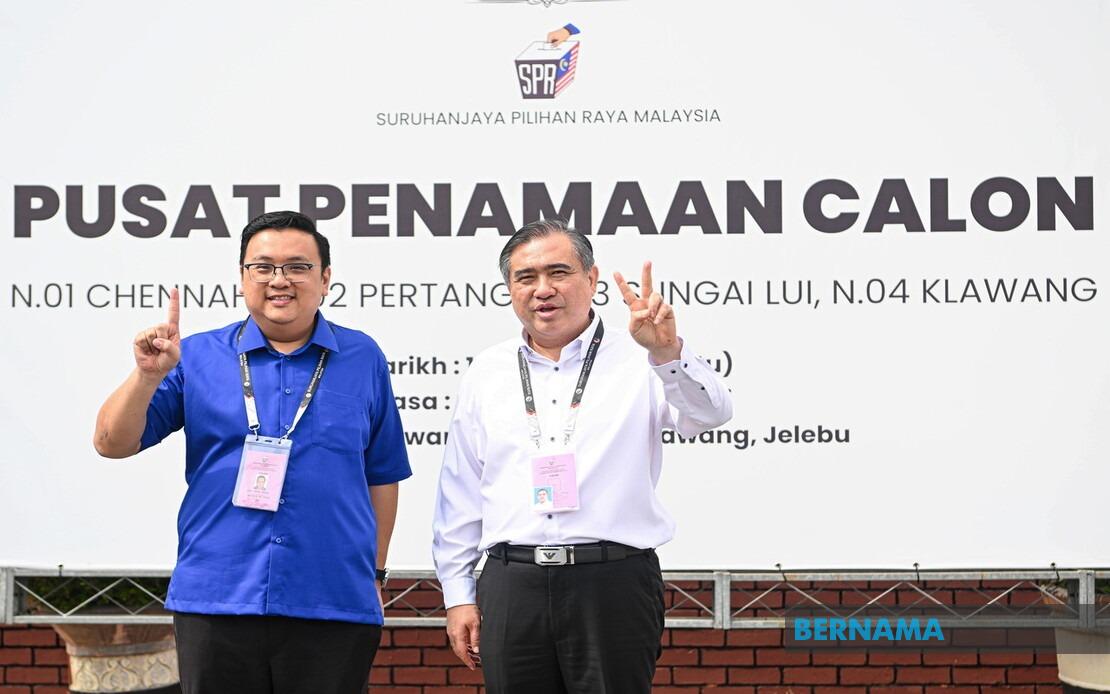
Among the straight fight contests, high-profile national political figures will be directly engaged. In Chennah, DAP secretary-general and Transport Minister Anthony Loke represents Pakatan Harapan against Barisan Nasional's Siow Kong Choon. This seat holds symbolic importance for the DAP's urban mobilization strategy and reflects the party's confidence in contesting directly where it retains organizational strength. Equally significant is Rantau, where UMNO deputy president and Foreign Minister Datuk Seri Mohamad Hasan will defend his seat for Barisan Nasional against Pakatan Harapan's Dr Azizul Hakim Mahdi, positioning this constituency as a direct test of UMNO's resilience in the face of opposition pressure.
The proliferation of three-cornered contests introduces unpredictability into the electoral outcome and raises tactical considerations for all parties. In Linggi, PKR vice-president and Negeri Sembilan Menteri Besar Datuk Seri Aminuddin Harun confronts both a Barisan Nasional challenger in Datuk Mohd Faizal Ramli and a Bersatu competitor in Zamri Md Said. This configuration could fragment the anti-establishment vote and benefit the incumbent if opposition supporters split strategically. Similarly, in Pertang, Negeri Sembilan UMNO Liaison Committee chairman Datuk Seri Jalaluddin Alias faces pressure from both Pakatan Harapan's Mohd Umry Abdul Khois and Bersatu's Mohd Faizal Fadli Mohd Idrus, making seat retention contingent on solid Barisan Nasional ground organization.
The Klawang contest presents a novel dynamic with Perikatan Nasional's entry into competitive Negeri Sembilan politics. Danni Rais, son of veteran politician Tan Sri Rais Yatim, contests the seat under the PN banner against incumbent Datuk Bakri Sawir of Pakatan Harapan and Bersatu's Muhammad Adib Musa. This race exemplifies how the PN coalition, despite its federal weakness, continues seeking state-level relevance by fielding politically connected candidates in select constituencies.
Two four-cornered contests further complicate the electoral arithmetic. Jeram Padang will feature incumbent Datuk Mohd Zaidy Abdul Kadir of Barisan Nasional alongside Pakatan Harapan's G. Manivannan, Bersatu's R. Sri Sanjeevan, and Parti Orang Asli Malaysia's Dayana Dal. The inclusion of PVOAM introduces indigenous representation considerations into Negeri Sembilan's political equation. Rahang similarly hosts a diverse contest with incumbent Siaw Meow Keong of Pakatan Harapan facing Barisan Nasional's Yap Siok Moy, Parti Sosialis Malaysia's S. Thinagaran, and Bersatu's Tang Jay San. The PSM candidacy indicates that fringe leftist politics retains organizational presence in selected Malaysian constituencies.
The two five-cornered races represent uncharted territory for Negeri Sembilan electoral politics. In Nilai, incumbent J. Arul Kumar of Pakatan Harapan must contend with Barisan Nasional's Lai Chien Kong, Bersatu's Datuk V. Saravana Kumar, Berjasa's Zamani Ibrahim, and independent Omar Mohd Isa. This fragmentation creates scenarios where winning candidates could secure seats with substantially less than 50 per cent of the vote, raising questions about mandate legitimacy and coalition-building challenges for the eventual government formation. Sri Tanjung presents a similar configuration, with incumbent Datuk Dr G. Rajasekaran of Pakatan Harapan challenged by Barisan Nasional's A. Achuthan, Bersatu's M. Leevineshwaraan, and two independent candidates, Datuk A. Saravanan and Islah Wahyudi Zainudin.
For Malaysian political observers, this contest structure signals the persistence of political realignment dynamics that began with the 2022 federal election. Bersatu's presence across multiple constituencies reflects its attempt to maintain state-level relevance despite internal organizational challenges. The emergence of independent candidates and smaller party nominees, while numerically limited, demonstrates voter receptivity to non-establishment alternatives in specific contexts. These patterns likely foreshadow similar contests in upcoming state elections elsewhere in Malaysia, particularly in peninsular states where coalition coherence has frayed.
The Election Commission has established July 28 for early voting, with the main polling day on August 1. A total of 889,490 electors are eligible to vote, comprising 867,151 ordinary voters, 16,884 military personnel and their spouses, and 5,455 police personnel. This electorate size places Negeri Sembilan as a mid-tier state by voter population, making it a significant but not dominant factor in the broader Malaysian political narrative. However, the state's strategic location adjacent to Selangor and Kuala Lumpur, coupled with its role as a UMNO stronghold and recent Pakatan Harapan gains, ensures that the outcome will carry implications for national coalition positioning and state-federal coordination.
The dramatic increase in complex contest formats reflects deeper structural changes in Malaysian politics. Single-party dominance has become increasingly difficult to sustain at state level, with voters demonstrating willingness to support diverse political options. The Negeri Sembilan election will therefore serve as a valuable case study in how Malaysian voters navigate fragmented ballots and what implications multiparty competition poses for post-election governance and coalition formation.

