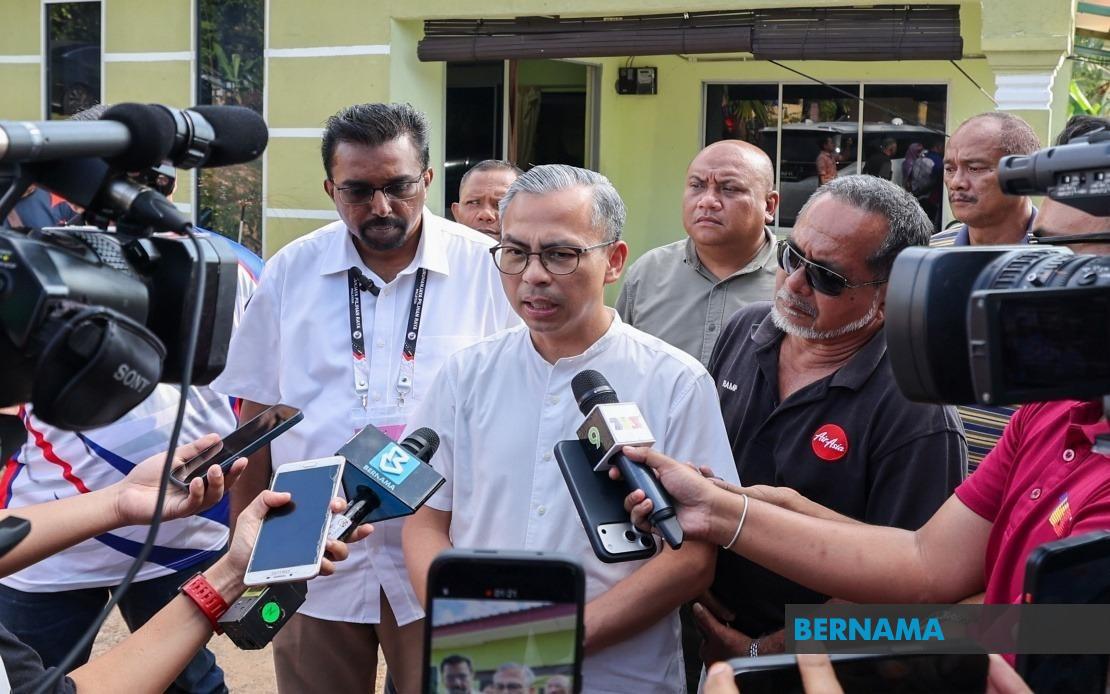
The Negeri Sembilan state election campaign has proceeded with relatively orderly conduct on social media platforms, according to Communications Minister Datuk Seri Fahmi Fadzil, who noted that the Malaysian Communications and Multimedia Commission has fielded just 16 complaints since campaigning commenced. Speaking during a visit to Felda Palong 1 at a Ziarah Kasih MADANI programme, Fahmi characterised the online environment as broadly stable and well-managed, suggesting that political actors and citizens have largely adhered to digital conduct standards.
The nature of complaints received reveals a diverse range of technical and regulatory concerns rather than concentrated misconduct. Of the 16 submissions to MCMC, 14 centred on telecommunications network difficulties affecting user communications, while the remaining pair flagged the presence of fraudulent social media accounts operating during the campaign period. This breakdown suggests that infrastructure limitations represent a more pressing challenge than deliberate platform manipulation, though both issues warrant attention from authorities tasked with maintaining electoral integrity.
Fahmi's comments carried an implicit acknowledgment that campaign intensity typically escalates as election day approaches. The minister specifically highlighted the 72 to 96 hour window immediately preceding the August 1 polling date as a period of heightened vulnerability, when online activity from competing political factions and interest groups historically surges. During these compressed timeframes, the risk of coordinated disinformation campaigns and the viral spread of unverified claims increases substantially, making this final stretch a critical phase for regulatory agencies.
To manage these risks, Fahmi encouraged voters and residents to take active roles in policing the information environment themselves. The public should report content perceived as breaching election regulations or platform guidelines directly to the social media operators in question, he advised. Should those platforms fail to respond appropriately, complainants are invited to escalate matters to MCMC for investigation and enforcement action. This tiered approach distributes responsibility across platforms, authorities, and civil society, acknowledging that no single institution can monitor the entire digital ecosystem effectively.
Beyond social media governance, Fahmi identified a more fundamental infrastructure challenge affecting the Negeri Sembilan electorate. His inspection of Felda Palong 1 uncovered significant internet connectivity gaps, though the problem manifests differently than commonly assumed. Rather than affecting residential areas within the settlement schemes themselves, the connectivity blackspots concentrate along the major arterial roads providing access to these communities. This distinction matters considerably for affected residents, as those travelling to or from their homes face disrupted mobile and data services during their commute.
The implications of this connectivity deficit extend beyond mere inconvenience. Fahmi underscored that inadequate internet coverage along transportation corridors creates genuine safety hazards during emergencies, when residents may need rapid communication with emergency services. Poor connectivity in the final hours before help arrives could prove life-threatening for those injured or in crisis. The Communications Minister articulated a philosophical principle guiding his response: wherever roads exist serving populated areas, reliable internet access should follow as a matter of basic infrastructure entitlement.
However, translating this principle into reality has proven sluggish. Although Malaysia's telecommunications companies executed a memorandum of understanding on network sharing infrastructure last year, the practical implementation of coordinated coverage expansion has lagged expectations. The MoU was designed partly to accelerate deployment by permitting shared access to tower infrastructure, yet the anticipated acceleration has not materialised sufficiently to eliminate the Negeri Sembilan gaps. This suggests that contractual agreements alone, without corresponding regulatory pressure or financial incentives, may insufficient to motivate rapid capital investment in less profitable rural coverage areas.
Fahmi outlined several remedial pathways under active consideration. Construction of new telecommunications towers represents the conventional approach, though it requires capital expenditure and regulatory approval timelines. Optimisation of existing infrastructure through technological improvements offers a faster, lower-cost interim route. Additionally, satellite-based connectivity via services such as Starlink provides an alternative technology pathway, potentially circumventing the need for extensive ground-based tower construction in sparsely populated zones. This multi-pronged strategy reflects the recognition that no single solution suffices for Malaysia's diverse geography and settlement patterns.
The minister also directed telecommunications companies to enhance their customer complaint handling mechanisms. Firms have been instructed to strengthen feedback systems and specifically to implement artificial intelligence tools enabling users to monitor the progress of their service complaints in real time. This technological requirement addresses a chronic frustration affecting telecommunications customers across Malaysia, where complaints submitted to service providers often vanish into bureaucratic black holes with minimal transparency. By mandating AI-enabled status tracking, Fahmi seeks to create accountability while simultaneously reducing the administrative burden on company staff managing complaint verification.
The timing of these infrastructure revelations carries political significance within the Negeri Sembilan campaign context. Rural areas including Felda settlements traditionally vote based on practical bread-and-butter considerations alongside ideological preference, making connectivity failures a tangible grievance affecting electoral calculus. By highlighting these gaps and committing to remedial action during the campaign period, Fahmi and his government demonstrate responsiveness to rural constituency needs. Simultaneously, the identification of implementation delays in the telecom MoU suggests that coordination between government and private sector entities remains imperfect despite formal agreements.
As campaigning progresses through its final week toward the August 1 election and July 28 early voting date, regulatory agencies face the familiar tension between enabling free political expression and preventing information integrity violations. The current complaint level suggests this balance has held reasonably well during the initial six days of formal campaigning. Yet Fahmi's explicit warning about the anticipated surge in final-stage online activity indicates that authorities are preparing contingency measures to handle potential escalation without being caught unaware.

