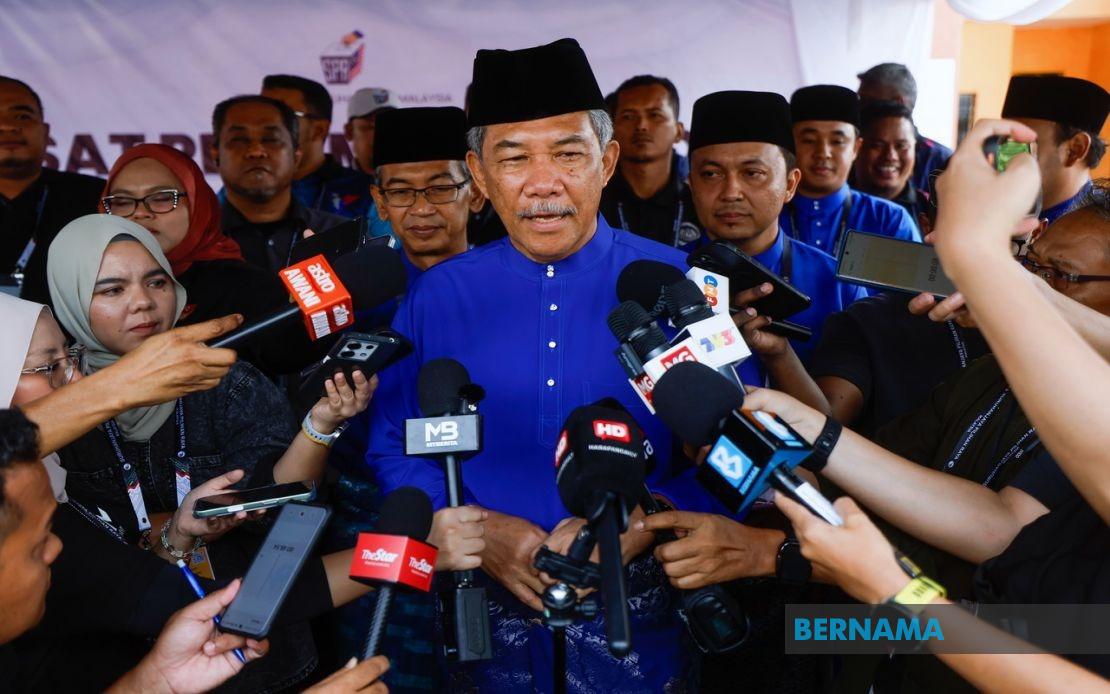
Barisan Nasional deputy chairman Datuk Seri Mohamad Hasan has called on the coalition's campaign machinery to refrain from leveraging Negeri Sembilan's adat—the state's system of traditional customs and governance—as an election issue, emphasising that doing so would help maintain stability throughout the democratic process. Speaking in Rembau after nomination procedures for the 16th state election, Mohamad, who also serves as UMNO deputy president, stressed that the institution of adat must remain independent from partisan politics and retain the respect it commands among constituents.
The warning reflects concern within BN leadership that adat-related matters, which carry deep cultural and historical significance in Negeri Sembilan, could become flashpoints if incorporated into campaign messaging. Mohamad made the position explicit, noting that party operatives had been instructed to avoid this line of attack. His intervention suggests potential pressure within BN ranks to deploy such issues as mobilisation tools, a practice he sought to discourage before the campaign gained momentum.
According to Mohamad, intertwining adat affairs with electoral competition would only serve to complicate the state's political landscape without advancing substantive policy debates. The distinction he drew between respecting traditional institutions and engaging in partisan campaigns reflects a governance philosophy that separates cultural and religious custodianship from routine political contestation. This approach aligns with how Malaysia's constitutional framework treats certain institutions as apolitical pillars of state identity.
Negeri Sembilan's adat system is particularly sensitive given its constitutional role and the symbolic importance of the Yamtuan Negeri, the elected paramount ruler who holds significant ceremonial and cultural authority. Any attempt to politicise this institution could undermine its legitimacy and create fissures along community lines, concerns that appear to have motivated Mohamad's public reminder to party discipline.
On the broader coalition dynamics, Mohamad confirmed that BN and Perikatan Nasional would continue operating under an electoral understanding rather than a formal alliance comparable to the arrangement seen in Johor's recent polls. This arrangement involves coordination to maximise vote efficiency across Negeri Sembilan's 36 state seats, with each coalition focusing on constituencies where it contests while supporting the other's candidates in designated areas. The strategy reflects pragmatic recognition that dividing the non-opposition vote could strengthen both coalitions' prospects against the Democratic Action Party and other opposition forces.
The electoral understanding between BN and PN represents a middle ground between formal merger and outright competition. Rather than present voters with a unified ticket, the arrangement operates behind the scenes to prevent wasteful vote-splitting in constituencies where one coalition has withdrawn. For Negeri Sembilan voters, this means the traditional two-front contest between BN and opposition forces continues, though tactical coordination between ruling coalitions happens outside public view.
Negeri Sembilan's state assembly was dissolved on June 5, following political developments that necessitated fresh elections. The Election Commission scheduled early voting for July 28 and general polling for August 1, compressing the campaign period into a relatively short timeframe. This compressed schedule may have contributed to leadership efforts to establish clear boundaries around permissible campaign conduct, preventing controversies that could consume disproportionate attention during the campaign.
For Malaysian observers, Mohamad's statement carries implications beyond Negeri Sembilan's borders. As Southeast Asia's oldest surviving electoral democracy faces recurring questions about the relationship between cultural institutions and democratic politics, the Negeri Sembilan approach offers a case study in attempted compartmentalisation. The success or failure of this effort could influence how other states manage sensitive traditional institutions during future campaigns.
The timing of Mohamad's warning also reflects BN's broader effort to position itself as a stabilising force capable of managing competing interests within a plural society. By publicly committing to keep adat matters separate from electoral competition, BN leadership signals to voters and institutional custodians alike that the coalition respects constitutional boundaries and cultural sensitivities. This messaging becomes particularly important in a state where traditional governance structures retain genuine authority and community backing.
The coordination between BN and PN, meanwhile, reflects the realignment of Malaysian politics since the 2018 general election upended three decades of single-coalition dominance. Rather than return to that arrangement, both coalitions have adopted a pragmatic coexistence model in certain state-level contests. This approach acknowledges that neither coalition commands sufficient electoral strength to govern alone in all states, necessitating tactical arrangements that might once have seemed unthinkable to rival political organisations.
Looking ahead to August 1, Negeri Sembilan voters will determine whether BN and its coalition partners can maintain the equilibrium Mohamad described, or whether opposition forces capitalise on any missteps or internal discord. The restriction on adat-based campaigning represents one constraint on the political contest, though whether all parties respect this informal boundary remains to be seen during the campaign's final weeks.

