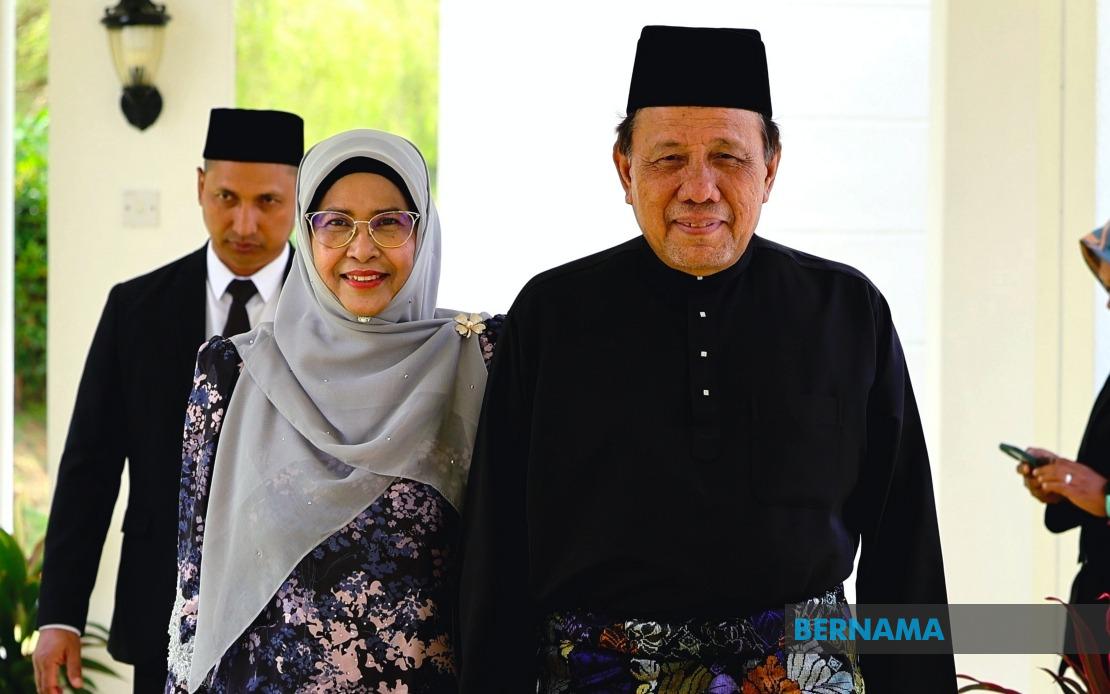
Negeri Sembilan's newly sworn-in Menteri Besar Datuk Ismail Lasim has announced that August 3 will be observed as an occasional public holiday, a move intended to honour the state's voters and stakeholders who participated in the successful conduct of the 16th state election held the previous day. The decision, granted with the approval of the Yang Dipertuan Besar of Negeri Sembilan, Tuanku Muhriz Tuanku Munawir, represents the incoming administration's first significant gesture toward the electorate.
Lasim revealed the holiday declaration during his inaugural press conference as Menteri Besar, held at Kuala Pilah following his swearing-in ceremony. The 67-year-old leader took his oath of office before Tuanku Muhriz at Istana Besar Seri Menanti, formally assuming his new responsibilities. In remarks to gathered reporters, Lasim expressed gratitude both to the Yang Dipertuan Besar for consenting to his appointment and for granting permission to announce the special holiday.
The rationale behind the announcement centres on acknowledging the strain that electoral campaigns place on communities. Lasim emphasised that many residents remained physically and mentally fatigued following the intensive period of campaigning and voting, and that providing an additional day of rest would allow citizens across the state to recover. This pragmatic approach signals the administration's attentiveness to the welfare of its population during the transition period following electoral change.
The Negeri Sembilan state election results reflected a decisive outcome that enables stable governance over the coming term. Barisan Nasional secured 18 seats in the State Legislative Assembly, whilst Perikatan Nasional captured seven seats, bringing the combined coalition to 25 seats out of 36 contested. This distribution affords the governing alliance a commanding two-thirds majority, traditionally regarded as sufficient to pass legislation without reliance on opposition support and to implement constitutional amendments if necessary.
The electoral contest itself involved 103 candidates competing across all 36 state constituencies. The scale of candidacy and the breadth of engagement across the state underscore the significance voters and political parties alike attached to the outcome. For electoral observers monitoring developments across Malaysia's states, the results demonstrated the continued strength of Barisan Nasional in peninsular territories, whilst also reflecting how Perikatan Nasional has consolidated itself as a credible alternative coalition capable of securing meaningful parliamentary representation.
The formation of a two-coalition government in Negeri Sembilan represents a continuation of the collaborative arrangement that has characterised Malaysian politics since the 2022 general election. Rather than governing alone, Barisan Nasional has chosen to formalise partnership with Perikatan Nasional, a configuration that provides additional seats for stability and may facilitate resource-sharing in state governance. This model has become increasingly common across Malaysian states, reflecting the fragmented electoral landscape that has emerged in recent years.
For Lasim personally, the ceremonial swearing-in and immediate assumption of leadership duties mark the culmination of extensive campaigning and political manoeuvring. At 67, he brings considerable experience to the role, though his leadership will inevitably be scrutinised by both supporters and opponents regarding his ability to address the state's development priorities and manage inter-coalition dynamics effectively. The decision to grant a public holiday demonstrates his willingness to make gestures of reconciliation and recognition toward all constituencies, including those who voted for opposition candidates.
The timing of the holiday announcement also serves a secondary purpose within the political communication strategy. By presenting the decision as joint acknowledgement with the Yang Dipertuan Besar, the new administration emphasises the respect it accords to constitutional monarchy and established institutions. This messaging resonates particularly in Negeri Sembilan, where the role and dignity of the Yang Dipertuan Besar holds considerable cultural and political significance among the state's population.
Looking forward, the Negeri Sembilan government will face the practical challenge of implementing its electoral commitments whilst managing the expectations of two separate coalition partners with potentially divergent policy priorities. The two-thirds majority provides a comfortable governing buffer, yet maintaining unity between Barisan Nasional and Perikatan Nasional components will require ongoing negotiation and compromise. How effectively Lasim and his cabinet manage these internal dynamics will substantially influence the state's ability to deliver promised development projects and public services.
The public holiday also reflects broader Malaysian political tradition of marking electoral transitions through symbolic gestures. Such moves, whilst ostensibly celebratory, also serve to reset public discourse following campaigning periods that often involve heated rhetoric and partisan contestation. By providing a shared moment of rest and reflection, the holiday offers an opportunity for communities to regain a sense of collective purpose before the serious business of governance and opposition oversight resumes.

