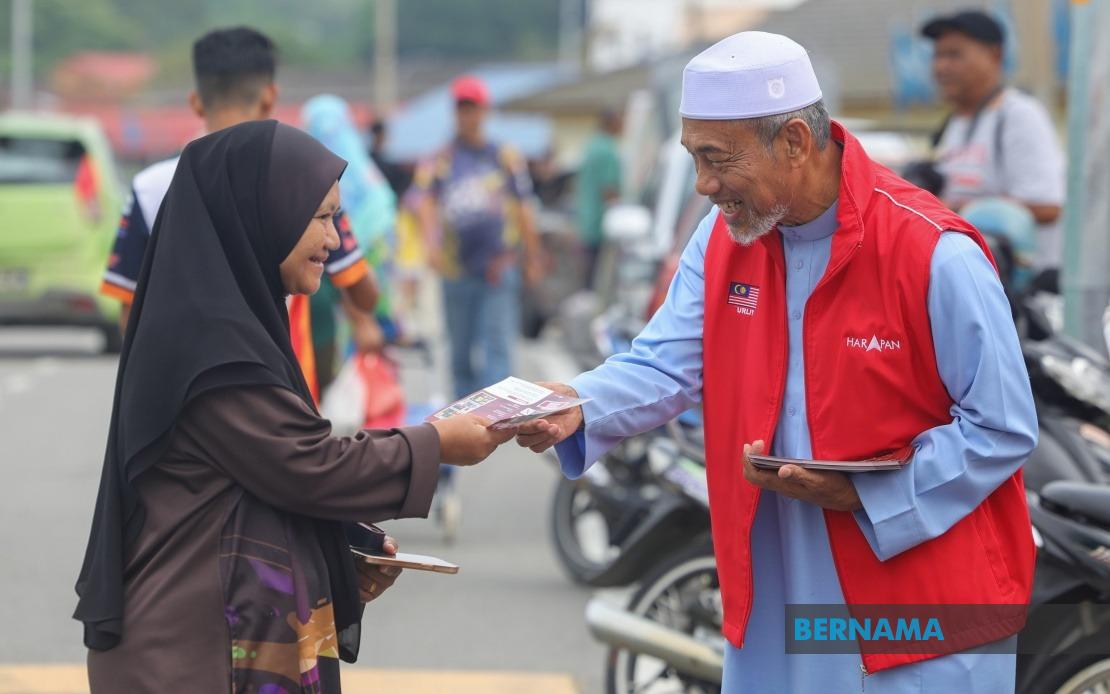
The race for control of Negeri Sembilan has entered its decisive phase, with candidates from the ruling Pakatan Harapan coalition and opposition Barisan Nasional accelerating ground-level engagement ahead of polling day on August 1. With just 12 days separating the campaign period from voting, the competing camps have mobilised their machines across the state, deploying strategies that emphasize direct voter contact and community listening sessions. The intensity reflects the high stakes: control of the state assembly and the crucial position of Menteri Besar have emerged as focal points in the broader narrative of Malaysia's evolving political dynamics.
Menteri Besar Datuk Seri Aminuddin Harun, the Pakatan Harapan standard-bearer, has adopted a schedule that demonstrates the grueling pace demanded of frontline candidates. His day began with prayers at Masjid Jamek Pasir Panjang in his Linggi constituency, transitioning swiftly into breakfast engagement with residents and systematic walkabouts across multiple neighbourhoods including Pasir Panjang town, Taman Setia, Taman Kekatong, and several kampung areas. The strategy reveals the campaign calculus: winning marginal seats often depends on personal visibility and the accumulation of intimate encounters rather than mass rallies. Aminuddin, who serves simultaneously as PKR vice-president, Negeri Sembilan PKR chairman, and Port Dickson Member of Parliament, has positioned himself as someone listening to community grievances whilst framing the campaign within a narrative of shared progress and continued service delivery.
The Negeri Sembilan Pakatan Harapan organisation has distributed candidates across challenging constituencies with ambitious daily schedules. Several contenders have programmed up to nine separate engagements daily, reflecting an acknowledgment that in a state with 889,490 registered voters spread across multiple assembly seats, saturation presence matters. DAP secretary-general Anthony Loke, defending the Chennah seat, began with a market walkabout at Seremban Central Market before pivoting to evening engagement activities, a pattern suggesting careful time management to reach voters in their everyday spaces and leisure contexts. Meanwhile, Kamarul Ariffin Wafa, the PH candidate for Seri Menanti, combined market engagement at Pekan Ahad with visits to Tanjong Ipoh and other locations, following a template now standard across competitive campaigns.
The Pakatan Harapan approach emphasizes informal engagement environments where candidates interact without podiums or formal structures. Yaacob Mahmood, contesting Serting for PH, has specifically adopted breakfast meetings and business premises visits in locations such as Felda Raja Alias 3 and Bandar Seri Jempol. Campaign organisers have framed these sessions as creating "friendly atmospheres" where voters feel comfortable articulating concerns about local issues. This methodology reflects sophisticated understanding of Malaysian electoral behaviour: voters often distinguish between election-time promises and genuine commitment to community needs, and informal settings allow candidates to demonstrate responsiveness without the stagecraft of formal political theatre.
The Barisan Nasional campaign has deployed its own competitive machinery, with incumbent Rantau assemblyman Datuk Seri Mohamad Hasan, the coalition's deputy chairman, maintaining presence at party polling district centres and community locations. Known colloquially as "Tok Mat," Hasan represents the establishment dimension of BN's campaign, combining his role as sitting assemblyman with higher-level party responsibilities. Jalaluddin Alias, the Negeri Sembilan UMNO Liaison Committee chairman, has pursued a complementary strategy emphasising youth engagement through sports events like the Pertang constituency sepak takraw tournament and outreach to Orang Asli communities, suggesting BN's recognition that maintaining coalition cohesion requires attention to community segments that have shown electoral volatility.
The electoral context frames these campaigns within specific structural parameters. The Negeri Sembilan State Legislative Assembly was dissolved on June 5, with the Election Commission establishing August 1 as polling day and July 28 for early voting procedures. This timeline compressed the usual campaign period, intensifying the urgency of candidate visibility strategies. Early voting provisions accommodate 16,884 military personnel and their spouses alongside 5,455 police personnel, constituencies that historically lean toward the ruling coalition and thus require particular BN attention. The broader voter roll of 867,151 ordinary voters distributes across constituencies of varying competitiveness, creating differentiated strategic priorities.
For Pakatan Harapan, the campaign reflects confidence in its Negeri Sembilan administration and continuity narrative with Aminuddin's incumbency. The coalition has attempted to frame the election as a mandate renewal for development programmes and social policies implemented during the current term. The emphasis on listening to voter concerns serves dual purposes: demonstrating accessibility whilst gathering intelligence on emerging issues that might become pressure points in the campaign's final days. This approach has become standard in Malaysian politics as candidates recognise that specific local grievances—whether infrastructure complaints, business licensing disputes, or social service delivery concerns—often weigh more heavily than grand national narratives in voters' final decision-making.
Barisan Nasional's campaign positioning reflects its status as the displaced incumbent at state level. The coalition must simultaneously defend credibility on economic management and service delivery whilst offering an alternative vision that justifies returning to power. The emphasis on engagement with diverse communities, from youth sports participants to Orang Asli populations, demonstrates BN's attempt to reassemble a coalition of constituencies that historically supported the grouping. The deployment of senior figures like Mohamad Hasan, whose political stature extends beyond state assembly relevance, signals that BN views Negeri Sembilan as strategically important within broader calculations about Malaysian political trajectory.
The campaign's ground-level intensity reflects broader Malaysian electoral trends. Despite Malaysia's sophisticated media landscape and digital connectivity, candidates continue investing heavily in face-to-face engagement because door-to-door contact, market walkabouts, and informal community meetings generate direct persuasion opportunities that mass communication cannot replicate. The willingness of senior national figures like Anthony Loke to personally campaign in state contests underscores how Malaysian political parties treat state elections as laboratories for national positioning and opportunities to test messaging approaches. Negeri Sembilan, with its economically diverse base spanning industrial, agricultural, and service sectors alongside significant Orang Asli populations, presents a microcosm of voter complexity that campaigns view as representative of broader Malaysian dynamics.
As the campaign enters its final fortnight, the intensity of grassroots engagement will likely increase further. Candidates will compete for remaining visibility opportunities whilst party strategists focus on identifying persuadable voters in marginal constituencies. The logistics of maintaining nine daily programmes place enormous physical demands on candidates, requiring disciplined time management and supportive ground operations. For Malaysian observers and political analysts tracking national trends, the Negeri Sembilan campaign offers insights into how both Pakatan Harapan and Barisan Nasional are positioning themselves to compete in future electoral cycles, whether at state or national levels. The outcome will carry implications beyond the state's borders, affecting perceptions of coalition strength and electoral viability heading toward the next general election.

