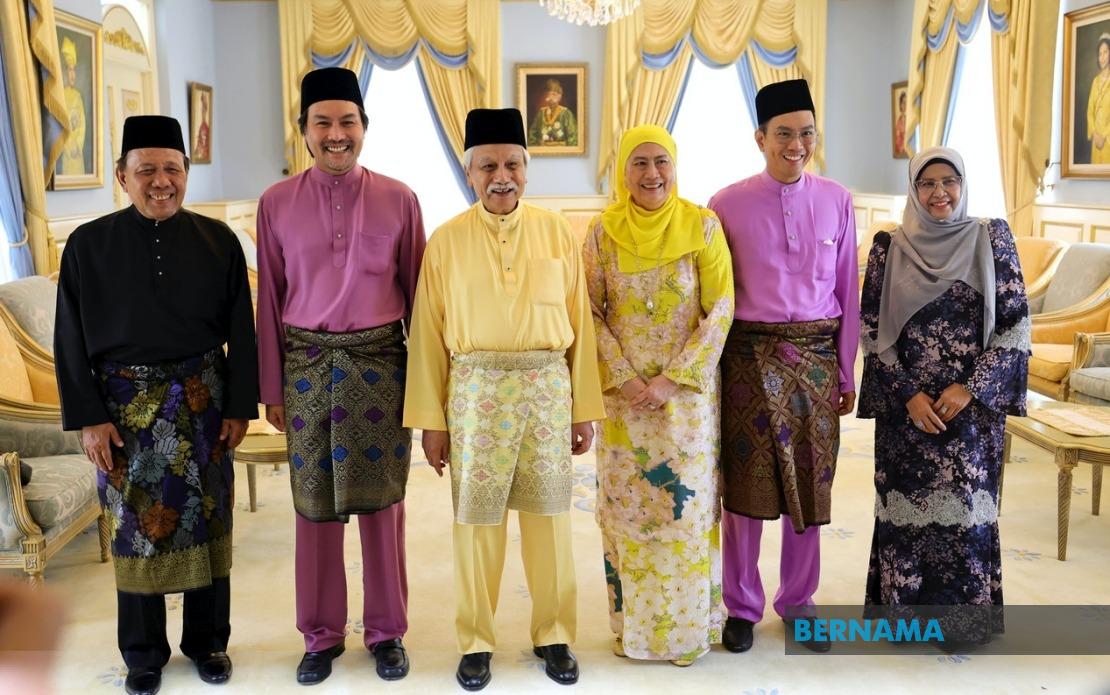
Datuk Ismail Lasim, sworn in yesterday as Negeri Sembilan's newly appointed Menteri Besar, has signalled that the composition of the state cabinet will be formally concluded within the week, contingent on consultations with coalition partners and royal approval. Speaking at his inaugural press conference in Kuala Pilah, Ismail indicated that Friday represents a realistic deadline for resolving the matter, though he acknowledged that the timeline depends on the pace of ongoing discussions among key stakeholders. The Yang Dipertuan Besar Tuanku Muhriz Tuanku Munawir has expressed a preference for swift resolution, adding procedural urgency to the deliberations.
The process of constructing the state executive council involves multiple layers of coordination that reflect the complexity of managing coalition governments in Malaysia's federal system. Before any cabinet composition is presented to the palace for royal assent, Ismail must secure alignment with Barisan Nasional leadership and explore the possibility of including representatives from Perikatan Nasional in the executive structure. This necessity stems from the election outcome, which has created a political landscape requiring input from both major coalitions. The Menteri Besar plans to meet separately with UMNO president Datuk Seri Dr Ahmad Zahid Hamidi to seek guidance on portfolio allocation and the specific question of whether PN-aligned assemblywomen and men should occupy EXCO positions.
Electorally, the Negeri Sembilan state assembly elections delivered a decisive result that provides substantial room for manoeuvre. Barisan Nasional captured 18 of the 36 contested seats, while Perikatan Nasional secured seven, granting the two coalitions combined control of 25 seats—well above the 19-seat threshold required for a two-thirds supermajority. This outcome emerged from a contest involving 103 candidates across the 36 state constituencies and represents a validation of existing power structures in the state. The breadth of the electoral mandate affords Ismail considerable flexibility in determining the EXCO's final shape, though coalition politics and internal party considerations will inevitably constrain his options.
On the matter of EXCO size, Ismail has indicated that tradition offers the most sensible template. The state has historically maintained a ten-member executive council, and Ismail has suggested that this configuration remains the optimal framework for effective state administration. However, he was careful to avoid presenting this as a foregone conclusion, noting that discussions with party leadership must occur before the decision becomes final. The balance between maintaining functional government capacity and accommodating coalition demands represents a central tension in forming the cabinet. A larger EXCO might offer greater opportunities for power-sharing and representation, but Ismail appears inclined toward maintaining a leaner structure that preserves ministerial focus and accountability.
The composition of Negeri Sembilan's EXCO carries broader implications for how Barisan Nasional and Perikatan Nasional navigate their collaborative arrangement across Malaysia's states. The decision on whether to include PN representatives in executive positions could signal the nature of the coalition relationship at state level—whether it represents substantive power-sharing or a more transactional arrangement. Ismail's stated willingness to consult Ahmad Zahid on PN inclusion demonstrates that coalition mechanics remain contested and require negotiation among senior leadership figures. How this particular state resolves these questions may offer insights into the fragility or stability of the broader BN-PN partnership.
Within Barisan Nasional itself, the EXCO composition must reflect the coalition's internal balance. Negeri Sembilan contains not merely UMNO members but also representatives from the Malaysian Chinese Association and Malaysian Indian Congress, the traditional component parties of BN. These parties, though diminished compared to their historical roles, retain symbolic and practical significance within the coalition structure. Ismail's public acknowledgement that he will consider all BN representatives when forming the EXCO suggests an intention to maintain some inclusive approach, though UMNO's electoral dominance will likely translate into dominance in portfolio allocation.
The welfare and development concerns of Negeri Sembilan's electorate now depend substantially on how efficiently Ismail's administration assembles its governing apparatus. The new Menteri Besar has made clear that citizen well-being forms the substantive focus of his administration, positioning governance quality and responsiveness as central to legitimacy. However, the speed and coherence with which the EXCO takes shape will partially determine the government's capacity to deliver on such commitments. A prolonged process of cabinet formation risks creating a period of administrative limbo, whereas swift finalisation would allow the focus to shift toward substantive policymaking and service delivery.
From a regional perspective, Negeri Sembilan's political settlement carries relevance for understanding the health of Malaysia's broader political ecosystem. The state election results, combined with the apparent ease with which BN and PN have negotiated post-election arrangements, suggest that despite ongoing rivalry between the coalitions, institutional mechanisms for managing coalition dynamics continue to function. The palace's role in blessing and formalising political arrangements remains constitutionally central, and Ismail's respectful acknowledgement of the Yang Dipertuan Besar's preferences reflects the continued importance of royal sanction in Malaysia's constitutional framework.
The finalisation of Negeri Sembilan's EXCO by Friday would represent a relatively swift conclusion to what is typically a sensitive and complex process in Malaysian state politics. If achieved, it would allow Ismail to commence his administration with full ministerial capacity and clarity regarding each EXCO member's responsibilities. The process undertaken in Negeri Sembilan may also serve as a template or cautionary tale for other states as Malaysia continues navigating the tension between two significant political coalitions competing for influence and legitimacy across the federation's various territories.

