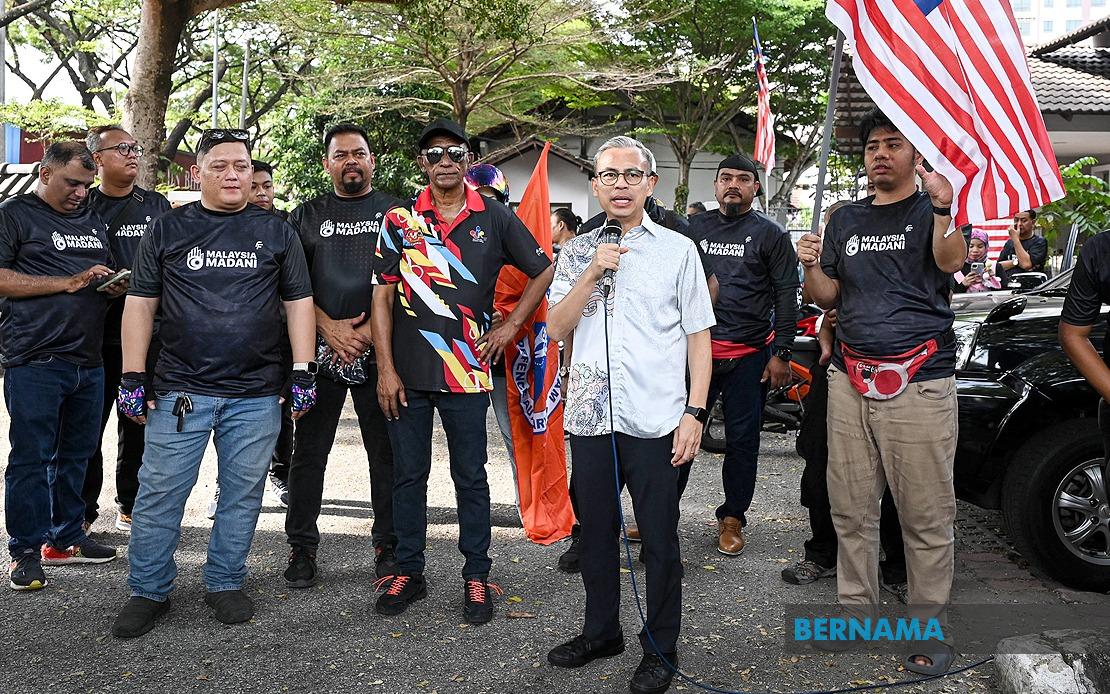
Almost 300 motorcyclists converged on the Lembah Pantai constituency in Kuala Lumpur on August 30 to participate in a festive convoy designed to celebrate Malaysia's approaching independence day while strengthening community bonds across the diverse neighbourhood. The Lembah Pantai Kembara Merdeka Convoy represented an attempt to harness the enthusiasm and visibility of a large group of riders to amplify messages of national pride and social cohesion just ahead of the Merdeka eve festivities.
Communications Minister Datuk Seri Fahmi Fadzil, who represents Lembah Pantai in Parliament, positioned the event as more than a symbolic parade through familiar streets. He framed the initiative as a deliberate strategy to bring together residents of different ethnic, religious and cultural backgrounds—a defining characteristic of the constituency—and demonstrate through tangible action how diversity strengthens rather than divides the community. The convoy thus served as both a patriotic observance and a practical statement about the value of multicultural cooperation at the grassroots level.
In his remarks at the programme, Fahmi emphasised that participants embodied the essence of Malaysian citizenship by transcending individual backgrounds to work toward shared national objectives. He highlighted that residents of Lembah Pantai benefit from genuine friendships across communal lines, and the convoy provided an occasion to formalise and celebrate these existing social bonds rather than merely preach unity in abstract terms. This grounding in lived community experience distinguished the event from top-down patriotic messaging that often rings hollow without local participation.
The logistics of the convoy reflected careful planning to maximise community engagement and symbolic impact. The route commenced at Taman Seri Sentosa and wound through five designated pit stops, including Kampung Pasir, IWK Eco Park, and Vista Angkasa in Kampung Kerinchi, ultimately concluding at Bangsar LRT station. This geographic distribution ensured that the convoy reached multiple neighbourhoods within the constituency rather than concentrating activity in a single location, thereby extending the initiative's visibility and inclusivity across the electoral division.
A particularly significant dimension of the convoy was the ceremonial distribution of Jalur Gemilang flags at each pit stop. These flags were handed to representatives from Resident Representative Councils and local community organisations, serving as symbolic transmission of patriotic responsibility from the riding community to established grassroots institutions. The gesture formalised a transfer of national spirit and suggested that patriotism should flow through multiple channels and leadership structures within society.
For Fahmi, the event represented part of a broader vision for Lembah Pantai that extends beyond single-day celebrations. In his concluding remarks, he expressed determination to sustain the friendships and collaborative spirit forged during the convoy through ongoing programming and community initiatives. He invited continued participation in future activities spanning assistance programmes, charitable contributions, and additional national celebrations beyond Merdeka, positioning the constituency as a site of continuous community development rather than episodic enthusiasm.
The timing of the convoy, immediately preceding Merdeka celebrations, carried strategic significance within Malaysia's political calendar. August marks an intensifying period of national reflection on independence and collective identity, and localised events like the Lembah Pantai convoy operationalise these broader sentiments at the neighbourhood scale where residents experience them most concretely. By channelling motorcycle enthusiasts into a patriotic purpose, the initiative transformed a leisure activity into an instrument of social cohesion.
From a communications and political perspective, the convoy exemplifies how ministers increasingly attempt to build direct connections with constituents through participatory events rather than relying exclusively on traditional public addresses. The high visibility of nearly 300 motorcyclists travelling through familiar streets generates organic media coverage and social media engagement, amplifying the minister's message about unity far beyond those physically present at pit stops or the main programme site.
The Lembah Pantai initiative also reflects broader trends within Malaysian political leadership to emphasise interfaith and intercommunal harmony as a central pillar of governance. In a context where social media can rapidly amplify divisions and international observers scrutinise Malaysia's handling of diversity, local demonstrations of genuine community cooperation provide meaningful counternarratives grounded in tangible action rather than rhetoric alone.
Looking forward, the success of the Lembah Pantai Kembara Merdeka Convoy may encourage similar constituency-level initiatives across Malaysia, particularly in urban areas with significant demographic diversity. The model of leveraging community enthusiasm—in this case, a shared passion for motorcycling—to achieve patriotic and social objectives offers a replicable framework for other representatives seeking to strengthen local bonds while celebrating national occasions.

