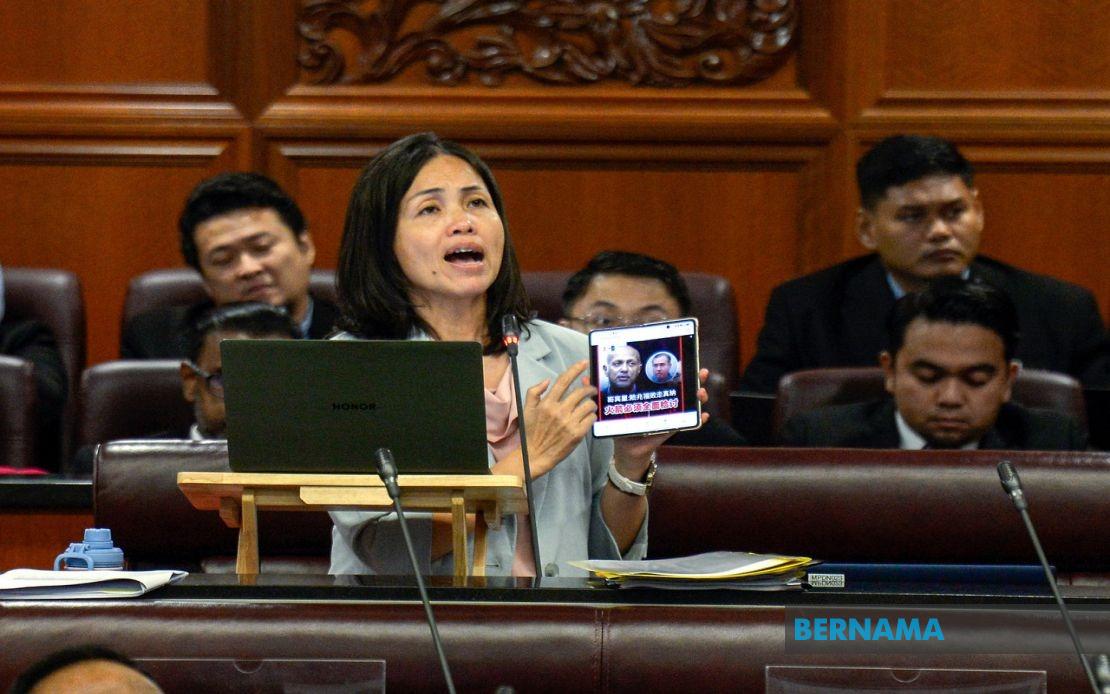
The scale of online fraud content proliferating across social media platforms in Malaysia has reached alarming proportions, with nearly 100,000 scam-related posts removed from various platforms during the opening seven months of 2025 alone. Deputy Communications Minister Teo Nie Ching disclosed these figures during parliamentary proceedings in the Dewan Negara on August 3, emphasising that the volume of harmful content continues to accelerate despite intensified enforcement efforts. By July 31, Malaysian authorities had taken down 99,693 individual scam-related items, a figure that already surpasses the entire year's tally of 98,503 removals recorded in 2024, underscoring the mounting challenge posed by digital fraud networks.
The trajectory of online scam content removal paints a troubling picture of how rapidly this threat has mushroomed within Malaysia's digital ecosystem. Teo presented comparative data stretching back several years, revealing that in 2024, authorities removed 63,652 scam-related posts, while 2023 saw 6,297 takedowns and 2022 had merely 242 removals. The exponential increase across successive years—from hundreds in 2022 to nearly six figures in just seven months of 2025—demonstrates both the accelerating sophistication and scale of coordinated online fraud operations targeting Malaysian citizens. The Deputy Minister framed this disturbing escalation as a wake-up call for policymakers and enforcement agencies, characterising online safety as a domain demanding comprehensive government focus and strategic intervention.
The Communications and Multimedia (Amendment) Bill 2026, which passed the Dewan Negara by majority voice vote following deliberations among 15 senators, represents the government's legislative response to these mounting digital threats. The Bill introduces substantive amendments to Malaysia's communications regulatory framework, with particular emphasis on establishing clearer legal foundations for how authorities can address online harms. Among its key provisions is the National Universal Service Provision (NUSP) initiative, framed explicitly as a national security safeguard designed to ensure critical communication infrastructure remains protected from exploitation by criminal and hostile actors operating through digital channels. The legislation essentially provides the Malaysian Communications and Multimedia Commission (MCMC) with reinforced statutory authority to implement and oversee these security-focused interventions.
Crucial to the Bill's architecture is the empowerment it grants to the Communications Minister to direct MCMC to support initiatives relating to network service usage and applications underpinning the NUSP framework. This centralised authority mechanism reflects a deliberate policy choice to concentrate decision-making regarding digital security matters within specified government bodies, potentially streamlining responses to emerging threats. However, the legislation also incorporates safeguards intended to address accountability concerns. Teo emphasised that any party adversely affected by MCMC directives or decisions retains the right to file appeals before a dedicated Appeals Tribunal established under the existing Communications and Multimedia Act 1998. The tribunal operates under the chairmanship of a High Court judge, providing judicial oversight at an intermediate level, with further recourse available through judicial review proceedings if parties dispute the tribunal's determination.
Senators engaged in the parliamentary debate raised substantive concerns regarding the balance between security imperatives and governance transparency. Senator Datuk Seri Prof Dr Noor Inayah Ya'akub stressed that determinations affecting national security cannot rest on ambiguous foundations, insisting instead that each ministerial decision must satisfy clearly articulated criteria and parameters open to scrutiny. This intervention reflected broader anxiety among legislators about preventing potential government overreach through vague or discretionary application of new security powers. The Senator's position underscored the necessity for measurable, objective benchmarks that distinguish legitimate security measures from arbitrary regulatory actions, ensuring that executive authority remains tethered to transparent legal standards comprehensible to both regulated entities and the public.
Senator Sheikh 'Umar Bagharib Ali approached the Bill from a different analytical angle, characterising Malaysia's communications infrastructure as fundamental strategic national property underpinning both digital economic advancement and public protection. His remarks positioned communications regulation within the broader context of national development priorities, arguing that robust digital governance creates ecosystem conditions enabling economic growth while simultaneously protecting citizens from predatory fraud networks. Sheikh 'Umar articulated a vision wherein public confidence in government power—predicated on its fair, transparent, and lawful exercise—transforms ordinary citizens into active partners in collective security efforts. This framing suggests that heavy-handed enforcement divorced from transparent justification may paradoxically undermine security objectives by eroding the social trust necessary for effective public cooperation with regulatory authorities.
The Bill's passage through the Dewan Rakyat on July 15 preceded this Dewan Negara debate, indicating a relatively expedited legislative trajectory through parliament's bicameral process. The legislation comprises two substantive clauses, with the primary amendment modifying Section 202 of the Communications and Multimedia Act 1998 to furnish MCMC with enhanced legal grounding for supporting NUSP implementation. Rather than creating entirely novel regulatory authority, the amendment essentially clarifies and consolidates existing powers, providing more robust statutory foundation for actions Malaysian authorities increasingly undertake in response to escalating digital threats. This legislative approach suggests parliamentary confidence that existing regulatory structures, with modest clarification, suffice for contemporary security challenges.
The practical implications of these escalating scam removal figures extend beyond parliamentary statistics, affecting Malaysian households and businesses directly. The dramatic year-on-year increase in content removals reflects not merely enhanced enforcement capacity but fundamentally the proliferation of fraud operations targeting Malaysia's growing digital consumer base. As more Malaysians utilise social media platforms for commerce, banking, and social interaction, exposure to sophisticated fraud schemes intensifies correspondingly. The scams tracked by authorities encompass various criminal methodologies—investment fraud, impersonation, credential theft, and romance scams—each exploiting particular psychological vulnerabilities and technological affordances of social platforms. The concentration of removal efforts on social media suggests these platforms remain the primary vectors through which organised fraud networks target Malaysian consumers.
Regional dimensions of Malaysia's digital security challenges warrant consideration within broader Southeast Asian context. Multiple ASEAN members confront comparable online fraud epidemics, suggesting coordinated criminal operations exploit regulatory fragmentation across borders. Malaysian legislative and enforcement developments may establish precedents influencing regional approaches to digital security governance. The emphasis within parliamentary debate on transparency and accountability reflects evolving regional consciousness that security measures, however necessary, must incorporate institutional checks preventing governmental overreach. As Southeast Asian economies increasingly digitalise, jurisdictions must simultaneously strengthen defences against transnational fraud networks while protecting fundamental freedoms and due process rights that democratic institutions require.
Looking forward, the practical effectiveness of enhanced MCMC authority will depend substantially on implementation specifics and resource allocation decisions yet to be determined. The dramatic scaling of content removals—from 242 items in 2022 to nearly 100,000 within seven months of 2025—demonstrates that current approaches, despite intensification, struggle to match the pace at which fraud networks generate new content. This mismatch suggests that legislative amendments alone cannot address the underlying problem; technological investment, cross-platform coordination, and international cooperation regarding transnational fraud networks will prove equally essential. The government's challenge lies in simultaneously expanding enforcement capacity, maintaining transparency and accountability standards, and enlisting platform cooperation and public participation in collective security efforts. The Bill's passage represents necessary clarification of regulatory authority, yet resolving Malaysia's escalating digital fraud crisis will ultimately require sustained, multi-stakeholder commitment extending well beyond parliamentary legislation.

