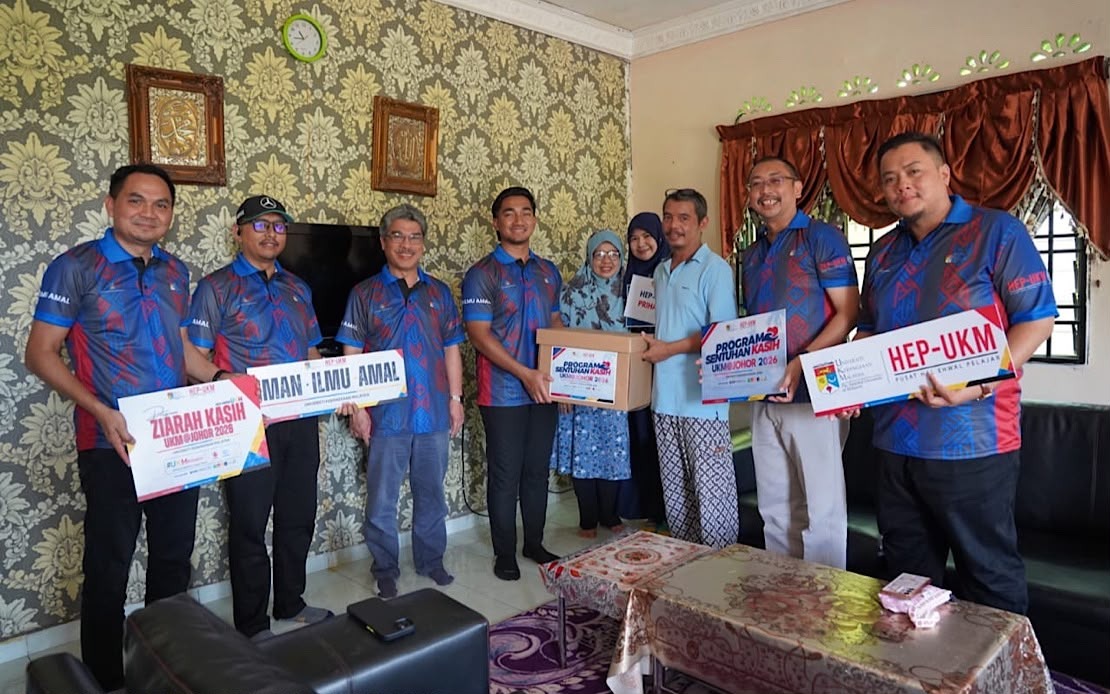
Universiti Kebangsaan Malaysia (UKM) has deepened its commitment to community service by mobilising nearly 1,000 residents across four locations in Johor for its latest Sentuhan Kasih outreach programme. Held over a weekend in late June, the initiative brought together university volunteers and local residents in Kota Masai, Pasir Gudang, Kampung Baru Sri Aman and Taman Jaringan, Skudai, under the unifying theme "From Campus to Community, Spreading Love and Service". The scale of participation reflects growing momentum in Malaysia's higher education sector towards embedding civic responsibility and social engagement as core institutional values, signalling a shift beyond traditional academic boundaries.
The programme engaged 78 members of the UKM community—students and staff—in executing a diverse portfolio of activities designed to address real community needs. Participants organised gotong-royong sessions focusing on environmental cleanliness and neighbourhood improvement, conducted "ziarah kasih" compassion visits to residents, provided mental health awareness and screening services, and facilitated sports and recreational activities. This multi-dimensional approach recognises that community service extends beyond one-off charitable gestures, instead positioning universities as anchors for sustainable neighbourhood development. The presence of Higher Education Minister Datuk Seri Dr Zambry Abd Kadir underscored governmental support for such initiatives, highlighting the alignment between institutional outreach and national policies promoting inclusive social development.
According to Assoc Prof Dr Darfizzi Derawi, director of UKM's Student Affairs Centre (HEP-UKM) and programme chairman, student engagement in community work provides invaluable experiential learning that complements formal academic instruction. He emphasised that universities risk intellectual isolation when confined strictly to campus operations, arguing instead that direct community engagement cultivates essential competencies—adaptability, communication, and soft skills—that classroom settings cannot fully replicate. This pedagogical philosophy reflects broader international trends in higher education, where service-learning has become recognised as a legitimate educational methodology rather than merely a corporate social responsibility obligation. For Malaysian universities competing in regional and global rankings, such integration of community engagement with curriculum demonstrates holistic approaches to graduate development.
The Johor deployment represents the initial phase of a broader expansion strategy. UKM has signalled intentions to scale the Sentuhan Kasih programme periodically across additional states, establishing a sustainable nationwide network of university-community partnerships. This phased geographic expansion suggests institutional confidence in the programme's sustainability and replicability, moving beyond pilot-project status towards embedding community engagement as a routine operational function. For regions beyond Johor, the template offers a scalable model adaptable to local contexts while maintaining consistency in core values and objectives. This systematic approach positions UKM not merely as a responsive institution but as a proactive architect of societal development channels.
Community feedback from Kota Delima Zone Leader Herman Ismadi Ismail corroborates programme success despite demographic challenges. The industrial character of participating areas means residents typically work weekends, reducing availability for community activities. Nevertheless, participation remained robust, indicating that effective outreach messaging and programme timing had overcome structural constraints. Ismail noted that residents gained tangible benefits from exposure to UKM's institutional identity, learning about the university's initiatives and educational opportunities available to their children. This visibility function proves particularly valuable for communities with limited higher education exposure, where university programmes often remain distant abstractions rather than accessible pathways. For Malaysian policy-makers focused on broadening access to tertiary education and reducing geographical disparities in educational opportunity, such initiatives serve instrumental functions beyond immediate service delivery.
UKM complemented its community-wide activities with targeted student welfare interventions, conducting familial support visits to seven student households in Tiram and Puteri Wangsa areas. This dual-track approach—simultaneous mass engagement and individual family support—reflects institutional recognition that student success depends not solely on academic provision but on stable home circumstances and family stability. By visiting student residences, UKM demonstrates that pastoral care extends beyond campus boundaries, acknowledging that financial strain and family circumstances often constrain academic performance as significantly as intellectual capacity. This holistic support framework aligns with growing research demonstrating that student retention and graduation rates improve substantially when institutions address socioeconomic barriers alongside academic challenges.
UKM Vice-Chancellor Prof Datuk Dr Sufian Jusoh contextualised the Sentuhan Kasih initiative within broader institutional philosophy emphasising holistic human capital development. His framing explicitly positions the university as simultaneously pursuing academic excellence and student wellbeing, rejecting false dichotomies between intellectual rigour and compassionate support. Jusoh characterised such programmes as investments extending beyond immediate financial assistance, viewing student welfare as foundational infrastructure enabling sustained academic engagement. This perspective resonates increasingly with international higher education discourse, where universities face reputational and competitive pressures to demonstrate social responsibility and contribute demonstrably to community wellbeing. Malaysian institutions positioning themselves as leaders in regional higher education compete partly through demonstrated commitment to values transcending narrow credentialism.
The programme's emphasis on mental health screening addresses a critical but often underserviced area of university and community health infrastructure. Mental health conditions frequently remain undetected in residential communities lacking healthcare access, and university students experience substantially elevated mental health challenges relative to general populations. By integrating screening into community engagement, UKM advances dual objectives: normalising mental health awareness within participating communities while extending university health resources beyond traditional campus constituencies. This approach responds to Malaysia's evolving public health priorities, where mental wellbeing increasingly features in national health frameworks alongside infectious disease control and chronic disease management.
The Sentuhan Kasih programme illustrates evolving institutional conceptions of what universities contribute to society beyond knowledge production and graduate training. As Malaysia competes for regional educational leadership and confronts persistent spatial inequalities in opportunity distribution, tertiary institutions increasingly function as community development anchors. UKM's model demonstrates that universities possess untapped capacity to mobilise human resources—student volunteers, staff expertise, institutional infrastructure—towards neighbourhood improvement. For policymakers designing higher education strategies, such examples provide evidence that institutional missions can simultaneously advance academic excellence and community development, creating virtuous cycles where students gain experiential learning while communities access university-based expertise and resources.
The initiative's success also reflects deepening recognition that effective community engagement requires sustained institutional commitment rather than episodic charitable endeavours. By establishing clear governance structures, allocating dedicated staff leadership, and planning systematic geographic expansion, UKM signals that Sentuhan Kasih functions as core institutional responsibility rather than peripheral public relations exercise. This structural embedding increases probability that the programme survives leadership transitions and budget cycles, establishing it as permanent feature of institutional identity. For other Malaysian universities observing UKM's approach, the organisational architecture offers replicable templates for scaling community engagement while maintaining quality and consistency. As higher education increasingly faces expectations to justify public investment through demonstrable community benefit, institutions embracing systematic, sustained engagement models position themselves favourably within competitive institutional landscapes.

