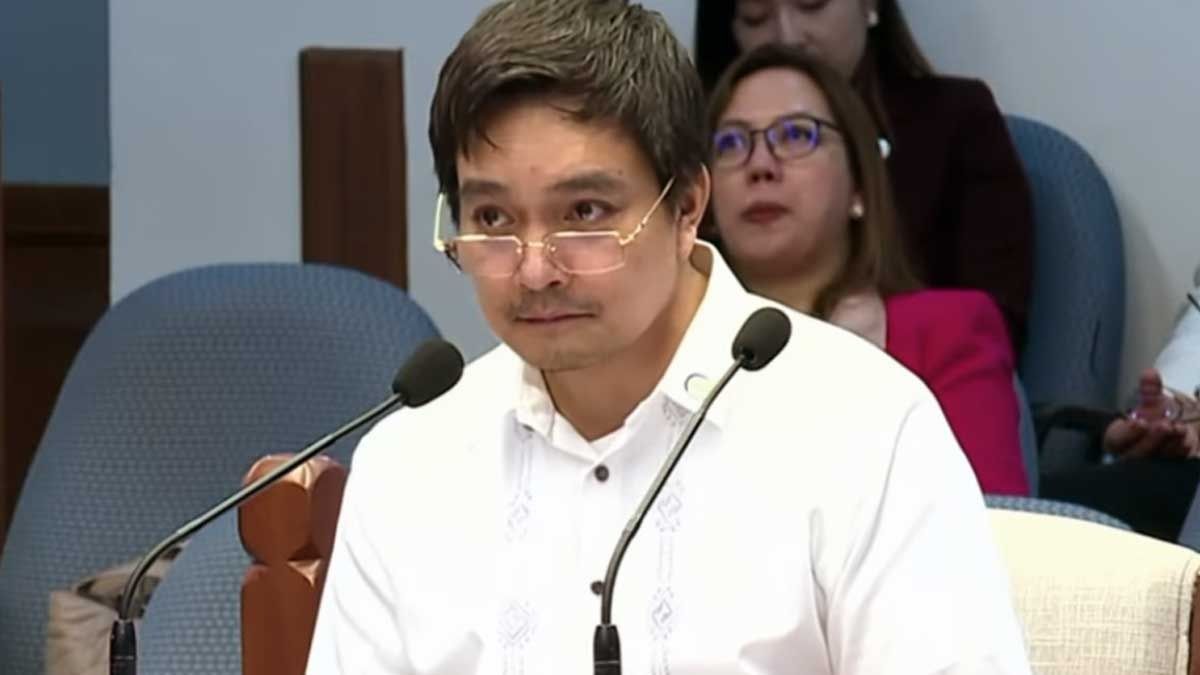
The Philippines' case against Vice President Sara Duterte for alleged assassination threats took a significant evidentiary turn on Tuesday when the National Bureau of Investigation's regional director conceded he possessed no personal knowledge of her supposedly hiring someone to murder President Ferdinand Marcos Jr., yet insisted the investigation had uncovered material linking her to such a plot. The admission underscores the largely circumstantial nature of the charges against the nation's second-highest official, even as prosecutors push forward with their impeachment proceedings.
Jeremy Lotoc, who oversaw the NBI's Crime Division investigation into Duterte's public remarks made during an online media briefing on November 23, 2024, found himself walking a careful line during cross-examination. When defence counsel Mark Vinluan directly questioned whether Lotoc had witnessed or obtained evidence of Duterte actually engaging someone to kill the president, first lady Liza Araneta-Marcos, and former House Speaker Martin Romualdez, Lotoc's response revealed the investigative gap. He acknowledged his lack of direct knowledge but pivoted to the gathered evidence, suggesting the investigation had uncovered enough circumstantial material to support what amounts to a serious accusation against a sitting vice president.
The exchange highlights a fundamental legal challenge facing the impeachment proceedings: the distinction between what someone has said publicly and what evidence proves they have done. Duterte's killing remarks were captured on video during the November briefing and subsequently became the fourth article of impeachment filed against her. However, translating her words into proof of actual criminal conspiracy—the hiring of an assassin—represents a substantially higher evidentiary burden. Lotoc's testimony demonstrates that despite months of investigation, the NBI has not apparently uncovered direct evidence, such as communications between Duterte and a putative assassin, financial transactions, or witness testimony from someone directly involved in such a plot.
The presiding officer, Senator Francis "Chiz" Escudero, intervened repeatedly during the cross-examination as tensions mounted between defence and prosecution counsels. When the questioning devolved into semantic disputes about whether Lotoc's acknowledgment of Duterte's stated utterances constituted an admission that her corruption allegations against certain lawmakers were factually true, Escudero pointedly reminded both sides that the proceedings were not a "college debate." This intervention proved telling: the impeachment trial, despite its gravity and the high office at stake, has revealed procedural vulnerabilities and a tendency toward rhetorical scoring rather than systematic fact-finding.
When Senate President Sherwin Gatchalian pressed Lotoc on what specific evidence demonstrated Duterte's capability to carry out assassination threats, the witness initially argued that her position as vice president itself indicated capacity. Gatchalian quickly challenged this reasoning, correctly noting that holding high office does not automatically translate to possessing the ability or intent to commit murder. The exchange forced Lotoc to reach for additional justification, ultimately pointing to the legal troubles facing Duterte's father, former President Rodrigo Duterte, who faces International Criminal Court proceedings concerning alleged extrajudicial killings during the drug war. Lotoc suggested that exposure to her father's background in controversial security operations provided her the capability to orchestrate violence.
This reasoning represents a significant logical leap. While Rodrigo Duterte's administration oversaw thousands of drug war deaths and faces ICC scrutiny, familial connection to such events does not constitute direct evidence that Sara Duterte herself has either the operational capacity or the intent to hire professional assassins. The prosecution appears to be constructing an inferential chain: high office plus controversial family history equals capability for murder-for-hire. Malaysian and regional observers familiar with rule-of-law concerns in Southeast Asia will recognize how such reasoning, however understandable as circumstantial suspicion, falls short of the rigorous evidentiary standards that should attend impeachment proceedings against a sitting head of state's constitutional successor.
The impeachment trial has taken place against a backdrop of intense political friction between Duterte and the Marcos administration. The two once formed a political alliance but have since become bitter antagonists, with Duterte's resignation from the Cabinet last year marking a formal rupture. Her public statements about readying assassins to kill Marcos, his wife, and Romualdez were made during this period of acute tension, raising questions about whether her remarks represented genuine threats or hyperbolic political theatre characteristic of her public persona. The NBI's investigation, conducted in this highly polarized environment, operates under scrutiny regarding whether the probe reflects genuine criminal investigation or serves as a prosecutorial instrument of political conflict.
For Southeast Asian regional stability, the proceedings carry implications extending beyond factional Philippine politics. If a sitting vice president can be removed through impeachment proceedings grounded substantially in circumstantial evidence and inferential reasoning rather than direct proof of criminal conspiracy, the precedent affects how accountability mechanisms function across democratic systems in the region. Malaysia, Indonesia, Thailand, and other nations with impeachment or removal procedures face periodic questions about whether such mechanisms serve genuine constitutional protection or facilitate factional removal of disfavoured officials. The Duterte case illustrates how even grave allegations—conspiracy to murder—can become vehicles for political contestation when evidentiary standards remain unclear.
Lotoc's testimony also exposed the investigative limitations the NBI apparently faces in substantiating the core allegation. Several months have elapsed since Duterte's November statements, yet the prosecution has not apparently uncovered the decisive evidence that would definitively establish a murder-for-hire conspiracy: communications between Duterte and a purported assassin, intermediaries, financial arrangements, or corroborating testimony from those directly involved in planning. Instead, the case rests on her public statements, interpreted as evidence of intent, combined with circumstantial factors regarding her position and family history. Philippine legal tradition, like most common-law influenced systems, requires more concrete evidence to sustain serious criminal charges.
The defence strategy of pressing for explicit admissions regarding what Lotoc did not personally witness proved effective in establishing the investigative gaps. By forcing Lotoc to acknowledge repeatedly that he possessed no personal knowledge of the alleged conspiracy despite his investigative role, the defence highlighted the circumstantial character of the evidence. This approach may influence how senators ultimately evaluate the impeachment articles, particularly those more legally cautious or concerned with establishing clear evidentiary precedent. Senate votes on impeachment, unlike criminal trials, involve both legal and political calculation, but even politically motivated senators may hesitate to remove a vice president on grounds that would be insufficient in criminal court.
The broader implications for Philippine governance relate to vice-presidential succession and constitutional stability. Should the impeachment proceed to removal, despite evidentiary gaps, it would establish that a vice president can be removed on politically charged accusations without the level of proof required in criminal proceedings. Conversely, acquittal in the face of the vice president's inflammatory public statements might suggest the impeachment process is inadequate for addressing serious threats from sitting officials. Either outcome carries consequences for how the Philippines manages future conflicts between constitutional offices and how the region's largest English-speaking democracy models accountability mechanisms that balance genuine constitutional protection with protection against factional abuse.

