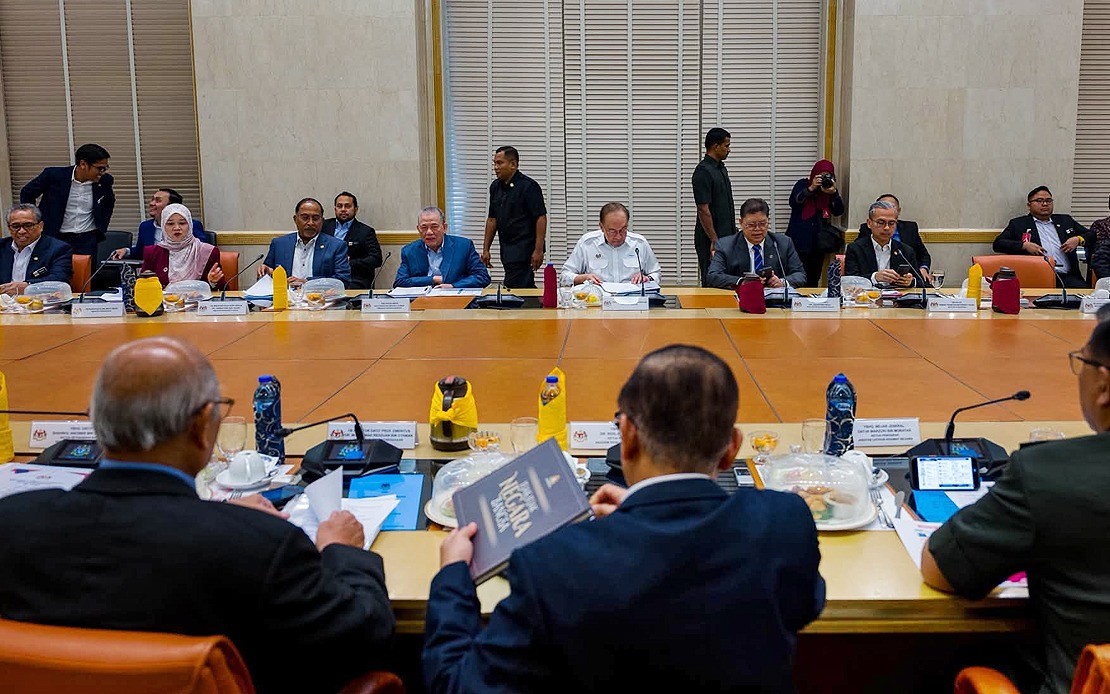
Prime Minister Datuk Seri Anwar Ibrahim has called for sustained efforts in promoting nationhood values as a cornerstone of Malaysia's development agenda, arguing that such principles are essential to building a cohesive society of individuals anchored in strong identity, ethical conduct and moral conviction. Speaking following a Dewan Kenegaraan Board of Governance Meeting he chaired, the Prime Minister stressed that without continuous reinforcement of these values at all levels of society, the nation risks losing the civic consciousness required for long-term stability and progress.
Anwar's remarks reflect mounting concern within government circles about maintaining social cohesion in an increasingly diverse and digitally connected Malaysia. The emphasis on nationhood values—encompassing shared commitment to the constitutional framework, multicultural harmony and collective national purpose—represents an attempt to counterbalance centrifugal forces that can fragment societies along ethnic, religious or ideological lines. For Malaysian policymakers, this framing suggests that institutional reforms and economic initiatives alone are insufficient; cultural and values-based alignment must run parallel to structural nation-building efforts.
The Prime Minister elaborated that fostering love for the country requires deliberate cultivation of a values-based society, one in which citizens internalise principles that transcend individual or community interests. This philosophical positioning aligns with Malaysia's constitutional DNA, particularly the social contract embodied in the Federal Constitution, which was designed to accommodate pluralism while maintaining national unity. However, Anwar's emphasis indicates recognition that this original compact requires periodic renewal and re-articulation to remain meaningful for successive generations.
During the governance meeting, Anwar was briefed on the National Service Training Programme (PLKN), which has generated encouraging outcomes and received favourable assessments from both programme participants and their families. The PLKN, designed to expose young Malaysians to military discipline and civic education, represents a practical vehicle for translating nationhood values into lived experience. The programme operates on the premise that shared training, physical hardship and structured exposure to diverse cohorts can forge emotional and psychological bonds that transcend pre-existing social divisions.
Anwar emphasised that the PLKN should be progressively enhanced as a mechanism for cultivating robust identity, discipline and resilience throughout the youth population. This recommendation signals that the government views the programme not merely as a logistics or recruitment instrument, but as a nation-building initiative with strategic importance. For regional observers, Malaysia's investment in such programmes stands in contrast to several neighbouring countries that have deprioritised or downsized equivalent schemes, suggesting different assessments of their utility.
The governance meeting also examined the Nationhood Fellows initiative, a platform designed to convene respected personalities, former statesmen and intellectual leaders from disparate backgrounds to pool expertise and ideas in service of the nation-building agenda. This mechanism recognises that state institutions alone cannot generate the moral authority or creative thinking required to articulate and sustain shared nationhood values. By bringing together figures from business, academia, civil service and the arts, the government aims to create what might be termed a values-consensus among elite stakeholder groups, whose views subsequently permeate downward through their respective communities and organisations.
The strategic emphasis on nationhood values occurs against a backdrop of intensifying political polarisation and identity-based contestation in Malaysia. Religious sensitivities, questions around bumiputera policy, concerns about constitutional interpretation, and debates over the role of traditional institutions have all become flash points in recent political discourse. By elevating nationhood values as a governing priority, Anwar appears to be attempting to establish a common foundational language that can frame these specific disputes within a broader commitment to national unity and constitutional governance.
For Malaysian businesses and civil society, the Prime Minister's focus carries practical implications. Organisations may increasingly be expected to align their programmes, communications and practices with officially endorsed nationhood values, creating both opportunities for those whose missions are consonant with this agenda and potential constraints for those pursuing divergent priorities. Educational institutions in particular face an implicit directive to prioritise values inculcation alongside academic curriculum, a shift that requires pedagogical investment and teacher training.
Regionally, Malaysia's emphasis on institutional nation-building through values cultivation offers lessons to other Southeast Asian democracies wrestling with diversity management and social fragmentation. Countries like Indonesia and the Philippines grapple with analogous challenges, though their constitutional and institutional frameworks differ markedly from Malaysia's. The Malaysian model—centring on constitutional nationalism, institutional discipline and elite consensus-building—represents one approach within the region's varied repertoire of nation-state consolidation strategies.
Looking forward, the success of initiatives such as the PLKN and the Nationhood Fellows programme will partly depend on whether their outputs translate into measurable changes in civic behaviour, interethnic relations and institutional trust. Polling data, educational outcomes and social cohesion metrics will ultimately determine whether Malaysia's values-based nation-building approach achieves its intended effects or remains largely confined to political rhetoric and ceremonial gestures.

