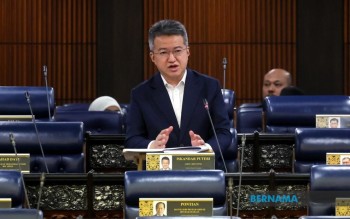
The National Trust Fund Bill 2026 entered Parliament for its first reading today, marking the beginning of Malaysia's push to establish a structured mechanism for accumulating and managing national wealth across generations. Deputy Finance Minister Liew Chin Tong introduced the legislation in the Dewan Rakyat, with the second reading already scheduled for the current parliamentary sitting, indicating government momentum behind the proposal. The bill seeks to create the National Trust Fund (KWAN) and establish the National Trust Fund (Incorporated) as the administrative entity responsible for overseeing the fund's operations, investments, and long-term stewardship.
The conceptual foundation of this legislation reflects growing awareness among policymakers about the need for sustained financial reserves that transcend the typical budget cycles. Rather than allowing resource revenues and fiscal surpluses to be spent immediately, the National Trust Fund would institutionalise savings discipline, ensuring that contemporary policy decisions do not deplete resources needed by future taxpayers and citizens. This approach mirrors international precedents such as Norway's Government Pension Fund Global and other sovereign wealth vehicles that have successfully insulated national economies from commodity price volatility and unsustainable spending patterns.
Under the proposed framework, the Federal Government faces mandatory contributions structured across three distinct mechanisms. The legislation requires annual allocations equivalent to at least 0.1 per cent of projected federal revenue, establishing a baseline contribution regardless of economic conditions. Additionally, at least two per cent of all dividends received from Petroliam Nasional Bhd must flow into the fund, directly linking Malaysia's petroleum wealth to long-term capital accumulation. The third requirement captures at least two per cent of export duties collected from depleting natural resources—such as tin, timber, and other minerals—after deducting any duty allocations designated for individual states, thereby incorporating resource nationalism considerations into the fund's revenue base.
This three-pronged contribution system carries significant implications for Malaysia's fiscal architecture. By anchoring contributions to specific revenue streams rather than discretionary allocations, the bill attempts to create a structural impediment against political pressures to redirect these funds toward immediate spending priorities. The minimum percentages function as legislative guardrails, preventing future administrations from easily dismantling the scheme through routine budgetary adjustments. However, the use of "minimum" thresholds theoretically permits larger contributions during periods of exceptional revenue growth, though implementation details remain unclear from the bill's current framing.
States possessing petroleum or mineral resources gain opportunities to contribute voluntarily, recognising the federal nature of Malaysia's resource distribution and providing subnational governments with agency in national wealth accumulation. This provision acknowledges the constitutional framework whereby petroleum and certain resources fall under state jurisdiction, while attempting to create incentive structures encouraging state participation in long-term wealth management rather than short-term exploitation. The voluntary nature, however, may create disparities in contributions across states depending on their fiscal situations and governance priorities.
Operational governance centres on the National Trust Fund (Incorporated) board, which assumes responsibility for formulating a strategic asset allocation framework that articulates the fund's long-term investment philosophy. This requirement introduces discipline into investment decision-making, obligating the board to establish predetermined allocation targets across asset classes rather than permitting ad-hoc investment choices. Such an approach reduces susceptibility to cyclical market pressures and ensures consistency with multigenerational wealth-building objectives. The board must maintain comprehensive reporting mechanisms, furnishing the Finance Minister with regular returns, financial accounts, and activity reports, establishing accountability structures between the fiduciary entity and elected government representatives.
The fund's permissible expenditures focus primarily on sustaining its operational capacity and generating returns. Moneys may be deployed for investment purposes—the core function of any sovereign wealth mechanism—as well as compensating board members, officers, and support staff. Administrative costs, management expenses, and investment-related expenditures all draw from fund resources, creating inherent tensions between maximising net capital accumulation and maintaining necessary operational infrastructure. The bill's structure does not explicitly address spending policies that might distribute fund returns to citizens or direct capital toward specific national projects, leaving such consequential decisions to future regulatory development.
The prescribed implementation timeline grants the Finance Minister discretionary authority to designate the operational commencement date through Gazette notification. This flexibility permits careful preparation of administrative systems, regulatory frameworks, and governance protocols before the fund formally commences operations. However, the absence of specific deadlines in the current framing may inadvertently create opportunities for indefinite postponement, particularly if subsequent administrations prioritise alternative fiscal agendas. Malaysian observers will likely scrutinise whether specific timeframes emerge during the second reading debate.
For Malaysian and Southeast Asian stakeholders, this legislation represents a significant policy shift toward institutional mechanisms that privilege intergenerational equity over immediate political cycles. The fund establishes precedent for treating resource revenues as capital to be preserved rather than income to be spent, an important distinction as Malaysia navigates demographic transitions, climate imperatives, and shifting global commodity markets. The framework potentially influences regional conversations about natural resource management, particularly across ASEAN nations grappling with similar questions about balancing development needs against long-term sustainability.
The bill's passage would position Malaysia among peers implementing sovereign wealth strategies, though the magnitude and efficacy of such funds depend entirely on execution discipline. Successful implementation requires genuine political commitment to respecting contribution mandates even during fiscal stress, maintaining investment discipline across economic cycles, and resisting pressure to raid fund balances for immediate priorities. Parliamentary scrutiny during the second reading will likely focus on governance safeguards, contribution adequacy, and spending restrictions—factors ultimately determining whether the National Trust Fund becomes a meaningful mechanism for Malaysian prosperity or merely another statutory body with limited practical impact on national wealth trajectories.

