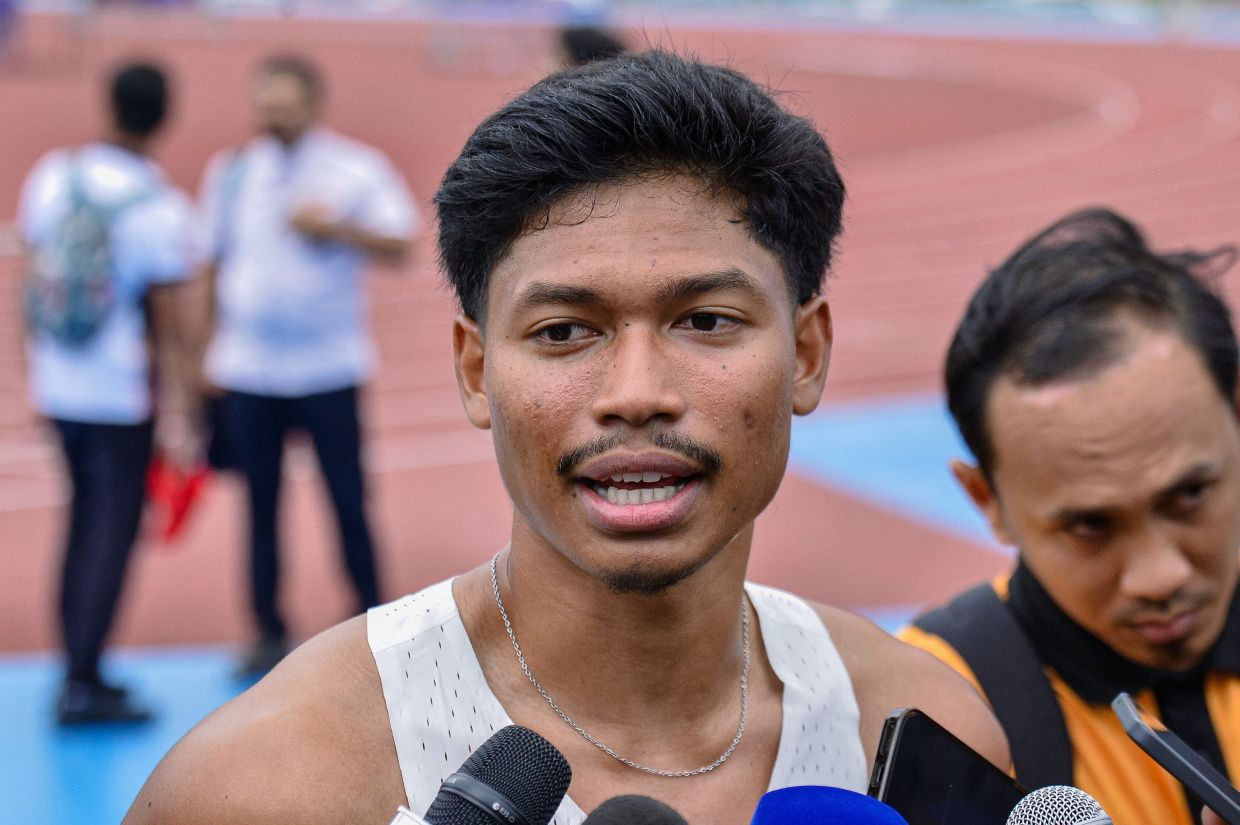
National sprinter Mohd Azeem Fahmi is transitioning into the next phase of his athletic and academic career by enrolling for postgraduate studies at Universiti Malaya, Malaysia's premier research institution. The 21-year-old athlete, who recently concluded his undergraduate programme at Auburn University in Alabama, has secured a pathway to pursue a master's degree at UM, marking a significant development in his professional trajectory as both a competitor and scholar.
During a formal visit to the university's administrative headquarters in Petaling Jaya, Azeem was received by vice-chancellor Prof Datuk Seri Dr Noor Azuan Abu Osman, signalling institutional recognition of the athlete's potential and commitment to fostering excellence in sports education. The meeting underscored UM's deliberate strategy to attract and retain elite athletes within its academic ecosystem, demonstrating how Malaysia's leading universities are positioning themselves as hubs where sporting achievement and intellectual advancement can flourish in tandem. The presence of senior academic figures, including Associate Prof Dr Zulkarnain Jaafar from the Faculty of Sports and Exercise Sciences and Sports Centre director Afizal Abu Othman, highlighted the university's comprehensive approach to supporting athlete-scholars.
Azeem's decision to pursue advanced qualifications domestically reflects a broader strategic pivot among Malaysian athletes who are recognising the value of combining international training exposure with locally-anchored higher education. His two-year tenure at Auburn University—where he studied exercise physiology and kinesiology under the tutelage of renowned coach Ken Harnden—provided him with world-class athletic development alongside rigorous scientific training methodology. By returning to Malaysia for his master's studies, Azeem exemplifies an emerging model where athletes leverage international expertise while maintaining their competitive base within Southeast Asia's competitive landscape.
UM has cultivated a formidable reputation as an incubator for athletic excellence, evidenced by its impressive roster of sports alumni who have achieved international prominence. Diving duo Datuk Pandelela Rinong and Ooi Tze Liang established themselves as Olympic contenders while completing their degrees at the institution, demonstrating that elite-level training and rigorous academic demands need not be mutually exclusive. Diver Bryan Nickson Lomas similarly leveraged UM's facilities and academic offerings to pursue his diving career concurrently with formal study, providing a compelling precedent for athletes like Azeem. Badminton player Vivian Hoo, who graduated with a Bachelor of Sports Science degree in 2019, represents another example of how the university has successfully integrated athletes into mainstream academic pathways while maintaining their competitive edge in national and international competitions.
Azeem's recent performance at the Malaysian Open at Universiti Putra Malaysia Serdang demonstrates that his transition from American university athletics to the domestic competitive calendar has been seamless and productive. His gold medal victories in both the individual 100 metres sprint and the men's 4x100 metres relay—achieved in partnership with sprinters Danish Iftikhar Mohd Roslee, Pengiran Aidil Auf Hajam, and Mohd Armin Zahryl—indicate that his competitive sharpness remains at peak levels despite the logistical adjustments of relocating back to Malaysia. These performances provide tangible evidence that his international training regimen has yielded substantive improvements in speed and technical execution.
The institutional commitment expressed by UM's vice-chancellor to facilitate an optimal pathway for Azeem's master's studies signals a deeper investment in developing dual-track professionals who can contribute to Malaysia's athletic competitiveness while advancing academic research in sports science. This approach aligns with contemporary international best practices, where elite athletes increasingly pursue advanced degrees in sports-related disciplines to deepen their understanding of training science, biomechanics, and athlete development. For Azeem, a master's programme in fields related to his undergraduate specialisation could equip him with expertise that extends beyond his individual competitive lifespan, potentially positioning him for roles in coaching, sports science research, or athletic administration.
The strategic timing of Azeem's return to Malaysia merits analytical consideration within the broader context of Southeast Asian athletics development. As regional nations intensify investment in sports infrastructure and talent pathways leading to major competitions including the Olympic Games and Southeast Asian Games, athletes who combine international competitive experience with locally-grounded academic credentials become particularly valuable. Azeem's profile—refined through training under Ken Harnden, one of America's most respected sprint coaches—combined with advanced qualifications from Malaysia's leading university, positions him as a potential bridge between international best practices and domestic athlete development systems.
UM's proactive engagement with Azeem also reflects institutional recognition that sports scholarship has evolved significantly beyond conventional athletic department models. Contemporary sports universities worldwide are increasingly emphasising the intellectual architecture underlying athletic performance, with programmes in exercise science, sports psychology, performance analysis, and sports management becoming integral to athlete development rather than supplementary. By welcoming Azeem into a structured master's pathway, UM is signalling its commitment to this evolved paradigm, where athletes are cultivated as informed, scientifically-literate professionals rather than merely performers competing on track or field.
Looking forward, Azeem's trajectory will merit close observation by sports administrators and athletic talent scouts across Malaysia and the broader Southeast Asian region. His synthesis of international training exposure, competitive success at regional level, and commitment to advanced formal education demonstrates a model that other emerging athletes might profitably emulate. The next phase of his academic journey at UM will be critical in determining whether he can maintain elite competitive performance while pursuing rigorous postgraduate study—a balancing act that requires sophisticated institutional support, personal discipline, and careful calibration of training and study commitments. The university's explicit commitment to facilitating this pathway suggests that UM is prepared to provide the necessary scaffolding for Azeem to succeed in both domains simultaneously.