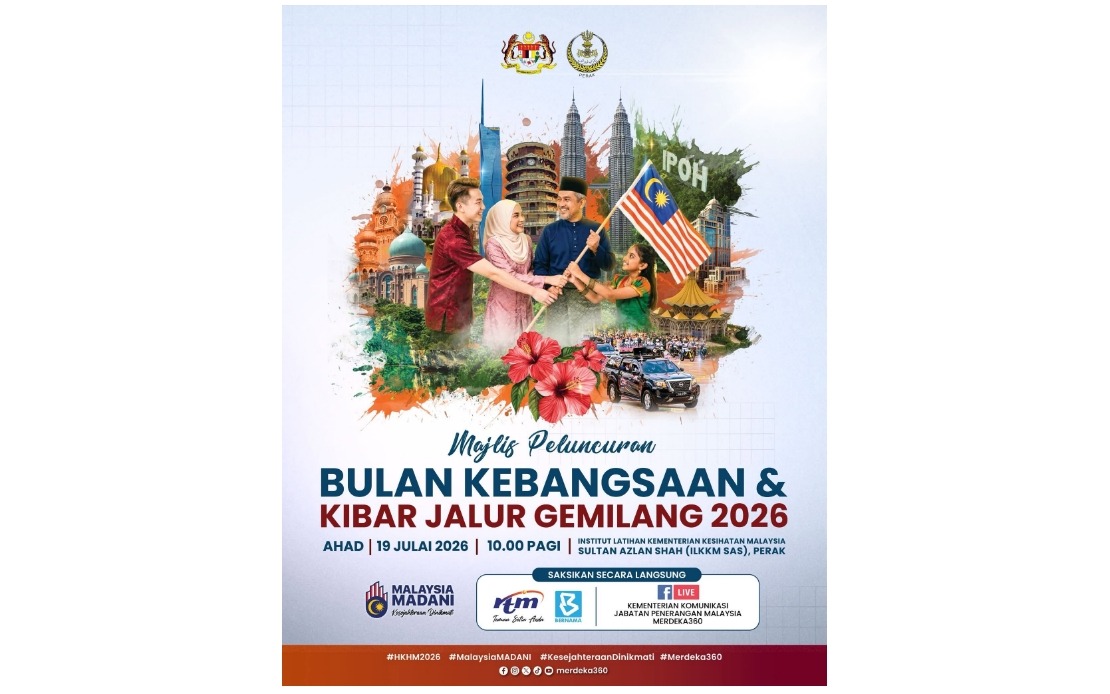
Malaysia's 2026 National Month campaign will formally commence on July 19 with a launch ceremony hosted at Institut Latihan Kementerian Kesihatan Malaysia Sultan Azlan Shah in Perak, signalling the beginning of nationwide celebrations that will culminate in the country's dual independence observances in August and September. The event, scheduled to begin at 10 am, will reach audiences across multiple platforms including traditional broadcast media and digital channels, demonstrating the government's commitment to ensuring widespread participation in the patriotic initiative.
The multimedia approach to broadcasting reflects an evolving strategy in how Malaysia communicates its national messaging. Radio Televisyen Malaysia and BERNAMA TV will carry the ceremony live, while simultaneous streaming via Facebook Live across official government platforms aims to capture younger demographics and those preferring digital engagement. This multi-channel rollout underscores recognition that citizens now consume information through diverse sources, and national campaigns must meet audiences where they are rather than relying solely on conventional broadcasting.
Central to the 2026 campaign is the theme "Malaysia MADANI: Kesejahteraan Dinikmati," a phrase emphasising that the nation's prosperity should be tangibly experienced by all Malaysians equitably. This thematic choice carries significant weight in the current national discourse, as it explicitly connects the government's policy framework with the everyday welfare of ordinary citizens. The emphasis on shared enjoyment of prosperity suggests an acknowledgment of growing concerns about inequality and accessibility of economic benefits across different segments of society.
The Malaysia MADANI framework itself, grounded in principles of justice, humanity, and public welfare, has become the overarching reference point for government initiatives extending beyond ceremonial celebrations. By retaining the Malaysia MADANI logo as the official emblem through 2026, the administration signals consistency in its policy messaging and attempts to build cumulative recognition of its governance philosophy. This branding continuity allows government messaging to reinforce core values across multiple campaigns and fiscal periods.
The actual National Day celebration on August 31 will take place at Dataran Putrajaya and is being deliberately scaled as a "modest yet vibrant" event, language suggesting an intentional recalibration of celebration style toward sustainability and accessibility rather than grandiose displays. This characterisation may reflect budgetary considerations, environmental consciousness, or a deliberate shift away from previous approaches. Simultaneously, Malaysia Day 2026 on September 16 will be hosted in Sarawak, continuing the established rotation of hosting states and reinforcing the federal nature of Malaysia's national identity by ensuring different regions take turns in the spotlight.
Communications Minister Datuk Seri Fahmi Fadzil's earlier announcement regarding these logistics establishes clear governmental ownership of the celebrations and provides concrete dates and locations that allow citizens and organisations to plan their participation. The minister's public statements serve as official direction-setting for how various government agencies and private entities should coordinate their own patriotic activities during the National Month period.
The campaign includes seven distinct supporting programmes designed to engage Malaysians across different interests and demographics. Kembara Bahasa HKHM addresses linguistic and cultural dimensions of national identity, while Quran Hour reflects Malaysia's Muslim-majority character and religious traditions. Ambang Merdeka appears to focus on pre-independence historical consciousness, and Merdeka Countdown creates anticipatory engagement. The RIUH Merdeka programme likely emphasises celebration and joy, whereas the National Statesmen Commemoration Ceremony anchors the campaign to historical figures who shaped modern Malaysia.
The Merdeka360 platform serves as the central digital hub for the 2026 campaign, offering downloadable official logos, patriotic music, and promotional materials. This approach democratises campaign participation by providing free resources to community organisations, schools, businesses, and individuals who wish to contribute to National Month celebrations. The provision of pre-designed materials reduces barriers to participation while maintaining consistent messaging and visual identity across diverse groups and locations.
For Malaysian regions and communities, the decentralised nature of these supporting programmes across the nation means that National Month 2026 will unfold through multiple simultaneous activities rather than a single focal point. This geographical distribution allows smaller towns and rural areas to participate meaningfully rather than being relegated to spectators of events happening in major urban centres. The emphasis on nationwide activities reflects lessons learned from previous years' celebrations regarding the importance of inclusive engagement.
The pre-launch campaign messaging emphasising "ignite the spirit of patriotism" identifies the core objective beyond ceremonial formalities. Government communications frame National Month not merely as a calendar observance but as an intentional effort to strengthen national consciousness and solidarity. This framing becomes particularly relevant in a multi-ethnic, multi-religious society where national identity must be continuously affirmed and strengthened through collective participation and shared narratives.
From a Southeast Asian perspective, Malaysia's approach to national celebrations offers insights into how diverse federations manage unity while respecting regional distinctiveness. The hosting of Malaysia Day 2026 in Sarawak rather than peninsular Malaysia demonstrates sensitivity to East Malaysian states' historical experiences and their essential role in the Malaysian federation. This rotational approach to major celebrations sends regional balance messages that extend beyond symbolic gestures to procedural recognition of shared national ownership.
As Malaysia enters the final phase of planning for these 2026 celebrations, the comprehensive nature of the campaign—spanning media, community activities, thematic consistency, and geographic inclusivity—suggests a maturing approach to national messaging. The balance between modest celebration and vibrant engagement, between top-down government direction and grassroots participation opportunities, and between honouring historical consciousness and projecting contemporary governance priorities reflects nuanced understanding of how modern nations sustain patriotic sentiment in increasingly complex societies.

