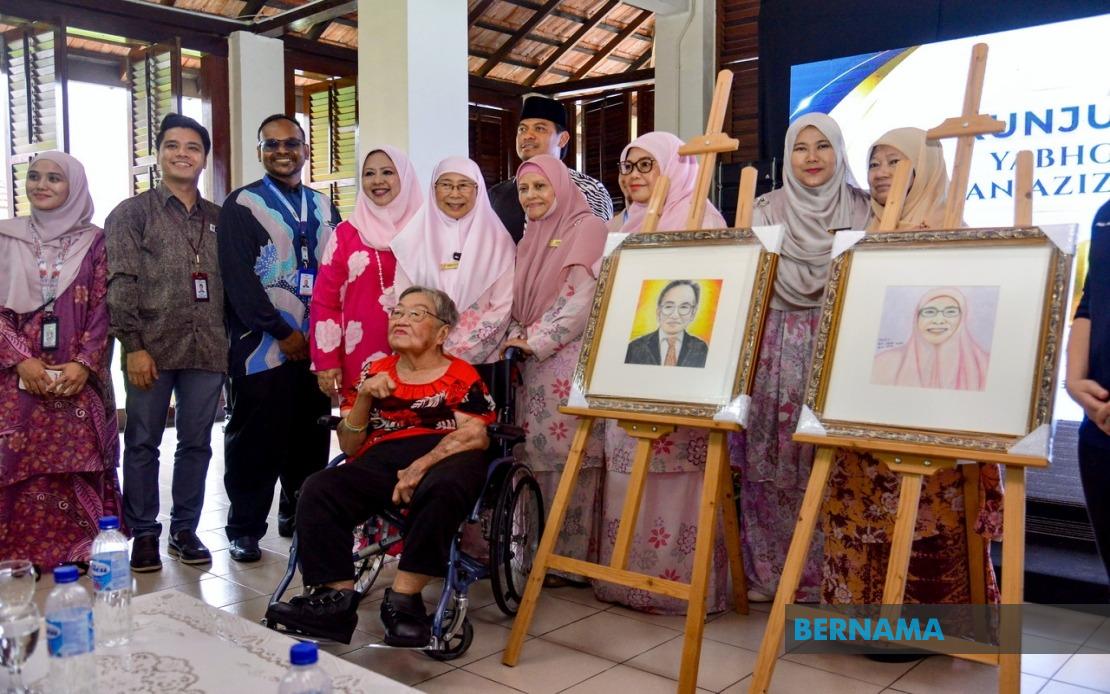
The National Leprosy Control Centre at Sungai Buloh Hospital, which opened its doors in 1926, stands at a critical juncture as it celebrates its centennial year. Prime Minister's wife Datuk Seri Dr Wan Azizah Wan Ismail has made a compelling case for maintaining this institution as a protected heritage site, recognising its profound significance in Malaysia's healthcare narrative. Her remarks, made during a visit to the facility in August, underline the growing consensus that the centre's physical infrastructure and historical value warrant deliberate conservation efforts moving forward.
The Bandar Tun Razak Member of Parliament's tour of the facility provided her with firsthand exposure to the centre's operations and its enduring role in patient care. During her time there, she received briefings on the institution's evolution and its contributions to controlling leprosy throughout Malaysia. Beyond the administrative aspects, Dr Wan Azizah engaged meaningfully with staff and residents, an gesture that highlighted the human dimension of heritage preservation. She contributed essential supplies to those currently under care and received a portrait as a token of appreciation from one of the residents, illustrating the continuing bonds between the institution and the broader community.
Malaysia's journey with leprosy control represents a public health success story that warrants international recognition. The country achieved leprosy elimination status in 1994, a milestone that placed it among nations that have effectively curtailed this once-devastating disease. The current prevalence rate stands at 0.15 cases per 10,000 population, substantially below the threshold of one case per 10,000 population that the World Health Organisation designates as elimination status. This achievement did not occur in isolation; it emerged from decades of sustained effort, research, and patient management at institutions like the National Leprosy Control Centre, making the facility a tangible repository of medical progress.
Historically, the National Leprosy Control Centre occupied a position of global significance. Before Malaysia attained its elimination status, the facility ranked as the world's second-largest leprosy isolation centre, a distinction that reflects both the scale of the disease burden the country once faced and the commitment to centralised, specialised treatment. This historical standing provides considerable weight to arguments for preservation. The centre's physical spaces, archives, and institutional memory constitute irreplaceable evidence of how Malaysia transformed from a nation with substantial leprosy prevalence to one of successful disease elimination.
Dr Wan Azizah articulated a nuanced perspective on heritage conservation that extends beyond mere physical preservation. She stressed that while the structures and physical plant of the centre merit protection as historical artefacts, the facility should not become a static museum piece. Instead, she advocated for continuous modernisation and enhancement of healthcare services provided within those heritage buildings. This balanced approach recognises that preservation need not mean freezing an institution in time; rather, heritage conservation can coexist with contemporary clinical practice and improved patient amenities. The centre's recent repurposing as a COVID-19 facility in 2020 demonstrated this adaptability.
Public perception of leprosy has undergone considerable transformation, a shift that Dr Wan Azizah directly addressed during her visit. For centuries, leprosy carried enormous social stigma and was widely misunderstood as a highly contagious condition that warranted isolation not merely for medical reasons but as a mechanism of social exclusion. Contemporary medical knowledge has thoroughly debunked these fears; the disease transmits with difficulty and responds well to modern antibiotic treatment. By preserving the National Leprosy Control Centre as a heritage site with proper interpretation and educational programming, Malaysia could utilise the facility to dismantle residual misconceptions. The centre could serve as a platform for public health education, demonstrating how scientific understanding evolves and how stigmatised populations deserve dignified treatment and social reintegration.
The role of Dr Wan Azizah, as chairman of KASIH Malaysia, a charitable organisation dedicated to welfare initiatives, adds institutional weight to her preservation advocacy. Her involvement signals that heritage conservation for the National Leprosy Control Centre aligns with broader social welfare priorities and values enshrined in charitable work. This institutional positioning elevates the discussion beyond individual sentiment to reflect coordinated civil society efforts aimed at protecting national assets and supporting vulnerable populations. The convergence of medical history, heritage preservation, and social welfare creates a compelling framework for government action.
For Southeast Asian nations observing Malaysia's experience, the National Leprosy Control Centre offers valuable lessons in disease elimination and institutional sustainability. Several countries within the region continue to grapple with higher leprosy prevalence rates and face the challenge of managing legacy facilities that treated large populations during peak disease burden periods. Malaysia's approach—combining medical success with heritage consciousness—could serve as a model for other nations considering how to honour their public health achievements whilst preserving institutional memory. The centre's survival and flourishing could inspire regional cooperation in sharing best practices for leprosy management and prevention.
The practical implications of heritage preservation for the National Leprosy Control Centre extend to employment and community engagement. Designating the facility as a protected heritage site could establish a framework for sustainable operations that balance historical conservation with contemporary needs. Residents currently under care would continue to receive treatment and support, while the physical integrity of century-old structures would be maintained through dedicated conservation funding. Staff employment would potentially stabilise under a heritage preservation model that guarantees long-term institutional viability, contrasting with scenarios where aging healthcare facilities face closure due to perceived obsolescence.
Looking forward, Dr Wan Azizah's advocacy creates political momentum for concrete action. Government agencies responsible for healthcare infrastructure and heritage preservation will likely receive renewed directives to develop comprehensive conservation plans for the centre. These plans should encompass structural rehabilitation, archival preservation, and the development of educational and interpretive programmes that communicate the facility's historical significance to future generations. The involvement of the Prime Minister's office through his wife's public endorsement signals that preservation enjoys executive support, potentially unlocking resources previously unavailable to the facility.
The National Leprosy Control Centre's centennial anniversary thus represents not merely a nostalgic commemoration but a crucial moment for institutional repositioning. By securing its future as a protected heritage site, Malaysia demonstrates commitment to honouring scientific achievement, respecting vulnerable populations, and preserving medical history for educational purposes. The centre's continued existence—modernised, accessible, and properly resourced—would stand as testimony to Malaysia's public health capabilities and social values, serving as an inspiration for ongoing efforts to eliminate other infectious diseases throughout the region.

