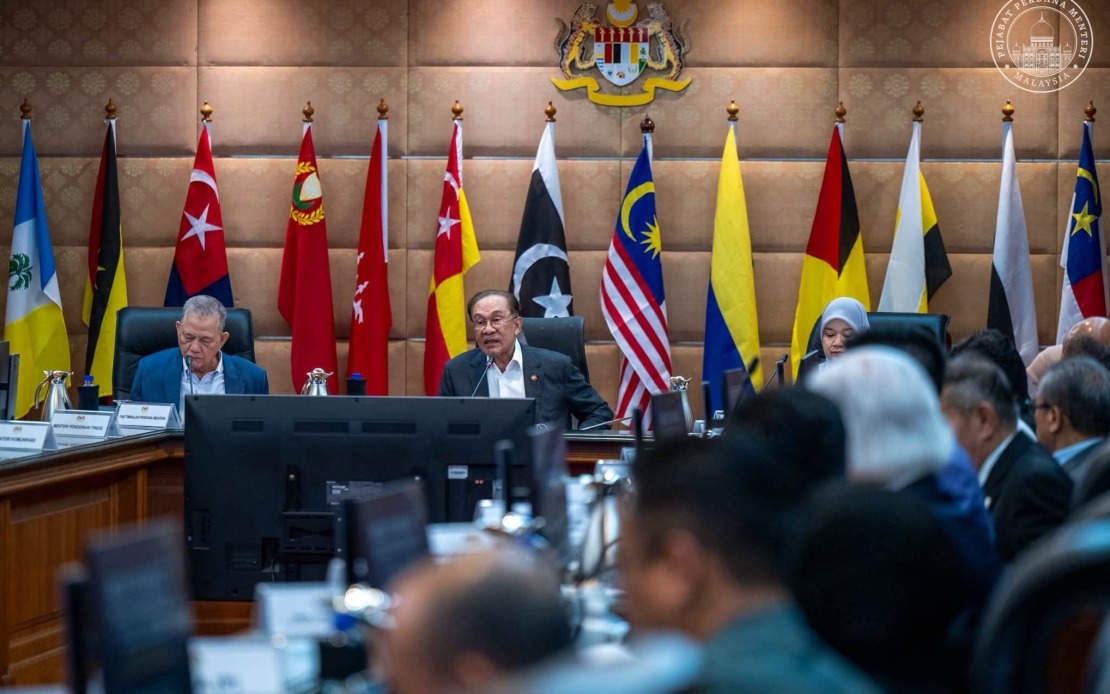
Prime Minister Datuk Seri Anwar Ibrahim has unveiled the formal establishment of a National Education Council, positioning it as a catalyst for transformative change across Malaysia's education ecosystem. The announcement came following the council's inaugural meeting in 2026, which brought together stakeholders to chart the future direction of both school-level instruction and higher education institutions across the nation.
The creation of this governing body reflects growing recognition that Malaysia's educational framework requires systematic evaluation and strategic recalibration to address contemporary challenges and emerging workforce demands. Rather than incremental adjustments, the council's mandate extends to comprehensive restructuring of how content is delivered, curricula are designed, and educational outcomes are measured at the district level and beyond.
A primary focus of the council's agenda centres on strengthening students' command of English as a second language whilst preserving the foundational role of Bahasa Malaysia within the national curriculum. This balancing act carries particular significance for Malaysia, where linguistic competency directly influences students' access to global educational resources, international career opportunities, and cross-border collaboration in increasingly interconnected fields. The council must navigate the tension between maintaining cultural identity and linguistic heritage against the practical necessity of equipping learners with English proficiency demanded by multinational employers and advanced academic institutions.
The Bumiputera education agenda has been elevated as a distinct priority within the council's reform framework. This signals commitment to ensuring equitable educational access and opportunity for indigenous populations whilst addressing historical disparities in achievement and representation across tertiary institutions. Strengthening this dimension of national education policy carries implications for social cohesion and economic mobility across Malaysia's diverse communities.
Critical to the council's forward-looking orientation is its emphasis on building a robust STEM talent pipeline capable of meeting Malaysia's future economic requirements. As industries increasingly pivot towards automation, artificial intelligence, and advanced manufacturing, the nation's capacity to produce graduates with sophisticated technical and analytical capabilities becomes essential for maintaining competitive advantage in regional and global markets. The council recognises that this pipeline must extend beyond universities to encompass vocational training, apprenticeships, and alternative pathways that broaden access to technical professions.
Anwar stressed the necessity for rigorous, objective evaluation of the existing education system, drawing upon the accumulated expertise and perspectives of diverse stakeholders including educators, parents, industry representatives, and academic researchers. This consultative approach reflects an understanding that sustainable educational transformation requires buy-in from multiple constituencies rather than top-down directives imposed without understanding ground-level realities.
A subtle but significant message underpins the Prime Minister's remarks: the rejection of institutional complacency that might otherwise perpetuate existing shortcomings. By explicitly warning against acceptance of the status quo, the leadership signals willingness to challenge entrenched practices and institutional resistance to change. This stance becomes particularly relevant in Malaysia's education sector, where bureaucratic structures and established methods sometimes impede innovation and responsiveness to changing needs.
The council's emphasis on continuous quality elevation suggests that reform should be understood as an ongoing process rather than a one-time intervention. This philosophy acknowledges that education systems must remain adaptive, capable of responding to technological disruption, demographic shifts, and evolving labour market requirements. Regular assessment and iterative improvement become necessary rather than exceptional activities.
For Malaysian families and students, these structural changes carry substantial implications. The reforms could affect university entrance requirements, vocational certification standards, workplace readiness measures, and the overall competitiveness of Malaysian graduates in regional job markets. The success of STEM initiatives will particularly influence career trajectory opportunities for students pursuing technical fields where demand substantially outpaces domestic supply.
Regionally, Malaysia's education overhaul signals broader patterns of Southeast Asian nations reconsidering curriculum design and pedagogical approaches in response to rapid technological change and increased regional competition for skilled talent. How successfully this council executes its mandate may influence educational policy discussions across ASEAN member states grappling with similar challenges around language proficiency, cultural preservation, and workforce development.
The council's formation also reflects Malaysia's broader Malaysia MADANI development agenda, which seeks to integrate economic prosperity with cultural values and social wellbeing. Education represents a critical institutional mechanism through which these objectives can be pursued simultaneously—building economic capacity whilst reinforcing national identity and ethical frameworks that define the Malaysian project.
Successful implementation of the council's reforms will require sustained political commitment, adequate resource allocation, coordination across federal and state education authorities, and genuine responsiveness to evidence and evaluation findings. The coming months and years will demonstrate whether the council functions as a genuine reform engine or becomes another consultative body whose impact remains limited by competing bureaucratic interests and resource constraints inherent in large-scale institutional change.

