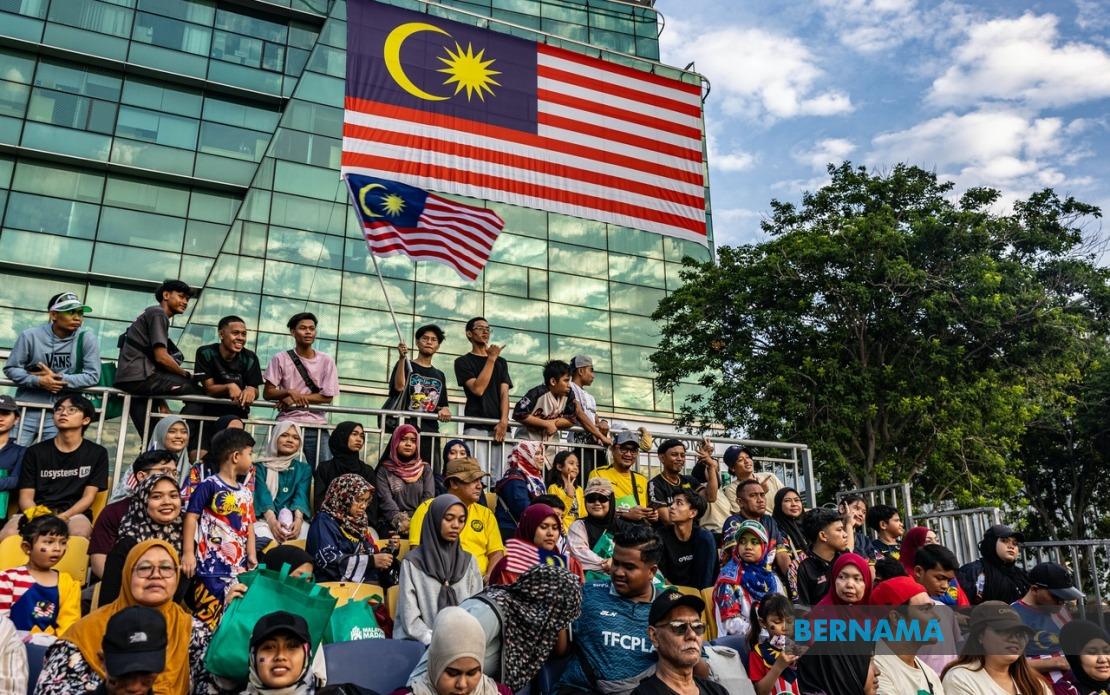
Malaysia's 2026 National Day celebration in Putrajaya has set a new attendance benchmark, drawing more than 100,000 participants and substantially exceeding the organizers' initial projection of 80,000 visitors. Communications Minister Datuk Seri Fahmi Fadzil, who chairs the 2026 National Day and Malaysia Day Main Committee, announced the figure immediately after the festivities concluded, highlighting the event's success in mobilising Malaysians across the country to participate in the nation's 69th independence commemoration.
The seamless execution of the day-long programme reflects months of meticulous coordination between multiple government bodies and agencies tasked with ensuring public safety and operational efficiency. Fahmi attributed the smooth proceedings not merely to logistical planning but to the collaborative spirit demonstrated by organisations including the Department of Environment, Malaysian Meteorological Department, and the National Disaster Management Agency. These entities worked in concert to monitor conditions throughout the event and maintained readiness for cloud-seeding operations, demonstrating how interagency cooperation can enhance public celebrations during Malaysia's tropical climate conditions.
The geographic diversity of attendees underscores the national appeal of Malaysia Day observances. Fahmi specifically acknowledged visitors who travelled considerable distances to participate, mentioning those arriving from Sandakan in Sabah, Johor Bahru in the southern peninsula, and Jeli in Kedah. This cross-regional participation reflects how the annual National Day celebration functions as a unifying ceremony, bringing together Malaysians from different states and backgrounds to commemorate shared national identity and values.
Beyond the formal parade component, organisers had programmed an extensive array of entertainment and recreational activities designed to sustain public engagement throughout the event. Attendees could view Malaysian defence capabilities through military asset displays at Anjung Floria, participate in Riuh Merdeka festivities at Monumen Alaf Baru, and enjoy culinary offerings from numerous food trucks stationed throughout the venue. This multifaceted approach transformed the National Day celebration from a spectator-focused parade into an interactive community experience, allowing families to create lasting memories whilst simultaneously reinforcing patriotic sentiment.
The parade itself showcased the breadth of Malaysian civil society and institutional representation. The procession comprised 76 distinct contingents supported by 22 marching bands and 11 decorated vehicles, mobilising a combined force of 10,819 participants drawn from government ministries, armed forces, uniformed services, government-linked corporations, educational institutions spanning secondary and tertiary levels, and various non-governmental organisations. This extensive participation demonstrates how National Day celebrations function as opportunities for diverse societal segments to express collective commitment to the nation's well-being and development.
This year's commemoration introduced several inaugural elements that reflected contemporary Malaysian society and future aspirations. The Royal Johor Military Force made its first appearance at a national-level parade, symbolising the integration of state-level security apparatus into the broader national narrative. Equally significant was the inclusion of a SEA Games 2027 contingent, highlighting Malaysia's upcoming hosting responsibilities for the regional sporting event and telegraphing the nation's commitment to athletic excellence and international cooperation. The Orange Economy Sustainability cluster contingent's participation signalled government emphasis on balancing economic development with environmental stewardship, aligning National Day messaging with broader sustainability objectives.
The cultural and artistic dimensions of the celebration reflected Malaysia's commitment to preserving and promoting diverse traditional heritage. The centrepiece "Gema Inovasi MADANI" percussion performance ingeniously blended contemporary innovation concepts with traditional musical instruments, notably Rebana Inovasi and Kompang Inovasi, creating a symbolic bridge between modernity and cultural authenticity. This segment mobilised 150 percussion specialists and 1,500 human graphic performers, demonstrating how large-scale public events can celebrate artistic diversity whilst reinforcing national cohesion across different ethnic communities.
The celebration's thematic framework, "Malaysia MADANI: Kesejahteraan Dinikmati" (Malaysia MADANI: Shared Prosperity Enjoyed), articulated government policy positioning around inclusive development and equitable wealth distribution. This messaging strategy reflects broader MADANI governance philosophy, emphasizing that national advancement must benefit all Malaysians regardless of demographic background or geographic location. By anchoring the National Day narrative to this theme, organisers sought to reinforce political messaging concerning government commitment to delivering tangible improvements in living standards and social welfare across diverse constituencies.
The finale performances amplified this theme of inclusive national identity through participatory spectacle. The Royal Malaysian Air Force contributed sophisticated aerial displays featuring fighter jets, transport aircraft, and helicopter squadrons, projecting national defence capabilities whilst inspiring patriotic sentiment. The closing "Rentak MADANI, Paluan Tradisi" performance, drawing together 2,350 participants, symbolically synthesised modern governance imperatives with Malaysia's rich cultural traditions, effectively communicating that national progress requires harmonising innovation with respect for cultural heritage.
For Malaysian stakeholders and Southeast Asian observers, the successful execution of this celebration carries multiple significance layers. Domestically, the event demonstrates government capacity to organise large-scale public gatherings whilst maintaining operational security and public safety standards. Regionally, the celebration signals Malaysia's institutional stability and social cohesion at a time when neighbouring nations confront various governance challenges. The exceptional turnout, substantially exceeding initial projections, suggests sustained public engagement with formal national commemorations, countering occasional concerns about civic participation erosion in digital-era societies.
Fahmi's closing remarks emphasised aspirational messaging around national unity and collective stewardship. His invocation of collaborative responsibility for preserving Malaysia's stability and prosperity reflected contemporary political discourse emphasising that national development transcends partisan boundaries and depends fundamentally on citizens' commitment to common values. In context of Malaysia's plural society, such messaging carries particular weight, as successful large-scale multiethnic gatherings provide tangible evidence that communal harmony remains achievable despite occasional sectarian tensions.
The 2026 National Day celebration thus functioned simultaneously as patriotic commemoration, institutional showcase, cultural performance, and political messaging exercise. The combination of record attendance, incident-free operations, extensive programmatic content, and thematic coherence suggests that Malaysian authorities have effectively harnessed public gathering machinery to reinforce national identity narratives and communicate government commitment to inclusive development paradigms that resonate across demographic and geographic constituencies.

