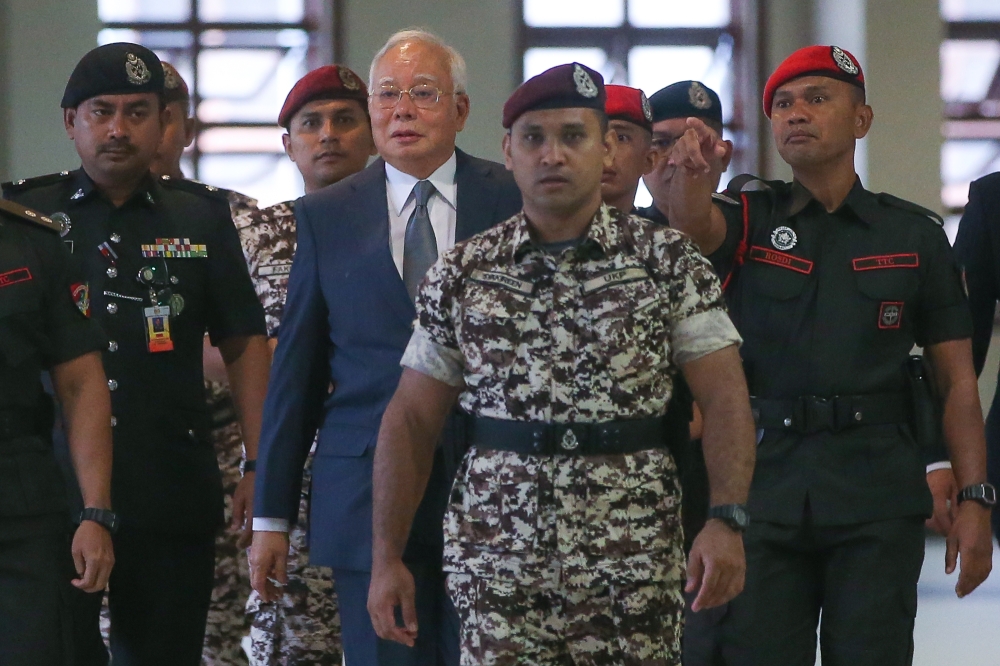
Former Prime Minister Datuk Seri Najib Tun Razak has provided a new explanation for the movement of hundreds of millions of dollars through his personal bank accounts, telling the High Court that he felt uneasy maintaining such substantial foreign funds after the 2013 general election.
The court heard testimony concerning US$620 million that had been transferred to Najib's accounts and subsequently returned to sources outside Malaysia. According to the account presented during proceedings, Najib decided the money needed to be sent back because prolonging his custody of these foreign donations created discomfort for him personally.
The rationale reflects a significant aspect of Najib's defence strategy in addressing questions about extraordinary financial flows during his time as Prime Minister. Rather than focusing on the legitimacy of receiving such funds, the explanation centres on Najib's state of mind regarding their retention, emphasizing that he recognized the impropriety of holding foreign money beyond a certain point.
This testimony becomes particularly relevant given Malaysia's position in Southeast Asia as a nation with strict anti-corruption frameworks and international commitments regarding financial transparency. The region has watched closely as Malaysian courts examine high-profile cases involving former leaders, with implications for how accountability mechanisms function across the broader region and how international anti-corruption standards are enforced domestically.
The timing of the repatriation carries significance within the narrative Najib presented. His explanation suggests that following the electoral victory in 2013, when his coalition retained power, circumstances changed in ways that made retaining the foreign funds untenable. The shift in his perspective following the election outcome suggests that political consolidation may have altered calculations about what financial arrangements were acceptable or necessary.
For Malaysian readers and Southeast Asian observers, the case illustrates the complexity surrounding fund flows involving political actors, particularly when international sources and domestic politics intersect. The assertion that discomfort rather than legal obligation prompted the return of such substantial sums raises questions about the standards governing political fundraising and the mechanisms by which leaders make decisions about foreign financial support.
The High Court proceedings themselves reflect Malaysia's judicial system grappling with unprecedented cases involving former top officials and international financial transactions. The detailed examination of motivations, account movements, and decision-making processes represents a departure from how political finance has historically been scrutinized in the country, establishing new precedents for accountability and transparency.
The US$620 million figure itself warrants context. The scale of these transactions significantly exceeds typical political donation benchmarks globally, making the nature and origins of such funds inherently controversial. The fact that multiple tranches of such magnitude moved through personal accounts raises questions that extend beyond individual discomfort to systemic issues about financial governance and oversight during the relevant period.
Najib's explanation also touches on broader questions about the purpose these funds were intended to serve. If the money represented legitimate donations for political activities, the mechanisms for their receipt and distribution become relevant to understanding Malaysia's political finance ecosystem. Conversely, if other explanations apply, the voluntary repatriation argument acquires different weight in legal and public discourse.
The court's examination of these matters occurs within a transformed political landscape. Since the 2018 general election that removed Najib's coalition from power, Malaysia's approach to investigating and prosecuting allegations involving former leaders has evolved considerably. The judicial scrutiny now evident contrasts with the period during which these transactions occurred, reflecting changing expectations about transparency and accountability among Malaysian institutions.
Regionally, Malaysia's experience with cases of this magnitude influences perceptions of how Southeast Asian democracies manage accountability for high-ranking officials. The visibility of proceedings addressing financial irregularities at the highest levels sends signals about institutional capacity and political will to investigate thoroughly, regardless of an official's former status or political prominence.
For the broader Malaysian public and international observers, the unfolding case remains significant precisely because it addresses fundamental questions about governance, financial stewardship, and the standards expected of leaders handling public office. The testimony regarding Najib's discomfort with retaining foreign funds represents one perspective on a complex chain of events that continues to be examined through multiple legal and investigative frameworks.

