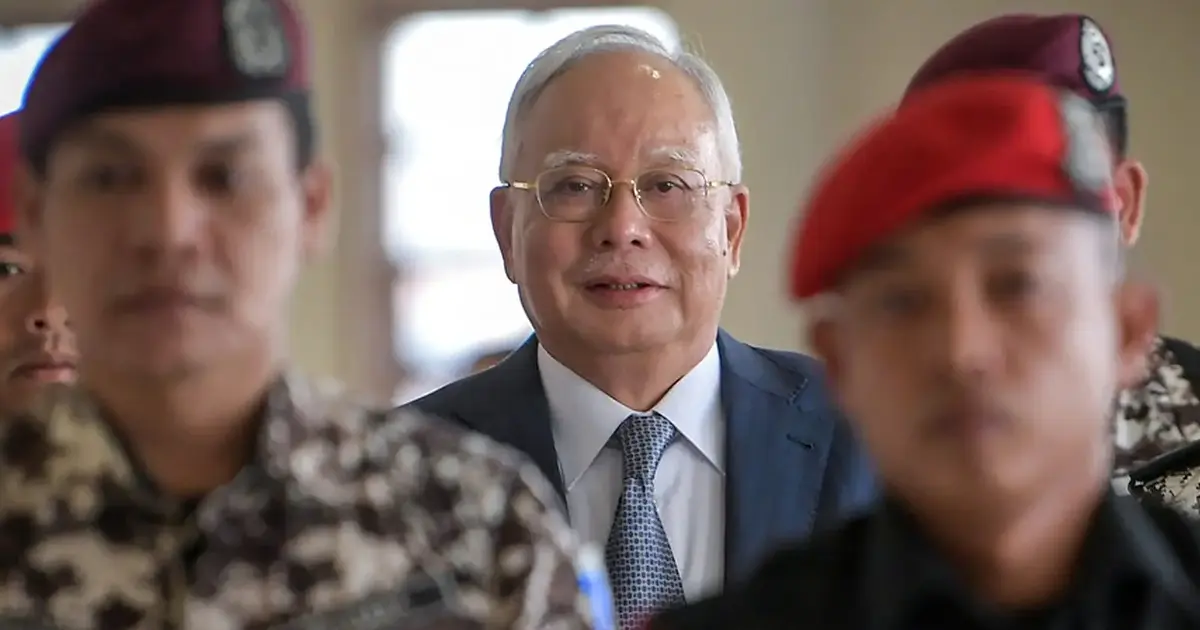
Former Prime Minister Najib Razak has secured permission from the Court of Appeal to attend a forthcoming hearing in which the Malaysian Bar Council contests a ruling made by the pardons board. The approval emerged following an ex parte application filed by Najib's legal representatives, a procedural step that allowed the court to hear arguments from one party without the opposing side present.
This development marks a significant moment in the prolonged legal saga surrounding Najib, who has faced multiple court battles since his arrest in 2018 following the 1Malaysia Development Berhad (1MDB) scandal. The Bar Council's intervention in this instance demonstrates the legal profession's ongoing scrutiny of decisions affecting fundamental principles of justice and due process in Malaysia. The organisation's willingness to challenge a pardons board determination indicates concerns about the procedures or reasoning underpinning that decision.
The pardons board, formally known as the Pardons Board of the Yang di-Pertuan Agong, holds considerable constitutional authority to recommend clemency, pardon, or remission of sentences. However, the Bar Council's challenge suggests potential procedural irregularities or substantive concerns regarding how this power was exercised. For legal observers across Southeast Asia, such challenges to executive clemency decisions remain relatively rare, making Malaysia's case notable for those tracking judicial independence and the separation of powers in the region.
Najib's personal attendance at the hearing underscores the stakes involved. Previously, various court proceedings related to his convictions had proceeded with him present or absent depending on circumstances. His participation in this appeal suggests his legal team views the hearing as consequential enough to warrant his direct involvement, potentially to demonstrate commitment to clearing his name or to influence perceptions of his engagement with the legal process.
The Court of Appeal's decision to grant permission through an ex parte application reveals procedural complexity in how Malaysian courts manage such matters. Ex parte applications allow one side to present arguments before the full adversarial hearing occurs. This mechanism serves legitimate purposes, such as seeking interim relief or, as in this case, clarifying participation rights, but it also reflects the intricate procedural landscape navigating Najib's ongoing legal challenges.
The Bar Council's role in contesting the pardons board's decision extends beyond defending one individual's interests. Professional bodies representing lawyers traditionally guard against perceived injustices affecting the broader legal system and public confidence in institutions. Their intervention here suggests they perceive broader implications about how pardons and clemency mechanisms function, potentially affecting precedent and public understanding of executive authority in judicial matters.
For Malaysian observers, this hearing connects to wider conversations about accountability, the rule of law, and whether high-ranking officials face equal scrutiny under the justice system. Since Najib's initial conviction in 2020 on seven charges including abuse of power and money laundering related to 1MDB, his legal journey has involved numerous appeals, retrials, and procedural developments. Each stage attracts intense public and political attention, reflecting the case's significance to Malaysia's democratic institutions and international reputation.
The timing of this hearing also intersects with Malaysia's evolving political dynamics. Najib's legal status remains relevant to political alignments and electoral considerations, particularly given his continued influence within the United Malays National Organisation (UMNO). How courts handle his cases sends signals about judicial independence to both domestic observers and international commentators monitoring Malaysia's governance standards.
Regionally, Malaysia's approach to pardons and clemency decisions attracts scrutiny from other Southeast Asian democracies navigating similar tensions between executive prerogatives and judicial constraints. The Bar Council's willingness to mount formal legal challenges creates a template that might influence how professional bodies in neighbouring jurisdictions approach comparable situations.
The substantive outcome of the Court of Appeal hearing remains uncertain. The court could uphold the pardons board's original decision, overturn it, or potentially remit the matter for reconsideration. Whatever the result, the hearing will likely generate further appeals and interpretations about the scope of judicial review over clemency decisions in Malaysia. Such determinations carry implications extending beyond Najib himself, potentially reshaping how future applications for pardons or clemency navigate Malaysia's legal framework.
Stakeholders across Malaysia's political, legal, and civil society sectors will watch proceedings closely. For the Bar Council, successful judicial oversight of pardons decisions strengthens the profession's institutional role; for Najib, attendance at the hearing represents another opportunity to seek legal redemption through the courts; and for the broader public, the case continues symbolising fundamental questions about whether Malaysia's justice system functions equitably regardless of an individual's previous status or political significance.

