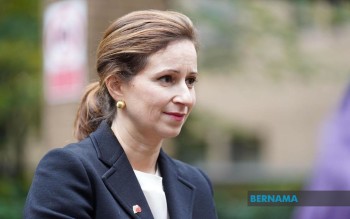
North American Blue Energy Partners (NABEP), an exploration and production company operating in the oil and gas sector, has announced a major restructuring of its legal division with the appointment of three senior attorneys. Sara Chouraqui will lead the organisation as General Counsel, while Elizabeth Collery and Victoria Jacobson have been named to supporting Deputy General Counsel roles, effective immediately.
The recruitment drive reflects NABEP's stated ambition to position itself for expansion as it pursues aggressive growth targets across its operational footprint. Chief Executive Officer Alejandro Betancourt characterised the additions as essential to the company's trajectory, noting that Chouraqui's background in navigating intricate regulatory landscapes will prove invaluable as NABEP enters what the leadership describes as a pivotal developmental phase. The trio's combined expertise addresses what the company identifies as a critical gap in strategic legal capacity needed to support anticipated corporate expansion.
Chouraqui brings a distinguished public sector track record to her new role. Prior to joining NABEP, she held the position of Head of a Fraud, Bribery and Corruption division at the United Kingdom's Serious Fraud Office (SFO), one of the world's most prominent institutions dedicated to investigating complex cross-border financial crime. Her tenure involved overseeing some of the office's most high-profile international investigations, positioning her as an expert in the regulatory and compliance issues that multinational energy companies routinely encounter when operating across multiple jurisdictions.
In her capacity as General Counsel, Chouraqui will oversee NABEP's entire global legal function. Her responsibilities will encompass providing counsel to the executive team on a broad range of matters including corporate governance, compliance protocols, and the identification and mitigation of legal and regulatory risks across all operational territories. She will additionally supervise major transactions and the structuring of strategic commercial partnerships, roles that carry significant implications for the company's growth trajectory and shareholder value.
Collery and Jacobson, both of whom previously held senior roles at the SFO, worked closely with Chouraqui during her tenure at the British agency. Their appointment as Deputy General Counsels creates a continuity of expertise and established working relationships within NABEP's legal department. This structural coherence may facilitate smoother integration of legal strategy with corporate objectives, particularly as the company navigates complex regulatory environments in multiple countries.
The timing of these appointments carries particular significance given NABEP's stated focus on the Venezuelan market. In her public comments, Chouraqui emphasised the company's commitment to maintaining the highest standards of legal compliance and ethical conduct, framing NABEP's operations as contributing to Venezuela's economic revitalisation. This positioning addresses longstanding concerns about governance and transparency in the Venezuelan energy sector, where international scrutiny of corporate conduct has intensified in recent years due to geopolitical considerations and sanction-related complications.
For Malaysian readers and Southeast Asian investors monitoring developments in the global energy sector, NABEP's restructuring underscores a broader trend within multinational oil and gas firms: the elevation of legal and compliance functions to the executive level. Companies increasingly recognise that robust legal infrastructure serves not merely defensive purposes but actively enables business development by reducing regulatory friction and building stakeholder confidence. The recruitment of individuals with Serious Fraud Office credentials signals to international partners and regulators that NABEP takes compliance seriously—a competitive advantage in sectors subject to intense scrutiny.
The appointment strategy also reflects market realities facing energy explorers seeking to operate in jurisdictions with complex regulatory frameworks or challenging geopolitical circumstances. Venezuela's ongoing political instability and exposure to international sanctions create a uniquely demanding legal and compliance environment. By recruiting attorneys with proven expertise in international fraud investigations and regulatory matters, NABEP positions itself to manage these risks more effectively than competitors lacking similar depth of legal capability.
Chouraqui's background in cross-border legal matters has particular relevance for a company pursuing partnerships across the Americas. The energy sector increasingly requires legal advisors who understand not only domestic regulations but also international sanctions regimes, foreign investment rules, and evolving environmental compliance frameworks. Her experience at the SFO, an institution that frequently investigates corporate misconduct involving international elements, directly equips her for these multifaceted challenges.
The three appointments coincide with broader industry trends toward enhanced corporate governance. Major oil and gas operators globally have substantially upgraded their legal and compliance infrastructure over the past decade, responding to investor pressure, regulatory expectations, and reputational considerations. NABEP's moves align it with peer company practices while simultaneously addressing what the organisation clearly views as pressing internal capability gaps.
For regional stakeholders interested in Latin American energy developments, these appointments merit attention as indicators of NABEP's expansion intentions. The recruitment of high-calibre legal talent often precedes major corporate announcements regarding production increases, partnership expansion, or new exploratory ventures. Such developments carry implications not only for energy market dynamics in the Western Hemisphere but also for global oil and gas supply stability, which remains of considerable importance to Southeast Asian economies including Malaysia.

