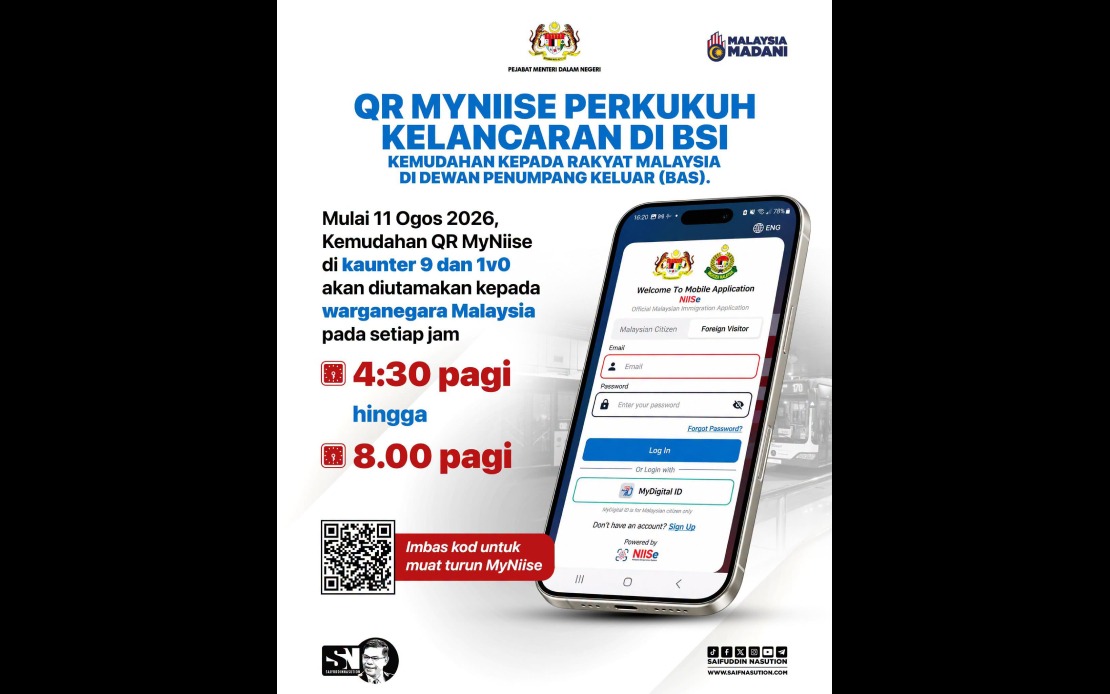
Malaysia's Home Minister Datuk Seri Saifuddin Nasution Ismail has unveiled a streamlined immigration processing system aimed at easing the morning commute rush at the country's busiest overland border crossing with Singapore. The initiative grants priority clearance to travellers using the National Integrated Immigration System (MyNIISe) QR code at Bangunan Sultan Iskandar (BSI), with dedicated lanes operational during the heaviest traffic periods beginning from August 11.
The priority service operates from counters 9 and 10 in the Bus Departure Hall between 4:30 am and 8:00 am, capturing the critical window when tens of thousands of Malaysian workers surge across the border to reach their offices and workplaces in Singapore on time. This targeted timing reflects the government's understanding of the genuine hardships faced by cross-border commuters, many of whom depart their homes before dawn to navigate the notorious congestion that characterises this crossing during morning peak hours.
Saifuddin Nasution framed the initiative as part of broader efforts to modernise immigration procedures and reduce unnecessary delays at entry and exit points. He acknowledged that the existing congestion at BSI during early morning hours places considerable strain on daily commuters, who must balance travel times, work schedules, and the unpredictability of border processing. By introducing technology-enabled fast-track options, the government seeks to create a more efficient system that rewards advance digital adoption while simultaneously reducing bottlenecks that affect all travellers.
The MyNIISe QR system represents a significant technological shift in how Malaysia manages immigration data and border administration. Rather than relying solely on manual document verification and counter-based processing, the digital platform consolidates traveller information into a machine-readable format that immigration officers can rapidly validate. This approach aligns with regional trends toward contactless, technology-driven border management systems, positioning Malaysia alongside Singapore and other developed economies that have invested heavily in digital immigration infrastructure.
Access to the MyNIISe application has been made deliberately inclusive across major smartphone platforms. Travellers can download the system from the Apple App Store, Google Play Store, and Huawei App Gallery, ensuring compatibility regardless of device type or operating system preference. This multi-platform availability removes potential barriers that might otherwise limit adoption, particularly among users with older devices or those who rely on alternative Android ecosystems.
The broader context for this initiative reflects Malaysia's ongoing digitisation agenda, which seeks to modernise government services and improve citizen experience across multiple sectors. Immigration clearance, as a frontline public service affecting hundreds of thousands of people monthly, represents an ideal testing ground for technological innovation and process improvement. The success of MyNIISe QR at BSI may establish a template for similar implementations at other major border crossings, including the second Causeway link and air terminals.
For Malaysian workers employed in Singapore, the efficiency gains could translate into tangible benefits beyond mere convenience. Reducing border clearance times by even five or ten minutes daily accumulates to significant time savings across the week and year. These gains become particularly valuable during inclement weather, public holidays, or unexpected traffic incidents that compound normal congestion levels. The psychological relief of having a predictable, faster crossing option may also reduce work-related stress for commuters who previously faced uncertain arrival times.
From Singapore's perspective, accelerating throughput at the Malaysian side of the border serves mutual interests in maintaining smooth cross-border commerce and labour movement. The city-state depends on substantial Malaysian workforce participation in sectors ranging from construction and domestic service to professional and financial services. Any system that reduces queuing times and processing bottlenecks strengthens the bilateral relationship and reinforces the efficiency of the wider regional economy.
The implementation at counters 9 and 10 suggests a carefully calibrated rollout strategy. Rather than attempting system-wide implementation immediately, authorities have designated specific lanes for testing and refinement. This phased approach allows immigration officials to monitor system performance, identify technical issues, and gather feedback before potential expansion to additional counters or extended operating hours. Such methodical deployment reduces risks of system failures during critical peak periods.
Technology adoption in public services often encounters resistance based on user familiarity, trust, or accessibility concerns. The Home Ministry's promotion of MyNIISe QR represents an opportunity to observe how effectively awareness campaigns can drive voluntary uptake of digital border tools. Success metrics might include measuring the proportion of commuters using dedicated QR lanes, comparing average processing times between QR and traditional channels, and tracking user satisfaction through feedback mechanisms.
The initiative also underscores how border management has evolved beyond conventional security-first paradigms toward integrated approaches balancing security, efficiency, and convenience. MyNIISe QR does not eliminate human verification or security protocols; rather, it enables immigration officers to conduct necessary checks more rapidly by pre-validating digital information and reducing paperwork handling. This hybrid approach maintains vigilance while acknowledging that contemporary border administration must accommodate legitimate mobility needs.
Looking forward, the success of the MyNIISe QR priority scheme at BSI could influence broader policy conversations around cross-border travel infrastructure, particularly as Malaysia and Singapore explore options for expanding transport links and facilitating economic integration. Digital systems that streamline legitimate travel complement physical infrastructure improvements, together creating conditions for enhanced regional competitiveness and connectivity.

