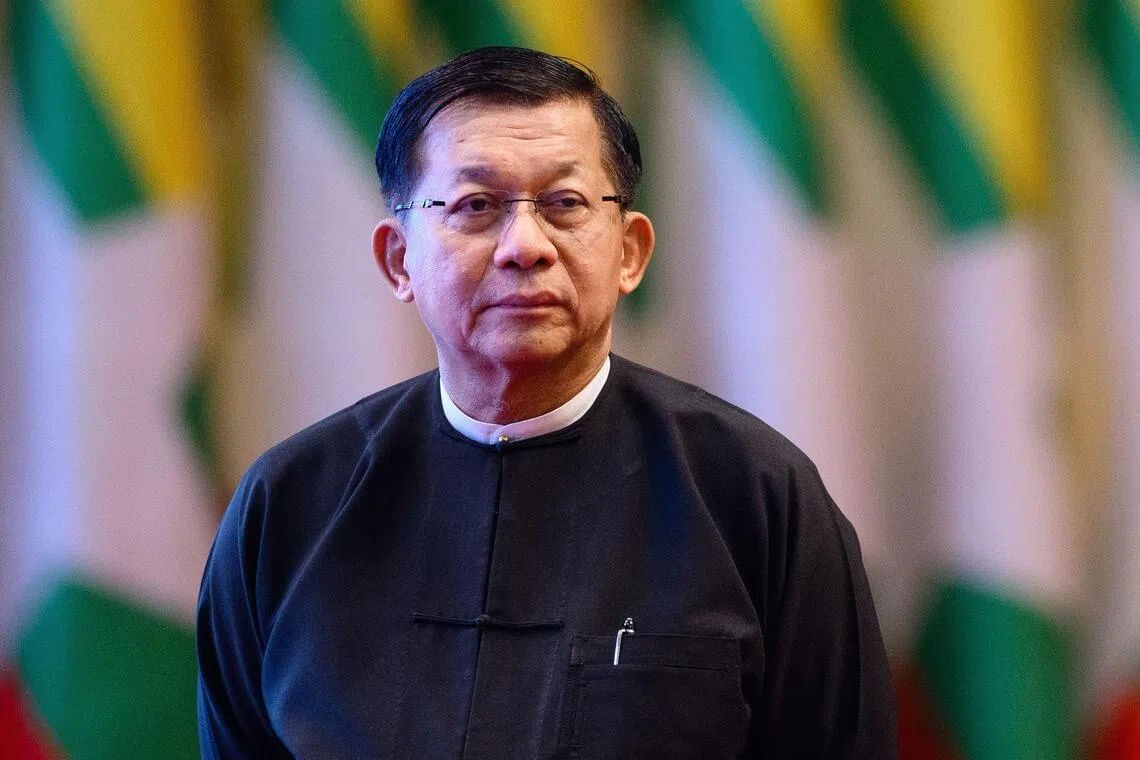
Myanmar's ex-junta chief Min Aung Hlaing is expected to arrive in Thailand on August 6 for what will be his first official visit to the country since assuming Myanmar's presidency as a civilian leader. The journey represents a significant diplomatic gambit for a nation increasingly isolated following the 2021 military coup that toppled democratically elected Aung San Suu Kyi and triggered a devastating conflict that observers estimate has claimed more than 100,000 lives across all combatant factions.
Min Aung Hlaing orchestrated the coup that swept aside Myanmar's nascent democracy and has since attempted to consolidate power through what international observers describe as façade democratisation. In April, he won a presidential election that Western governments and democracy advocates widely dismissed as a staged exercise designed to provide civilian legitimacy to military rule while obscuring the junta's fundamental control of state apparatus and security apparatus. The orchestrated nature of the transition has done little to satisfy international scepticism about Myanmar's political direction or intentions.
Thailand's role as convener and mediator reflects broader regional calculations about managing Myanmar's instability. The kingdom has positioned itself as architect of a normalisation campaign aimed at gradually reintegrating Myanmar into regional structures, particularly within the Association of Southeast Asian Nations. This diplomatic rehabilitation effort has involved bilateral engagement alongside Asean-level initiatives designed to draw Myanmar's leadership back into regional institutional frameworks from which they have been progressively sidelined since the coup.
Asean's official posture toward Myanmar's military government has been deliberately circumscribed. The bloc excluded Myanmar's leadership from major summits following the putsch, treating the country as a pariah within its own regional organisation. However, cracks in this united front have appeared recently. Myanmar's foreign minister participated in an informal gathering with regional counterparts in Thailand last month, suggesting tentative movement toward conditional re-engagement rather than indefinite isolation. This incremental thaw signals that some Asean members believe managed re-integration serves regional interests better than continued exclusion.
Min Aung Hlaing has embarked on an ambitious international tour since transitioning to civilian dress, strategically visiting fellow regional powers including India and China, whose continued support remains essential to Myanmar's viability. The visit to Laos, another Asean member-state, preceded the current Thai sojourn, suggesting a choreographed sequence of regional capital visits designed to demonstrate progressive international acceptance and normalcy. These trips serve a dual purpose: domestically, they project an image of restored international standing to Myanmar's population, while externally, they test whether regional neighbours view Min Aung Hlaing's civilian facade as sufficient grounds for renewed engagement.
Thailand's hosting of this visit carries distinct strategic imperatives beyond regional harmony. The long border between the two nations has become a flashpoint where Myanmar's internal conflict regularly spills across international boundaries. Armed clashes between Myanmar's military and diverse rebel organisations have displaced populations across the frontier, creating humanitarian emergencies that strain Thai resources and security. Thailand currently shelters millions of Myanmar refugees, a burden that has become increasingly politically sensitive within Thai domestic politics as security and economic pressures mount.
Beyond the refugee crisis, Thailand faces acute challenges from criminal enterprises operating from Myanmar's ungoverned borderlands. Cyberscam networks have proliferated in areas beyond Myanmar government control, with operations targeting victims across Southeast Asia and beyond. These operations generate substantial criminal proceeds that flow through regional financial systems, destabilising communities in neighbouring countries. Additionally, illicit drug trafficking from Myanmar's production zones represents an ongoing security threat that Thai authorities have struggled to contain. During Monday's media engagement, Thai Foreign Minister Sihasak Phuangketkeow explicitly signalled that combating these scam operations would feature prominently in conversations with Min Aung Hlaing, indicating Bangkok's expectation that normalisation must yield concrete security benefits.
The diplomatic schedule planned for Min Aung Hlaing's Bangkok visit reflects both its ceremonial and substantive dimensions. He will receive an honour guard at Government House and conduct bilateral meetings with Prime Minister Anutin Charnvirakul, scripted engagements designed to project equality and respect between governments. Beyond these formal rituals, the visit encompasses a business forum and state dinner, signals of economic engagement alongside political rehabilitation. Thai officials have indicated that both governments anticipate signing a memorandum of understanding focused on labour cooperation, addressing the significant flows of Myanmar workers into Thai employment and seeking to formalise frameworks governing these labour movements.
However, Min Aung Hlaing's diplomatic rehabilitation remains deeply contested. Independent Myanmar analysts including David Mathieson have characterised the military leader's campaign for Asean re-entry as fundamentally driven by prestige considerations rather than substantive policy commitments. Most significantly, Myanmar's leadership has conspicuously rejected Asean's five-point consensus mechanism for resolving Myanmar's conflict through dialogue inclusive of all parties. This calculated refusal underscores what observers describe as selective engagement: Min Aung Hlaing wishes to access the institutional benefits and international legitimacy that Asean membership provides while simultaneously rejecting any constraints on military autonomy or requirements for genuine political settlement. This paradox—seeking simultaneous acceptance as a responsible regional actor whilst rejecting collaborative conflict resolution frameworks—defines the contradictions embedded in current engagement efforts.
International accountability mechanisms present an ongoing complication to normalisation efforts. Min Aung Hlaing remains subject to an International Criminal Court warrant for crimes against humanity, whilst facing sanctions from multiple Western governments. Human rights organisations including Justice For Myanmar have vocally criticised Thailand's diplomatic overtures, arguing that extending ceremonial recognition to the military leader effectively rewards impunity for documented atrocities. This human rights advocacy creates tension between Bangkok's pragmatic regional diplomacy and international accountability norms, a friction that regional governments must navigate as they determine whether managed re-engagement with Myanmar's military leadership serves broader stability objectives.
Meanwhile, the treatment of Aung San Suu Kyi offers additional insight into Myanmar's political trajectory. The detained democratic leader was permitted a meeting with an International Committee of the Red Cross representative on Monday, her first publicly acknowledged contact with a foreign official since her removal from power. This carefully controlled access, granted in the immediate run-up to Min Aung Hlaing's Thailand visit, suggests coordination between Myanmar's military government and international organisations to project an image of improved governance and humanitarian concern. Whether such concessions represent genuine shifts in Myanmar's approach to detention practices or constitute tactical gestures timed to international engagement moments remains ambiguous, but the apparent coordination with diplomatic scheduling implies calculated image management.
Thailand's diplomatic initiative reflects broader strategic calculations about regional stability versus pressure for accountability. Bangkok recognises that Myanmar's indefinite isolation risks deepening the country's internal conflict, potentially amplifying refugee flows, criminal activity, and regional security threats emanating from ungoverned spaces. Conditional engagement offers Thai policymakers an instrument for gradual influence over Myanmar's trajectory, though this approach sacrifices pressure for meaningful political change or accountability. For Myanmar's military leadership, Bangkok's receptiveness validates their transition to civilian governance structures as internationally acceptable, even if Western governments and human rights bodies maintain reservations about the coup's legitimacy and Min Aung Hlaing's criminal accountability.

