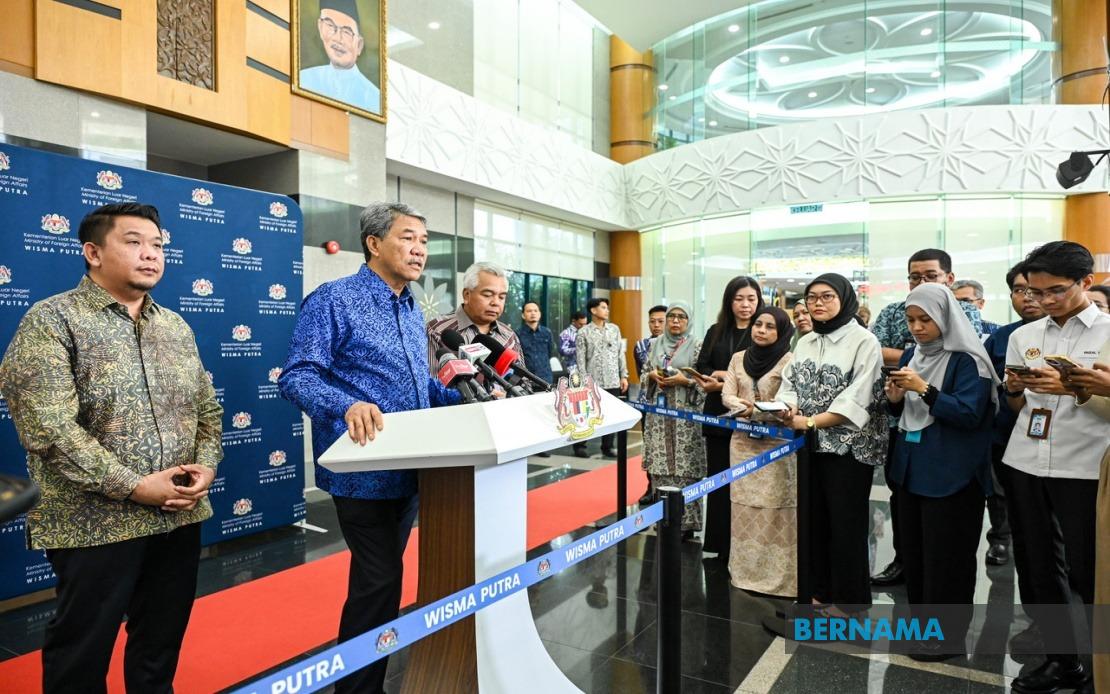
Malaysia's Foreign Minister Datuk Seri Mohamad Hasan has announced that Myanmar has signalled its readiness to facilitate the sea-based return of 5,000 refugees currently in the region. The disclosure came following a bilateral conversation between Mohamad and Myanmar's newly appointed Foreign Minister Tin Maung Swe, highlighting an apparent shift in Naypyidaw's stance on addressing the refugee situation that has strained Southeast Asia for years. Speaking at the 59th ASEAN Day commemoration in Putrajaya on Monday, the Malaysian diplomat underscored that whilst the offer represents potential progress, fundamental questions about the welfare and security of those being returned must take precedence over administrative efficiency.
The proposed maritime repatriation addresses one of the region's most intractable humanitarian challenges. Malaysia, as a frontline state, has borne considerable responsibility for managing displaced populations fleeing Myanmar, with irregular migrants regularly arriving on its shores. The identification of 5,000 specific individuals whom Myanmar has acknowledged represents a concrete step forward in what has historically been a contentious negotiation. However, Mohamad's emphasis on safety considerations reflects the complex reality facing returnees in a country where military rule, ethnic tensions, and economic collapse have created ongoing instability.
Crucially, Malaysia has already completed the painstaking work of documenting and verifying the identities of these 5,000 individuals, establishing a prerequisite for any orderly repatriation scheme. While no concrete timeline has been established, Mohamad indicated that accelerating the process remains a priority for Malaysian authorities. This administrative groundwork is essential, as shipping large numbers of vulnerable people across international waters demands meticulous coordination, particularly regarding health screening, documentation verification, and logistical arrangements. The absence of a firm deadline, however, suggests ongoing negotiations about modalities and conditions continue between Kuala Lumpur and Naypyidaw.
A significant dimension of Mohamad's remarks involved broadening the conversation beyond the Rohingya narrative that typically dominates international discourse on Myanmar's displaced populations. The Malaysian Foreign Minister drew attention to other ethnic communities—particularly the Chin and Karen peoples—who have equally sought refuge across Southeast Asian borders. This inclusive framing reflects the diversity of Myanmar's internal conflicts and the varied motivations driving displacement. Each community carries distinct historical grievances and faces particular vulnerabilities, requiring differentiated humanitarian and policy responses rather than treating all refugees as a monolithic group.
The ASEAN dimension looms large in Mohamad's strategic approach. Rather than positioning Malaysia's efforts as bilateral diplomacy, he situated the refugee question within the broader collective responsibility framework that underpins the bloc. The explicit invocation of the Five-Point Consensus, the foundational agreement established by ASEAN leaders to guide Myanmar's political transition, underscores the organisation's commitment to maintaining coordinated pressure on Naypyidaw whilst preserving engagement. This consensus represents the institutional architecture through which Southeast Asian states have sought to influence Myanmar's trajectory since the February 2021 military coup.
Yet tensions exist within this framework. Mohamad's insistence that any modifications to the Five-Point Consensus must return to the ASEAN negotiating table signals awareness that unilateral actions by individual member states could fracture collective positioning. The statement implicitly cautions against major powers or strategic partners outside ASEAN imposing alternative frameworks that might sideline regional consensus-building. Myanmar's military leadership, despite having initially endorsed the consensus, has shown reluctance to implement key provisions, creating a persistent impasse that Mohamad's emphasis on adherence attempts to address.
The practical implications for Malaysia are substantial. The country hosts significant numbers of Myanmar's displaced population, straining social services, employment sectors, and public resources. Facilitating repatriation of those willing and deemed safe to return alleviates this burden whilst theoretically strengthening Malaysia's position as a responsible member of the international community. Conversely, premature or poorly executed repatriation risks creating humanitarian disasters that would undermine Malaysia's credibility and potentially trigger new displacement waves.
International observers have long grappled with the tension between national sovereignty and humanitarian obligation in Myanmar's case. Naypyidaw's willingness to accept returnees could reflect genuine capacity-building, evolving military calculations about demographic stability, or strategic positioning ahead of international pressure. The maritime dimension adds complexity, as sea-based transport might reduce the domestic political visibility of returns that could otherwise provoke objections from hardline segments within Myanmar's military apparatus. Understanding the Tatmadaw's motivations matters as much as celebrating their public cooperation.
The broader Southeast Asian context matters considerably for Malaysia's approach. Cambodia, Thailand, and Bangladesh have each faced similar pressures regarding Myanmar's displaced populations, creating competition for burden-sharing whilst demanding coordinated regional responses. Malaysia's emphasis on collective ASEAN action rather than pursuing independent bilateral arrangements reflects recognition that uncoordinated repatriations could undermine trust and create perverse incentives for other states to avoid responsibility. This collective framing enhances Malaysia's legitimacy domestically whilst signalling to neighbours that solutions must accommodate shared interests.
As negotiations proceed, the humanitarian dimension cannot be subordinated to administrative convenience. The safety concerns that Mohamad explicitly highlighted encompass not merely the physical security of maritime transport, but the broader question of whether returnees will face persecution, arbitrary detention, or economic desperation in Myanmar. These considerations require independent verification mechanisms and international oversight to ensure Malaysia is not facilitating returns that compromise fundamental human rights protections. The credibility of Malaysia's humanitarian credentials depends on such vigilance.
Looking forward, the repatriation initiative represents a potential turning point, albeit a cautious one. Success would demonstrate that ASEAN's patient engagement strategy can yield tangible humanitarian outcomes despite Myanmar's political intransigence. However, it would constitute merely one dimension of a far larger crisis. Millions remain displaced or internally vulnerable, and Myanmar's underlying political dysfunction persists. The 5,000-person repatriation should be viewed as progress within a much longer, more complex journey toward regional stability and Myanmar's eventual democratic restoration, rather than a comprehensive resolution of the humanitarian emergency.

