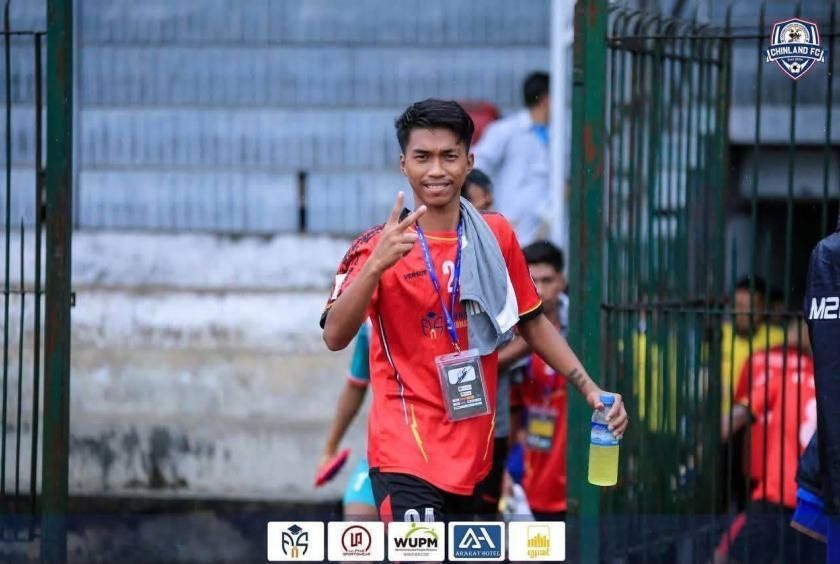
Yangon-based football club Chinland FC announced on the evening of August 29 that it had successfully located Pa Lung, the team's player who had been missing for a week, and that he had safely returned to rejoin the squad. The discovery brought relief to the club, which had launched an intensive search and public appeal after losing contact with the athlete days earlier.
According to Chinland FC's statement published on its Facebook page, Pa Lung had departed abruptly to return to his hometown without first alerting club officials because his mother faced a life-threatening medical emergency requiring his immediate presence. The urgency of the family crisis meant he could not wait to inform the club through normal channels before making the journey, a decision that would later trigger widespread concern about his whereabouts.
The communication breakdown that followed his departure proved more severe than initially anticipated. During his journey back to his hometown, Pa Lung's mobile phone battery became depleted, cutting off his ability to contact the club or provide updates about his situation. Beyond the dead battery, he encountered additional obstacles to re-establishing contact, leaving Chinland FC without any means of reaching him or learning his status for an extended period.
The seven-day silence alarmed club management sufficiently to escalate the matter to law enforcement. Officials at Chinland FC filed an official missing-person report with the local police station, treating Pa Lung's disappearance as a potential welfare concern rather than a voluntary absence. Simultaneously, the club's own personnel undertook their own search efforts, dedicating five days to attempting to trace the footballer's location through whatever channels were available to them.
When conventional investigation methods failed to yield results despite days of effort, Chinland FC made the decision to seek public assistance. The club issued an official appeal to the broader Myanmar community, requesting that anyone with information about Pa Lung's whereabouts come forward. This public call for help marked a significant escalation in the search operation and demonstrated the club's genuine concern for the player's safety and wellbeing.
The successful location of Pa Lung represents the conclusion of an anxious chapter for all involved. The player's return to contact with the club and his reunion with the team resolved weeks of uncertainty about his fate. Beyond the immediate resolution, the incident highlighted how emergency family circumstances can create unexpected complications in professional settings, particularly when combined with communication failures that might have been preventable under different circumstances.
Chinland FC's official statement expressing relief underscored the emotional toll the situation had taken on multiple stakeholders. The club took care to acknowledge not merely the player's safe return but also to provide reassurance to Pa Lung's family members, relatives, friends, supporters and the general public who had been following developments with concern. This messaging suggested that the disappearance had generated significant attention and worry across Myanmar's football community and beyond.
The club demonstrated appreciation for the extensive network of support that mobilised during the search phase. Chinland FC specifically thanked the Myanmar Football Federation (MFF) and Myanmar National League (MNL) for their institutional support, alongside recognition of assistance from relevant authorities, media organisations that helped publicise the appeal, the Myanmar Police Force, and various other organisations and individuals who contributed to locating the missing player. Such acknowledgment highlights how a single incident can activate coordination across multiple sectors of Myanmar's sports and civil infrastructure.
The incident raises broader questions about support systems for professional athletes in Myanmar when unexpected family emergencies occur. While Pa Lung's situation was ultimately resolved satisfactorily, the extended period of lost contact and the need for a missing-person report suggest that clearer protocols might benefit clubs and players alike. For Southeast Asian football clubs more generally, the case underscores the importance of maintaining accessible emergency contact procedures and ensuring players understand reporting obligations when urgent personal circumstances demand their immediate departure.
For Malaysian and wider Southeast Asian observers, the episode provides a reminder that professional sports operations across the region remain vulnerable to disruptions caused by the intersection of personal crises and technological limitations. The successful outcome in this instance owes much to coordinated effort by football authorities and law enforcement, a model that other nations in the region might consider formalising in their own protocols for handling missing athlete cases.

