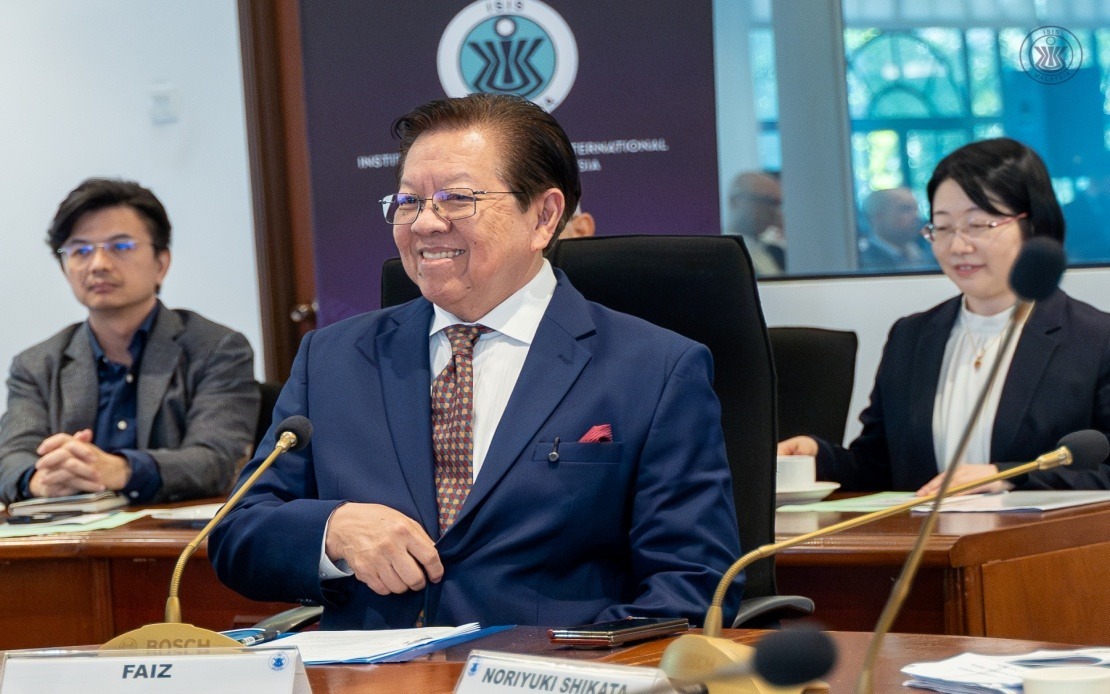
The 39th Asia-Pacific Roundtable (APR), which commenced on June 30 in Kuala Lumpur, has established a dedicated caucus to examine Myanmar's deteriorating situation in granular detail, marking a significant departure from the restrained public dialogue that characterised recent regional diplomatic gatherings. According to Datuk Prof Dr Mohd Faiz Abdullah, executive chairman of the Institute of Strategic and International Studies (ISIS) Malaysia, the decision to create this focused working group reflects broader frustration among Southeast Asian policy specialists that official ASEAN summits have constrained substantive discussion of the crisis to formal, carefully calibrated statements rather than frank analysis.
The move underscores growing recognition among regional thought-leaders that Myanmar represents perhaps the most destabilising challenge confronting ASEAN's stability agenda. During the ASEAN Summit held in Cebu, Philippines, earlier this month, Myanmar featured only obliquely in public sessions, with member states adhering closely to scripted positions that prioritised consensus-building over candid assessment of the humanitarian catastrophe unfolding on the ground. This circumspection, while diplomatically necessary within the Association's consensus framework, has left critical gaps in strategic understanding among practitioners, academics, and security analysts who operate in the Track 2 space where the APR functions.
The 39th iteration of the roundtable, extending through July 2, has structured its proceedings around the overarching theme of "Accelerating agency and action," a framing that sits uncomfortably with the region's apparent paralysis regarding Myanmar. By design, the APR seeks to identify potential regional catalysts and leadership models that might navigate the complex geopolitical tremors reshaping Southeast Asia, yet Myanmar itself has become emblematic of the region's limited agency. The creation of a dedicated Myanmar caucus therefore signals that ISIS Malaysia and its ASEAN-ISIS network partners recognise the crisis demands sustained, deep-dive scrutiny beyond what headline-level ASEAN diplomatic statements permit.
This year's roundtable has attracted approximately 400 participants representing 30 countries, a remarkable expansion from the gathering's inaugural iteration four decades ago, which drew merely 30 to 40 attendees. This growth trajectory reflects the APR's entrenchment as one of Asia-Pacific's premier non-governmental strategic forums. As a Track 2 mechanism—meaning conversations occur among scholars, analysts, and former officials rather than sitting government representatives—the APR occupies a unique institutional niche. It ranks internationally among the world's top 20 strategic-security conferences, yet maintains sufficient remove from official state positions to permit the forthright discussion that government delegations cannot engage in publicly without transgressing ASEAN's consensus conventions.
Beyond Myanmar, the 39th APR will address a crowded agenda of transnational challenges that directly implicate Southeast Asian interests. The South China Sea remains contested geopolitical terrain, with disputes over maritime boundaries and resource rights creating persistent friction. West Asia's instability, meanwhile, exerts ripple effects across global trade and energy markets that touch every Southeast Asian economy. Rising protectionism and escalating tariff regimes threaten regional supply chains that Malaysia and its peers have spent decades constructing. Simultaneously, energy security concerns have intensified as the region pursues the energy transition while navigating volatile hydrocarbon markets. Artificial intelligence represents an emerging policy frontier; regional governments remain largely underprepared for the technological, economic, and security implications of AI systems operating within their jurisdictions.
The substantive intensity anticipated during the Myanmar caucus—and across other APR sessions—reflects a fundamental structural advantage of Track 2 mechanisms. Scholars, think-tank researchers, and policy analysts can explore hypotheticals, criticise incumbent approaches, and articulate perspectives that governments cannot endorse officially without diplomatic consequences. This permissiveness has made the APR valuable to both regional and international policymakers seeking unvarnished assessments of emerging threats and opportunities. Myanmar specialists attending the roundtable will have space to discuss not only the immediate humanitarian dimensions of the crisis but also its strategic ramifications: the risk of state collapse, potential humanitarian corridors, the role of external powers, and pathways toward stabilisation that diverge from official ASEAN rhetoric.
The ISIS Malaysia executive chairman's emphasis on bringing together "practitioners, think tanks, and Myanmar experts" to "engage far deeper" signals that the roundtable's organisers view the current Myanmar impasse as requiring intellectual resources beyond what quarterly ASEAN meetings generate. The network of ASEAN-ISIS institutes—composed of leading policy research organisations across Southeast Asia—has collectively accumulated decades of expertise on regional security dynamics. Mobilising that expertise specifically around Myanmar reflects institutional conviction that the crisis warrants intensive analytical focus.
For Malaysian readers and policymakers, the APR's prominence of Myanmar carries direct implications. Malaysia chairs ASEAN in 2024 and faces pressure to advance a credible Myanmar policy framework, yet the regional consensus-building mechanisms that normally guide ASEAN decision-making have produced only incremental progress on the crisis. The frank discussions emerging from the Myanmar caucus may generate insights that inform Malaysia's diplomatic strategy, potentially identifying pragmatic interventions that circumvent the zero-sum positions many capitals have adopted. Additionally, Myanmar's instability poses immediate challenges for Malaysia's internal security, as displacement and transborder criminal activity create domestic complications.
The roundtable's three-day format, combined with its structured caucuses, allows participants to move beyond the superficial treatment that plenary sessions necessarily require. Smaller working groups focused on specific geographies or challenges create conditions for technical expertise and nuanced argumentation that shape how regional analysts subsequently frame issues for policymakers. The Myanmar caucus will likely produce consensus positions or at minimum, well-articulated alternative frameworks that circulate through policy circles across Southeast Asia in subsequent months.
As geopolitical volatility continues buffeting the region—evidenced by great-power competition in the South China Sea, shifting alignments, and economic turbulence—the APR's role as a crystallising forum for regional strategic thought has become more consequential. By dedicating formal space to Myanmar's complexities, the 39th roundtable acknowledges that Southeast Asia's stability depends on moving beyond diplomatic ritual toward substantive engagement with the region's most immediate security challenge.

