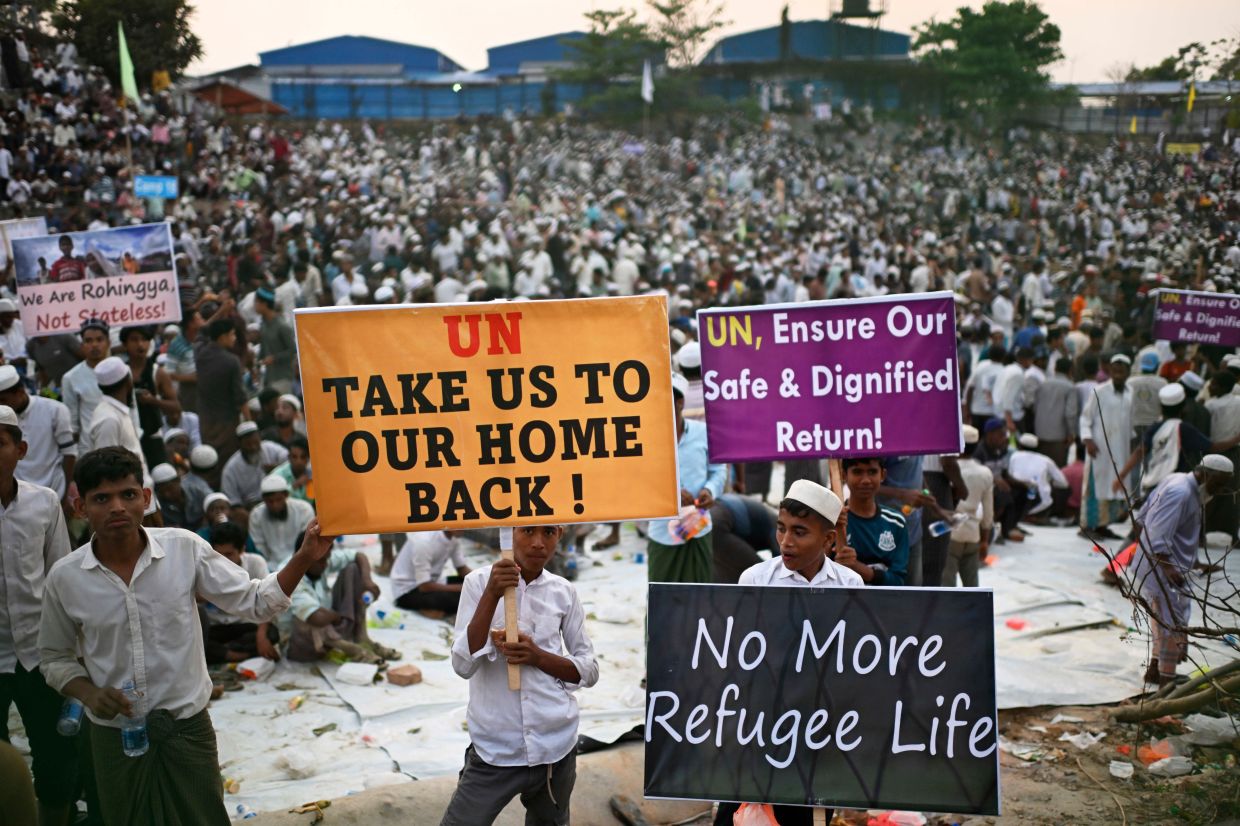
Myanmar's military-controlled government has declared that it has verified over 300,000 Rohingya refugees living in overcrowded camps across Bangladesh as former residents of Rakhine state, pledging to facilitate their return once the security situation in the troubled western region improves. The announcement from the Ministry of Foreign Affairs marks a formal recognition of verification efforts that have unfolded across nearly nine years of displacement, yet it arrives amid persistent instability that continues to obstruct any meaningful repatriation process.
The scale of displacement remains staggering. When Myanmar's military initiated a sweeping crackdown in August 2017 following attacks by a Rohingya insurgent group on guard posts, more than 700,000 people fled across the border into Bangladesh within a matter of months. This exodus added substantially to an existing Rohingya population in Bangladesh that had accumulated over decades through successive waves of violence perpetrated by Myanmar's armed forces. The combined refugee population now represents one of the world's largest and most protracted humanitarian crises, confined to sprawling camps where conditions have steadily deteriorated.
According to Myanmar's verification data released through late July, the government had examined 426,545 individuals from a roster of 828,824 refugees provided by Bangladesh. Of those examined, the military-led authorities determined that 308,797 qualified as former Rakhine residents eligible for return. An additional 113,507 people could not be verified through official records, whilst 4,241 were flagged as having participated in what Myanmar characterizes as terrorist activities. These figures represent Myanmar's formal stance on who might eventually be accepted, though the government's classification methods and documentation standards have drawn international scrutiny.
Myanmar's approach to the Rohingya question remains fundamentally rooted in its refusal to acknowledge them as a legitimate ethnic group. The government consistently refers to the Rohingya as Bengalis, implying they are economic migrants or illegal settlers from neighbouring Bangladesh rather than indigenous to Myanmar. This rhetorical framing serves a crucial political purpose within Myanmar's nationalist discourse, allowing the state to portray repatriation not as a restoration of citizenship rights but as a voluntary return of foreign nationals. Myanmar maintains that only 135 ethnic minorities possess lawful status within the country, conspicuously excluding the Rohingya from this protected classification.
The broader context of Myanmar's political deterioration has rendered repatriation increasingly improbable. A 2018 agreement between Myanmar and Bangladesh had outlined a two-year framework for systematic returns, but that timeline proved hopelessly optimistic given subsequent developments. The military coup in February 2021 that deposed elected leader Aung San Suu Kyi transformed Myanmar's internal security landscape, triggering widespread armed resistance and fragmenting state authority across multiple regions. Rakhine state, in particular, has become a flashpoint of competing armed forces, with the Arakan Army—a powerful ethnic insurgent group—seizing control of substantial territory from the military during fighting that intensified in 2023. This loss of military control has made any coordinated refugee repatriation programme logistically impossible and placed additional displaced persons at risk.
The humanitarian consequences of prolonged displacement have become increasingly dire. Conditions within the refugee camps have deteriorated markedly, with international humanitarian organisations facing steep funding reductions that have constrained medical services, education, and livelihood assistance. Facing bleak prospects for safe return to Myanmar and worsening living conditions in the camps, growing numbers of Rohingya have become desperate enough to attempt perilous maritime journeys across the Indian Ocean toward Malaysia and Indonesia aboard unseaworthy vessels. These journeys frequently result in tragedy, with drownings and human trafficking claims commonplace. The phenomenon has transformed the Rohingya crisis from a regional displacement problem into a transnational migration issue affecting Southeast Asian governments directly.
Malaysia has found itself at the forefront of managing these maritime arrivals. Prime Minister Anwar Ibrahim indicated in late July that Myanmar had committed to accepting 5,000 Rohingya refugees currently residing in Malaysia, potentially as part of a broader repatriation framework. However, contradictory statements from Myanmar's Foreign Ministry official Han Win Aung subsequently undermined this announcement, with the official asserting that Myanmar would only accept verified Myanmar nationals held in Malaysian detention facilities, not Rohingya refugees more broadly. This discrepancy highlights the persistent confusion and lack of coordination surrounding repatriation efforts, even when neighbouring countries attempt to negotiate direct arrangements.
Myanmar's government has also disputed international characterisations of the displacement scale, contending that claims of over one million people being driven from Rakhine represent exaggeration. The military-backed authorities maintain that while more than 540,000 crossed into Bangladesh following the 2017 violence, an additional 200,000-plus remained in northern Rakhine, implying that total displacement figures should be contextualized differently. This claim has attracted little credibility from international monitors, who have documented systematic destruction of Rohingya settlements and village structures that would render return and resettlement extraordinarily difficult even if security improved.
The international community has maintained that Myanmar's 2017 military operation constituted ethnic cleansing at minimum, with numerous bodies, including the United Nations, alleging evidence of genocide based on the scale, organisation, and systematic nature of the violence. Myanmar has rejected these accusations completely, framing the operation as a counterinsurgency response to legitimate security threats. This fundamental disagreement over characterisation has poisoned diplomatic efforts to resolve the crisis and likely contributed to the lack of meaningful progress on repatriation despite numerous international initiatives and diplomatic engagements.
For Malaysia and other Southeast Asian nations, the Rohingya crisis presents an ongoing dilemma between humanitarian obligations and sovereignty concerns. The region lacks the institutional capacity to permanently absorb hundreds of thousands of displaced persons, yet Myanmar's continuing instability and refusal to facilitate returns leave few alternatives. Malaysia's hosting of significant Rohingya populations, alongside attempts at negotiated repatriation, reflects the pragmatic regional approach of managing a crisis whose resolution depends fundamentally on stabilisation within Myanmar itself—a prospect that remains distant given the country's fractured political and security landscape.
As the crisis enters its ninth year, the verification process announced by Myanmar appears more symbolic than substantive. Without demonstrable improvement in Rakhine's security environment, reduction in military-insurgent conflict, and Myanmar's willingness to restore Rohingya citizenship rights, the 308,797 verified individuals remain trapped in a holding pattern. Regional governments including Malaysia must simultaneously prepare for the possibility that maritime migration attempts will continue and perhaps accelerate, requiring enhanced coast guard operations and coordination, whilst simultaneously advocating for genuine political resolution within Myanmar that remains stubbornly elusive.

