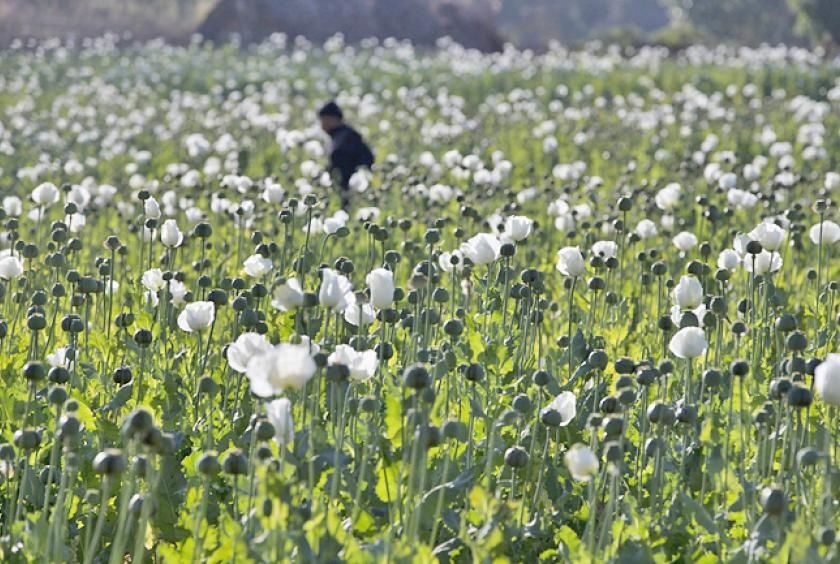
Myanmar's law enforcement agencies have dealt twin blows to regional drug trafficking networks, intercepting a substantial heroin consignment and a massive cache of synthetic stimulants in coordinated operations spanning central Myanmar. The Central Committee for Drug Abuse Control (CCDAC) confirmed the seizures, which underscore the country's ongoing struggle against narcotics trafficking across key transportation corridors.
In the first operation, anti-narcotics police acting on intelligence tips conducted a targeted search of four motorcycles in Amarapura township within the Mandalay region on Tuesday. Officers recovered 17.6 kilograms of heroin from the vehicles, a significant quantity that would supply tens of thousands of doses on regional markets. Four individuals were arrested at the scene and taken into custody for questioning and processing.
The second interdiction occurred in Lewe township of Naypyitaw Union Territory on July 23, when police seized approximately one million stimulant tablets in a separate enforcement action. Five suspects were apprehended in connection with this haul, which represents a substantial quantity of synthetic drugs destined for distribution networks throughout the region. The timing and scale of both operations suggest coordinated intelligence gathering among Myanmar's drug enforcement apparatus.
Both cases underscore the persistent challenge of narcotics trafficking through Myanmar, a country that serves as a critical transit point along the notorious "Golden Triangle" region where borders of Myanmar, Thailand, and Laos converge. The heroin seizure in Amarapura is particularly significant given that province's geographical position along major trafficking arteries connecting production zones in northern Myanmar and Shan State with markets throughout Southeast Asia. Law enforcement authorities have identified Mandalay's central location and extensive road networks as particularly vulnerable to smuggling operations.
The stimulant tablet seizure in Naypyitaw, the country's capital region, indicates trafficking networks have adapted their routes and methods to penetrate even high-security administrative areas. The sheer volume—one million tablets—suggests industrial-scale manufacturing or importation operations rather than small-scale distribution. These synthetic substances, often methamphetamine-based compounds, command substantial profits on underground markets across Thailand, Laos, and Vietnam, making Myanmar a critical nexus in the regional narcotics economy.
Authorities have charged all nine detained suspects under Myanmar's Narcotic Drugs and Psychotropic Substances Law, which carries substantial penalties including lengthy imprisonment and substantial fines. The legal framework represents Myanmar's formal commitment to international drug control conventions, though enforcement capacity remains inconsistent across the country's geographically fragmented territory, particularly in border regions and conflict-affected zones where state authority is contested.
These seizures reflect broader patterns of narcotics trafficking through mainland Southeast Asia, where synthetic drugs have become increasingly dominant over traditional opiates. Regional law enforcement agencies, including those in Thailand and Laos, have reported surging volumes of methamphetamine tablets and heroin moving along similar routes. The interconnected nature of these trafficking networks means disruptions in one country's supply chains often trigger adjustments in neighboring territories, creating a complex enforcement environment.
For Malaysia and other Southeast Asian nations, Myanmar's drug interdiction efforts carry direct relevance. Malaysian authorities regularly intercept shipments originating from or transiting through Myanmar, and the country remains a significant source region for narcotics consumed domestically. The effectiveness of Myanmar's enforcement capabilities thus affects the volume and availability of drugs reaching Malaysian streets, making regional cooperation on intelligence sharing and border control increasingly important.
The CCDAC's public disclosure of these seizures signals Myanmar's intention to demonstrate anti-trafficking credentials, particularly relevant given international scrutiny of the country's governance challenges. Yet analysts note that while individual operations like these represent genuine enforcement successes, they likely represent only a fraction of total trafficking volumes traversing the country. Estimates suggest seizures capture perhaps five to ten percent of actual drug flows, indicating the scale of clandestine operations exceeds what border police can interdict.
Longer-term challenges for Myanmar include strengthening institutional capacity among drug enforcement personnel, reducing corruption that enables trafficking, and addressing the economic incentives driving supply-side involvement in the narcotics economy. Border communities in Shan State and other regions often participate in drug production and trafficking because alternative income sources remain limited, a structural problem requiring development interventions beyond enforcement alone.
Regional intelligence sharing mechanisms, including ASEAN frameworks and bilateral arrangements with Thailand and China, play increasingly important roles in disrupting trafficking operations. Myanmar's participation in these networks, while improving, remains uneven, leaving coordination gaps that sophisticated trafficking organizations continue to exploit. The operations announced by the CCDAC likely resulted from tip-offs or intelligence that reflects these developing regional cooperation mechanisms.

