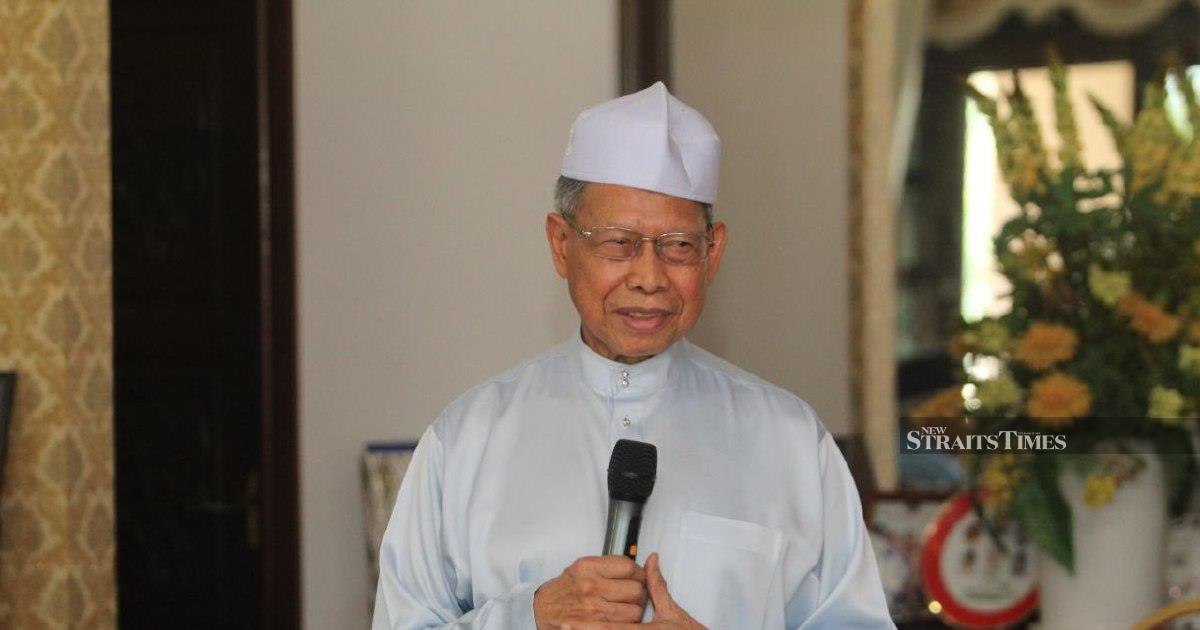
Datuk Seri Mustapa Mohamed, the veteran politician who recently returned to the Umno fold, has made clear that he will not be seeking a parliamentary seat in the forthcoming general election. Speaking in his Pasir Mas stronghold, the former Jeli member of parliament attributed his decision primarily to physical health concerns that have begun to affect his ability to campaign effectively.
The experienced statesman's announcement marks a significant moment in Malaysian politics, as Mustapa has long been a fixture in national discourse and legislative affairs. His condition, which he described as limiting his capacity even for basic physical activity such as walking, appears to have prompted a more reflective assessment of his political future. Such candid acknowledgement of health-related constraints reflects a broader reality affecting Malaysia's political establishment, where several senior figures have begun transitioning away from frontline roles in recognition of age-related limitations.
Mustapa's decision to rejoin Umno earlier this year itself generated considerable discussion within political circles, particularly given his history with the party and his experiences in different political formations. His return represented a recalibration of loyalties that observers interpreted through various lenses, from personal political calculation to recognition of changing fortunes within Malaysia's fractious political landscape. However, his immediate clarification that this homecoming would not translate into an electoral challenge suggests he envisions a different role within the party's hierarchy moving forward.
The timing of his announcement comes as political parties nationwide prepare preliminary strategies for an election that constitutional provisions suggest will arrive within the current parliamentary term. For Umno, particularly, the field of available candidates continues to reshape itself as established figures reassess their positions and younger cadres position themselves for advancement. Mustapa's withdrawal from the contest removes one established voice from the competitive arena, potentially opening space for new or alternative candidates in constituencies where his political weight might previously have been deployed.
Mustapa's circumstances also illustrate the human dimension underlying Malaysia's political machinations. While electoral politics often fixates on factional struggles, strategic alliances, and accumulated power bases, the lived experiences of individual politicians—their health challenges, their mortality, their changing capacity for the physical and mental demands of public service—shape outcomes in ways frequently overlooked by analysts focused on structural dynamics. His willingness to acknowledge these personal realities publicly may resonate differently with different constituencies, from sympathetic observers who respect his honesty to those who interpret his withdrawal as indicative of broader transitions within traditional power structures.
For Jeli constituency specifically, Mustapa's non-participation opens new possibilities. The seat, which he represented in parliament, holds significance within Kelantan's political ecosystem. The choice of his successor, whether from within Umno's existing ranks or through elevation of younger figures, will carry implications for how the party seeks to consolidate support in the state's northern reaches. Historical context matters here: Kelantan's political volatility and the shifting sands of party loyalty among voters mean that established names sometimes carry advantage, but new faces occasionally prove more effective at capturing electoral attention.
Umno's broader situation also provides context for understanding Mustapa's decision. The party has faced considerable challenges in recent electoral cycles, with internal fractures, leadership transitions, and competition from rival formations all contributing to a more complicated political environment than existed during previous eras of dominance. Against this backdrop, Mustapa's return—while symbolically important—appears designed to strengthen the party's institutional coherence rather than to position him as a frontline electoral combatant. His role may lean instead toward advisory functions, elder statesman contributions to internal party deliberations, and perhaps representation in upper house or appointed positions where health limitations prove less immediately consequential.
The broader implications for Malaysian politics warrant consideration. As electoral politics continues maturing and as generations of politicians who came of age in earlier eras increasingly step back, questions arise about succession, about whether institutional knowledge transfers effectively to newer cohorts, and about how party cultures evolve when founding or long-serving figures depart active electoral participation. Mustapa's experience with multiple party formations means his perspectives may carry particular weight in internal discussions about strategy and direction, even as his parliamentary ambitions conclude.
Health-related factors have begun influencing Malaysian political trajectories with greater frequency and visibility. Mustapa's frank discussion of his mobility limitations contrasts with occasional instances where senior politicians have continued campaigning or serving despite obvious physical challenges, prompting public concern about fitness for office. His decision to prioritize his wellbeing and acknowledge realistically his current capacities may establish a useful precedent, normalizing candid conversation about when active political participation becomes genuinely unsustainable rather than continuing performatively.

