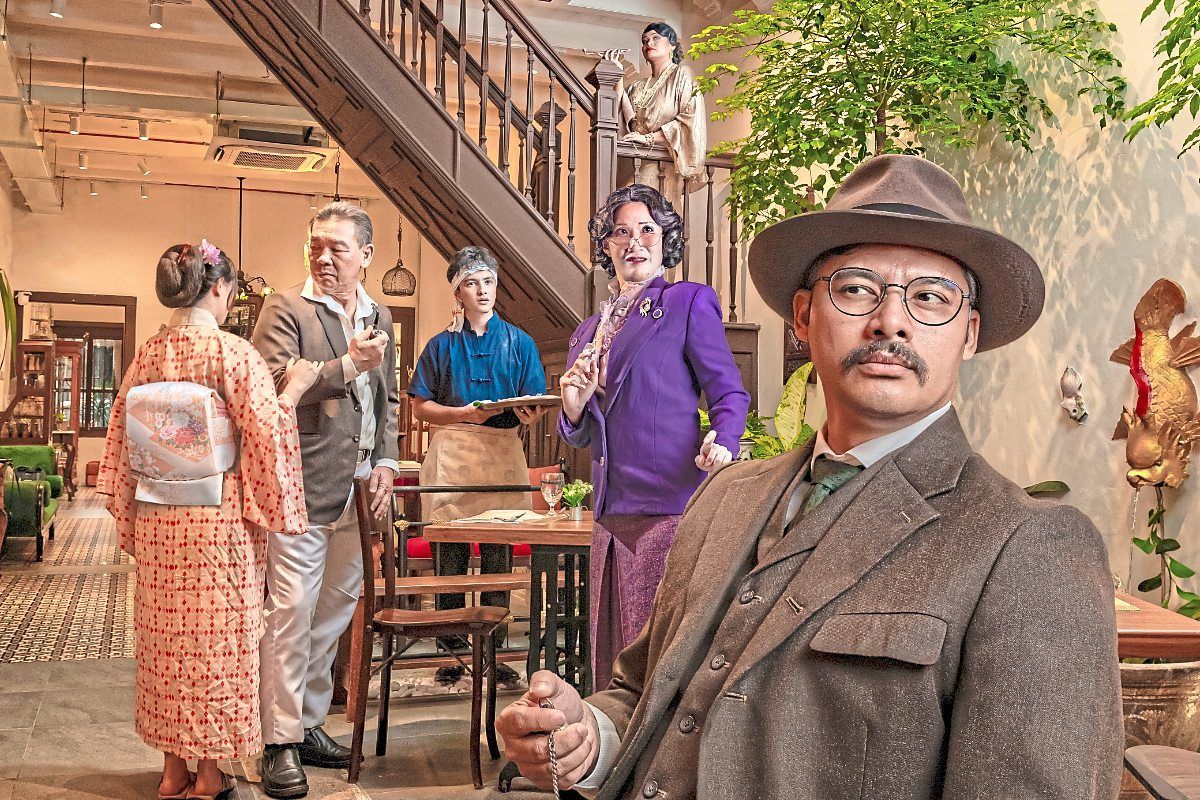
The notion of dinner theatre is hardly new, but Melaka's emerging cultural circuit is attempting something more ambitious: merging the rigours of investigative gameplay with the sensory immersion of Peranakan cuisine in a heritage setting. Over four weekends beginning in July, audiences at The Garden@Heeren on Jalan Tun Tan Cheng Lock will don vintage attire and step into a 1930s murder mystery, becoming active participants in an unfolding crime rather than passive observers. The production, developed by Krate Creative Space in partnership with the heritage venue, represents a deliberate attempt to position Melaka's cultural offerings beyond conventional tourism and into the realm of experiential storytelling.
The evening centres on a deceptively celebratory scenario: the grand reopening of a beautifully restored restaurant where guests are invited to savour the creations of the celebrated Chef Fa. Yet this festive occasion deteriorates into tragedy when a shocking death occurs, precipitating an investigation in which diners themselves assume investigative duties. Working alongside Detective Raymond, the cast character portrayed by Francis Augustine, guests will examine crime scenes, excavate hidden clues and interrogate suspects including Miss Irene (Sonia Lee), Baba Pang (Lee You Meng), Peter Pang (Elijah Skye) and Mama Maria (Neena Shu). The experience culminates with participants presenting their own verdict on the killer's identity, meaning each group's deductions and decisions tangibly influence how the narrative concludes.
What distinguishes this venture from conventional dinner-theatre is its deliberate architectural integration within The Garden@Heeren's rooms and spaces. Rather than remaining seated at a single table, guests migrate throughout the restored house, with movement itself becoming part of the investigative methodology. The production spans approximately two and a half hours and carries a recommended minimum age of fifteen. The creative team has engineered two distinct endings that rotate across the four weekends, allowing returning audiences a fundamentally different narrative resolution and experience on subsequent visits. This structural choice reflects the production team's understanding that mystery theatre's appeal lies partly in narrative unpredictability.
The culinary dimension anchors the immersion to Peranakan cultural identity. Multiple-course menus feature signature dishes including pie tee, pongteh chicken and cincalok omelette, embedding gastronomic heritage throughout the evening. Writer and developer Wee, who has conceived all of Krate's interactive productions, deliberately constructed the experience to engage all five senses simultaneously. The 1930s temporal setting, costuming choices, period-appropriate music and physical interactions with cast members collectively transport participants to a specific historical moment. By intertwining theatre with dining, Krate avoids relegating food to a peripheral function; instead, the meal becomes narrative substance, connecting contemporary audiences to Peranakan cultural expression through direct sensory engagement.
Wee's creative ambition reflects broader questions about heritage presentation and cultural tourism in Malaysia. Rather than curating museum-style exhibitions or passive guided tours, she has championed immersive methodologies that position participants as agents within cultural narratives. When discussing her desire to create a murder mystery, she emphasised that discovering The Garden@Heeren proved transformative; the venue's physical architecture and historical significance naturally lent themselves to suspense and storytelling. The convergence of heritage space, interactive theatre and Peranakan gastronomy proved serendipitous, creating what her team envisages as a new category of cultural experience.
Krate Creative Space itself emerged in 2016 as Melaka's first independent creative community dedicated to customised, interactive and multi-disciplinary live performances. The organisation has mounted over ten original productions, cultivating a loyal audience base and establishing itself as a quality provider within Malaysia's live performance landscape. The company's geographic draw extends significantly beyond Melaka; while approximately half its audiences originate locally, substantial cohorts travel from the Klang Valley, Penang, Johor and Singapore. International tourists seeking experiences transcending conventional sightseeing represent an additional market segment. This expanded audience geography underscores how heritage-focused immersive theatre can attract visitors specifically seeking distinctive cultural engagement rather than generalised tourism products.
The sustainability challenge confronting independent creative organisations remains acute, and Krate's operational philosophy reflects pragmatic adaptation. Based in Bukit Beruang, Melaka, the company's creative hub—incorporating rehearsal areas, studio and discussion space—simultaneously functions as a cafe, generating revenue streams beyond performance ticketing alone. Wee acknowledges that maintaining independent operations without institutional subsidies demands constant innovation and revenue diversification. Her willingness to expand beyond pure theatrical production into hospitality services demonstrates how cultural organisations in Southeast Asia increasingly operate as hybrid enterprises, blending artistic programming with commercial activities.
Wee's articulated vision extends beyond this particular production into systemic cultural positioning. She contends that immersive theatre possesses significant potential as a distinctive component of Malaysia's cultural tourism infrastructure, particularly within heritage cities where historical narrative infrastructure already exists. Her stated goal involves establishing a permanent Melaka home where heritage-inspired immersive experiences operate on a regular calendar basis, allowing both locals and international visitors sustained access to original Malaysian stories. This aspiration suggests recognition that Malaysia's cultural export potential lies not primarily in preserving heritage as historical artefact, but in dynamically re-animating it through contemporary artistic methodologies.
The production's invitation for guests to select their engagement level—choosing between bystander and active participant roles—acknowledges diverse comfort levels with immersive theatre. This flexibility distinguishes the experience from productions demanding universal participation intensity. Guests can calibrate their involvement according to personal preference, whether they wish to drive investigation or observe sympathetically. Additionally, the dual-ending structure creates genuine incentive for repeat attendance; returning audiences encounter substantially different narrative progressions rather than reductive replays of initial experience. Such design decisions reflect theatrical sophistication and audience understanding developed through Krate's prior production histories.
Last year's expansion to Penang, where Krate premiered The Best Nyonya at Georgetown Mansion, indicates ambitions to establish regular programming across Malaysia's heritage cities. This geographic diversification potentially positions Krate as a regional provider of heritage-centred immersive experiences. The success of such ventures depends substantially on cultivating tourism partnerships and securing reliable audience pipelines across state boundaries. The loyalty Wee describes among returning audiences—people willing to travel considerable distances for Krate productions—suggests that quality experiential offerings develop devoted constituencies capable of sustaining independent cultural operations.
For Malaysian audiences increasingly sceptical of standardised tourism experiences, the murder mystery weekends at The Garden@Heeren represent a distinctive proposition. The experience validates Melaka's positioning as a cultural destination beyond colonial architecture and souvenir shopping. By employing interactive theatre, Peranakan gastronomy and heritage venues as integrated components, Krate demonstrates how cities can refresh historical narratives and engage contemporary audiences through active participation rather than passive consumption. The July and August weekends at Jalan Tun Tan Cheng Lock accordingly merit consideration not merely as entertainment offerings, but as exemplars of how Southeast Asian heritage cities might evolve their cultural infrastructure to meet twenty-first-century visitor expectations.

