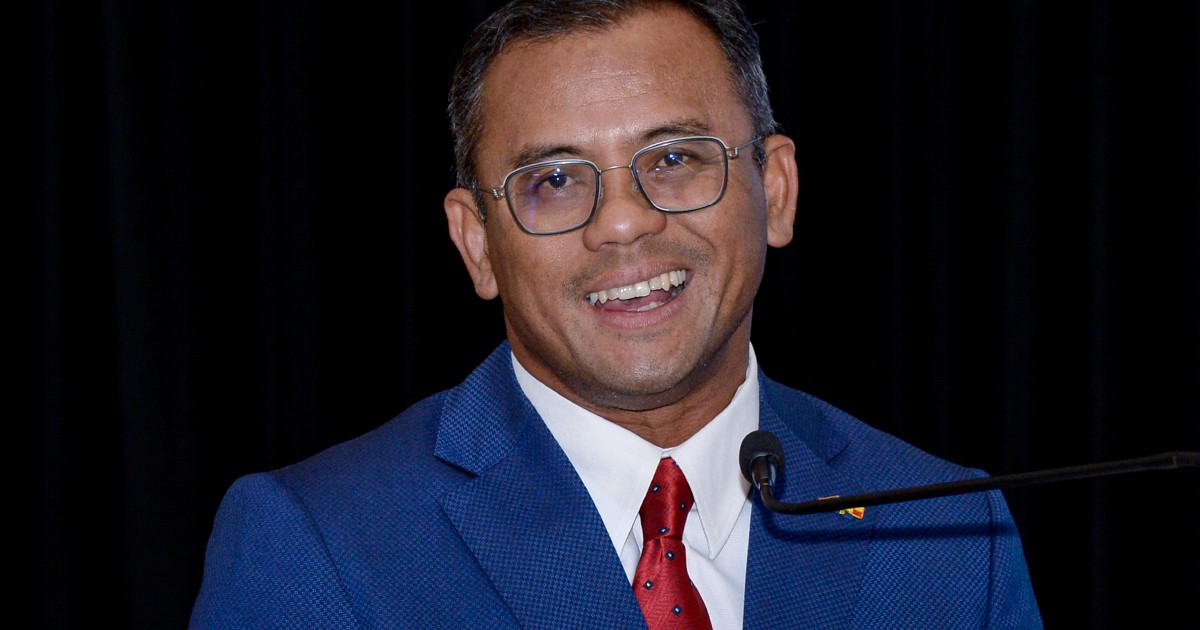
Parliament heard calls on Tuesday for the establishment of a dedicated multi-agency task force to examine past misconduct at Lembaga Tabung Haji, with particular focus on determining whether such irregularities intersected with the 1MDB financial scandal that rocked Malaysia's reputation and triggered international legal proceedings.
The proposal represents growing parliamentary concern about governance failures within Malaysia's pilgrimage fund administrator, which manages savings for millions of Muslims intending to perform the Hajj. Amirudin's intervention signals that lawmakers increasingly view the institution's troubles not as isolated administrative lapses but as potentially part of a wider pattern of financial mismanagement that may have implicated state assets.
Lembaga Tabung Haji has faced mounting scrutiny over recent years following revelations of substantial losses, questionable investments, and management decisions that drew criticism from parliamentary oversight committees and auditor-general reports. The fund's deteriorating financial position prompted emergency interventions and restructuring efforts aimed at stabilizing operations and restoring public confidence among its contributory members.
The 1MDB scandal, which emerged in 2015, involved an alleged global conspiracy to misappropriate billions of ringgit from a sovereign wealth fund established to fund national development projects. The investigation implicated high-level government officials and resulted in criminal convictions, asset recovery proceedings, and an ongoing international reputation crisis. The scandal prompted Malaysia's government to strengthen financial oversight mechanisms and pursue accountability across related institutions.
Establishing a task force specifically tasked with investigating TH irregularities and 1MDB connections would represent a comprehensive approach to examining whether individuals, networks, or schemes that operated within the 1MDB ecosystem extended influence or conducted questionable transactions involving Tabung Haji assets. Such an inquiry could uncover whether common perpetrators, financial intermediaries, or corrupt officials simultaneously exploited multiple institutional frameworks.
The multi-agency structure proposed would likely involve the Malaysian Anti-Corruption Commission, Bank Negara Malaysia, the Inland Revenue Board, the police's Commercial Crime Investigation Department, and potentially the Attorney-General's Chambers. Such coordination would enable cross-institutional intelligence sharing and prevent procedural gaps that corrupt actors might exploit to escape accountability.
For Malaysian stakeholders, particularly the millions of Hajj pilgrims who entrust their savings to Tabung Haji, such scrutiny carries profound implications. Public confidence in the institution directly affects contribution rates and long-term financial viability. A transparent investigation demonstrating commitment to identifying and prosecuting wrongdoing could help restore faith, whereas perceived inaction would deepen concerns about whether the fund remains vulnerable to predatory conduct.
The potential 1MDB nexus deserves particular examination given the scandal's documented reach across multiple sectors and institutions. If investigation reveals coordinated schemes exploiting both sovereign wealth structures and pilgrimage funds, it would suggest systemic vulnerabilities in Malaysia's financial governance architecture that require more ambitious reform than previously undertaken.
Regionally, Malaysia's continued ability to demonstrate effective accountability mechanisms carries geopolitical and economic significance. Foreign investors and trading partners monitor governance standards as indicators of institutional integrity. Comprehensive investigation into potential links between major scandals signals commitment to international best practices and may support broader rehabilitation of Malaysian financial sector credibility that suffered during the 1MDB episode.
For opposition lawmakers and civil society organizations, the proposal offers potential to broaden scrutiny beyond individual culprits to examine systemic enablers of financial crime. Previous inquiries into 1MDB concentrated on specific conspirators; a task force examining intersecting institutional failures could identify structural weaknesses and recommend governance reforms applicable across government-linked companies and statutory bodies.
The timing of renewed focus on TH irregularities reflects Malaysia's broader reckoning with institutional accountability following the 2018 election transition. The Pakatan Harapan government and subsequent administration made anti-corruption pledges central to their political mandate. Delivering concrete investigations addresses public expectations while demonstrating that no institution remains insulated from scrutiny regardless of historical political sensitivities.
Implementing such a task force would require political will to pursue leads wherever they lead, including toward figures with political protection or institutional connections. Previous investigations into financial crime sometimes encountered obstruction or resource constraints limiting scope. A dedicated task force with explicit parliamentary mandate and adequate funding could overcome such limitations.
Ultimately, investigating whether TH irregularities connected to 1MDB serves dual purposes: establishing individual accountability for specific wrongdoing while simultaneously mapping broader institutional vulnerabilities that enabled misconduct across multiple government structures. This comprehensive approach offers Malaysian citizens greater assurance that lessons learned from the 1MDB scandal inform future prevention measures and institutional safeguards.

