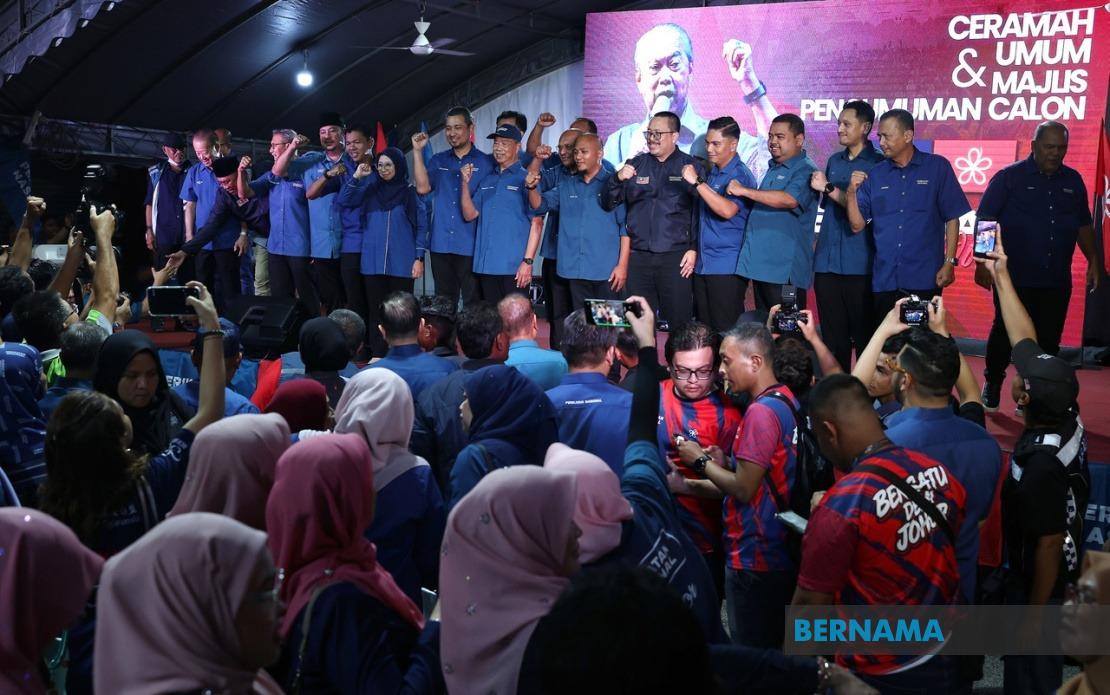
Tan Sri Muhyiddin Yassin, president of Parti Pribumi Bersatu Malaysia, formally presented his party's full slate of 16 candidates for the forthcoming Johor State Election at an event in Pagoh on June 25. The announcement took place during a candidates presentation and public ceramah gathering held at the Pagoh Parliamentary Service Centre in Taman Pagoh Jaya, marking a significant milestone in Bersatu's electoral preparation for what is shaping up to be a competitive battle in the southern peninsula's largest state by population.
The timing of the announcement comes as the electoral machinery accelerates toward the ballot box. The Election Commission has designated June 27 as nomination day, a critical juncture when candidates must formally register their candidacy and submit required documentation. This compressed timeline means parties have only two days between candidate announcements and the formal nomination process—a reflection of the urgency now gripping Malaysian electoral politics. With just two weeks separating nomination day from polling day on July 11, campaigning will be intense and strategically decisive across all 16 contested seats.
Bersatu's decision to field candidates across all available Johor constituencies demonstrates the party's determination to establish itself as a significant electoral force in the state rather than adopting a selective or niche strategy. The inclusion of Mohd Idzharruddin Mohd Nasirruddin as the candidate for N8 Bukit Pasir exemplifies the party's approach of fielding candidates across geographically and demographically diverse constituencies. This comprehensive approach signals confidence, though it also exposes Bersatu to potential losses across multiple fronts if campaigning falters.
For Malaysian political observers, Bersatu's performance in Johor carries implications beyond the state itself. The party, which emerged from dissent within the United Malays National Organisation and has since become a prominent component of various political coalitions, views strong Johor performance as essential to maintaining relevance in national politics. Johor, as a bellwether state with significant economic importance and a substantial Malay-Muslim voter base that Bersatu considers its core constituency, represents contested terrain that will substantially influence perceptions of which coalition direction has momentum heading into future national elections.
The dissolution of the Johor State Assembly on June 1 triggered the entire electoral process, ending the term of the previous state government and returning all seats to contention. This clean slate approach, while appearing democratic, has created uncertainty among incumbent representatives and voters alike. Political realignments within Johor have been particularly fluid in recent years, with various coalitions jostling for dominance and attempting to recalibrate their Johor strategies following national-level shifts.
Bersatu's electoral strategy in Johor reflects broader positioning within Malaysian politics. The party has consistently sought to position itself as a champion of Malay and Bumiputera interests while maintaining broader coalition flexibility. By contesting across all 16 seats rather than ceding territory to coalition partners or regional power brokers, Bersatu signals its intention to compete vigorously and build an independent power base within Johor. This approach contrasts sharply with parties that adopt a divide-and-conquer coalition arrangement, where different political parties claim different constituencies to avoid internal competition.
The public ceramah component of the announcement event reflects traditional campaign modes that remain central to Malaysian politics, particularly in reaching grassroots voters. Even in an era of social media and digital campaigning, face-to-face engagement at local venues continues to shape political perceptions and voter sentiment. Bersatu's choice to combine the formal candidate announcement with a public address suggests the party views this Johor campaign as requiring sustained grassroots mobilisation alongside institutional positioning.
For Malaysian voters, particularly those in Johor who will cast ballots on July 11, the Bersatu candidate slate represents one component of a broader electoral choice. Voters will need to evaluate not only individual candidate qualifications and local connections but also what backing each candidate brings from their party's national platforms and coalition partnerships. The relationship between state-level governance and national-level coalition politics has grown increasingly intertwined in Malaysian electoral dynamics, meaning Johor voters cannot easily separate local from national considerations.
The two-week campaign period leading to polling day will determine whether Bersatu's candidates can effectively communicate their message to voters across their respective constituencies. In an environment where multiple coalitions are contesting and political narratives shift rapidly, the success of individual Bersatu candidates may depend heavily on how effectively the party's central leadership, particularly Muhyiddin himself, can amplify their campaigns through strategic visits and high-profile endorsements during the short but intense campaign window.
Bersatu's formal candidate announcement represents a critical juncture in the Johor election cycle. With nominations set for June 27 and polling scheduled for July 11, the party and its candidates must now transition from internal party processes to direct voter engagement. The coming weeks will test whether Bersatu's organisational strength, candidate quality, and coalition positioning can translate into meaningful electoral gains in a state where control of the legislative assembly will significantly influence regional politics and potentially shape the broader Malaysian political trajectory.

