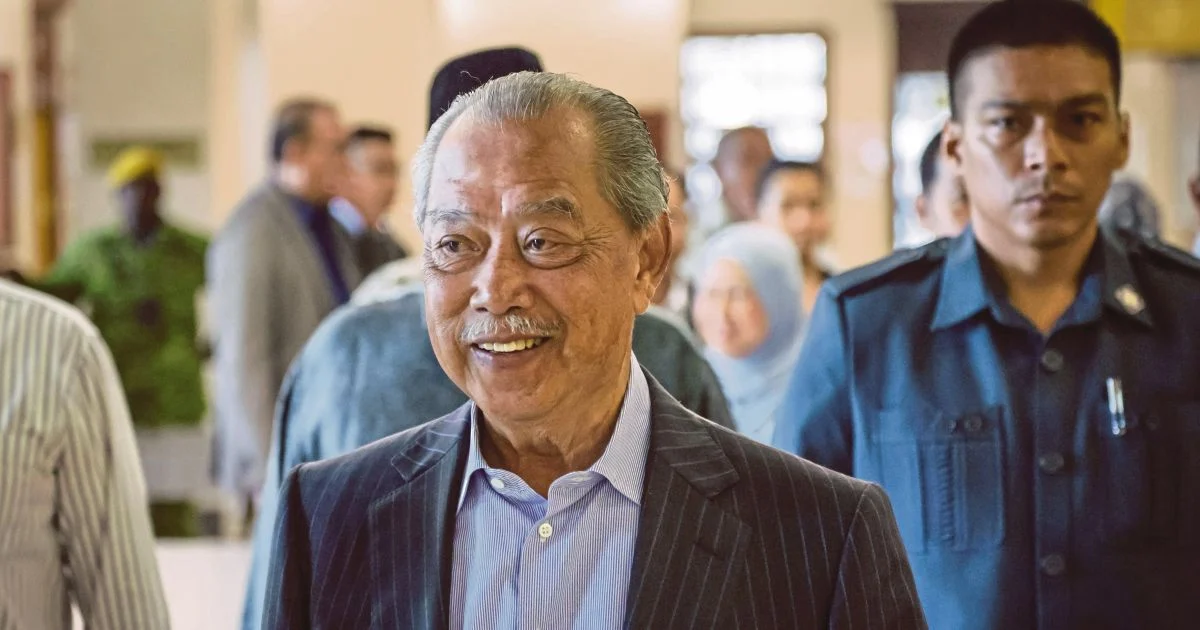
Bersatu president Tan Sri Muhyiddin Yassin has declared that Perikatan Nasional maintains realistic prospects of securing enough support to form the next government in Johor, a statement that comes as the coalition positions itself strategically in the forthcoming state election despite limiting its direct contest to 33 seats. Speaking from Pagoh, Muhyiddin's remarks underscore the opposition alliance's calculated approach to the electoral contest, suggesting that partnership arrangements and post-election negotiations may prove as decisive as the ballot results themselves.
The decision to contest only 33 of Johor's assembly seats represents a deliberate electoral strategy that differs markedly from conventional approaches where coalitions attempt to maximise seat capture. This constrained candidacy raises questions about coordination mechanisms within PN and the role that independent candidates or representatives from other parties might play in forming a government. For Malaysian observers accustomed to seeing coalitions field comprehensive slates, the selective approach signals either exceptional confidence in targeted victories or calculated accommodation of other political actors whose support may be essential.
Johor remains a politically significant state within Malaysia's federal structure, commanding substantial influence on national political trajectories. The state's electoral outcome carries implications extending far beyond its borders, particularly given the complex interplay between state and federal politics that characterises Malaysian governance. A PN success in Johor would represent a notable shift in the state's political landscape and potentially strengthen the coalition's national positioning ahead of future federal elections.
Muhyiddin's optimism reflects broader calculations within PN regarding the current political environment in Johor. The coalition appears to be banking on a combination of factors including dissatisfaction with incumbent administrators, internal divisions within competing coalitions, and the effectiveness of its campaign messaging on issues affecting ordinary Johoreans. Whether these assumptions will translate into sufficient legislative support remains uncertain, making the election outcome inherently unpredictable.
The mechanics of government formation in Malaysian states typically hinge not merely on individual seat wins but on subsequent negotiations, defections, and support agreements. Even when no single coalition commands an outright majority, political arithmetic can still favour particular groupings depending on the willingness of independent candidates or representatives from smaller parties to extend crucial backing. This reality explains why PN's leadership projects confidence despite the numerical modesty of their contested seats.
Intra-coalition dynamics within PN also merit consideration when evaluating the credibility of such forecasts. The partnership between Bersatu, Perikatan Sabah Sarawak parties, and other components must function smoothly to present a united front capable of commanding legislative support. Any fractures or divergent interests among member parties could undermine the coalition's ability to capitalise on electoral opportunities that arise.
The Johor electoral contest occurs within a broader context of Malaysian political volatility that has characterised the post-2018 period. Traditional assumptions about which coalitions dominate particular states have been repeatedly upended, and voter preferences remain less predictable than historical patterns might suggest. This unpredictability cuts both ways, creating openings for PN whilst simultaneously presenting risks to its calculations.
Regional political observers will be monitoring whether PN's selective approach represents innovative strategy or overly ambitious optimism. The coalition must demonstrate not only that its chosen battlegrounds yield victories but that these victories position it credibly for government formation discussions. Any significant underperformance in contested seats would substantially diminish Muhyiddin's optimistic projection and complicate post-election negotiations.
Muhyiddin's public statements appear designed to maintain morale among PN supporters and project an image of disciplined strategic thinking to wider audiences. By expressing confidence in government formation prospects, PN leadership seeks to frame the election as winnable and worth voters' engagement, whilst avoiding overcommitment that might prove embarrassing if electoral outcomes disappoint. This balancing act between aspiration and credibility will define how PN messaging evolves throughout the campaign period.
The outcome of Johor's election will furnish Malaysian political analysts with crucial data regarding voter sentiment, coalition effectiveness, and the continuing flux within the country's party system. Whether PN's optimism proves justified will depend on execution, messaging resonance, and the critical calculations of political actors whose cooperation will be essential for government formation.

