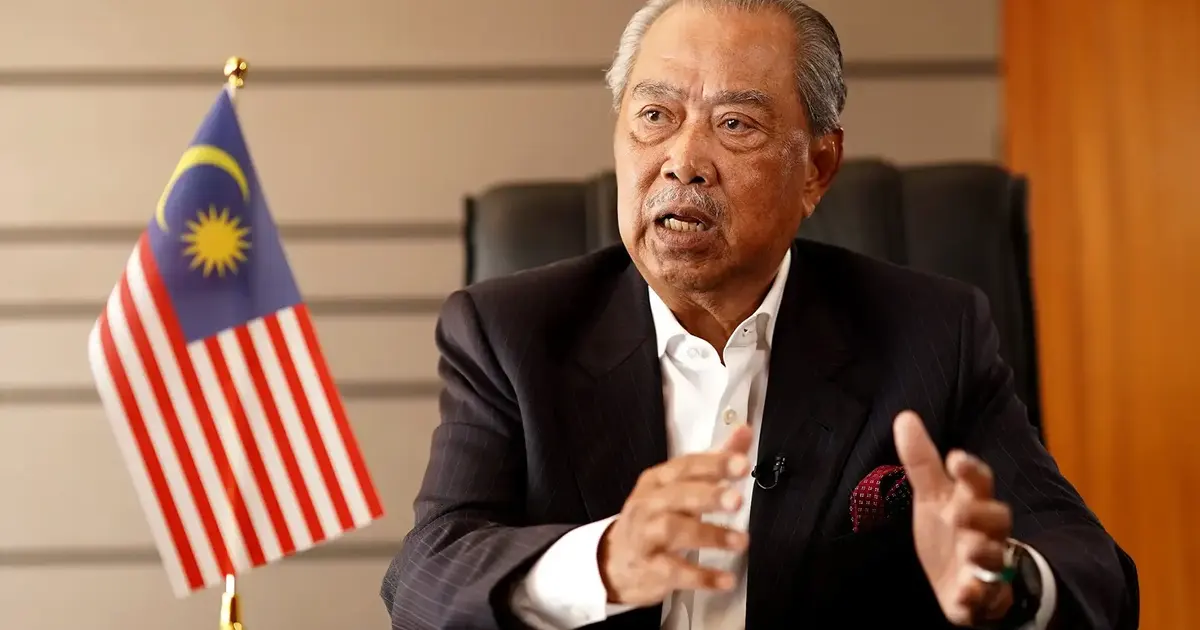
Bersatu president Muhyiddin Yassin has launched a public rebuttal against Finance Minister Annuar Musa's characterisation of his party's exit from Perikatan Nasional, asserting that the coalition systematically sidelined Bersatu despite its foundational role. The escalating war of words underscores deepening fractures within Malaysia's opposition bloc and signals worsening prospects for coalition cohesion ahead of looming electoral contests.
Muhyiddin's counterclaim directly challenges Annuar's narrative surrounding Bersatu's departure. Rather than accepting characterisations that frame the split as a strategic miscalculation or power play, the Bersatu leader argues that his party was deliberately excluded from meaningful decision-making structures within Perikatan Nasional. This repositioning of the narrative is significant because it shifts blame from Bersatu's leadership to systemic dysfunction within the coalition itself, potentially reshaping how party members and supporters interpret recent political developments.
The dispute carries substantial implications for Malaysian politics because Perikatan Nasional remains one of two major opposition coalitions alongside Pakatan Harapan. Any continued deterioration in Perikatan Nasional's internal cohesion weakens the broader opposition's competitive posture against the government. For Malaysian voters concerned about electoral viability of opposition alternatives, these mounting tensions raise questions about whether either coalition can effectively challenge ruling administrations in future contests.
Bersatu's founding membership in Perikatan Nasional gives particular weight to Muhyiddin's allegations. When Tan Sri Muhyiddin Yassin initially convened the coalition, Bersatu represented a substantial parliamentary contingent and claimed legitimacy as the vehicle for reformist politics following the 2018 electoral upheaval. That a founding member now claims marginalisation suggests institutional problems that extend beyond personality clashes or tactical disagreements between leaders.
Annuar Musa's counterarguments, presumably defending Perikatan Nasional's treatment of Bersatu, likely emphasise different interpretations of coalition protocols and decision-making procedures. The Finance Minister's position as a senior Umno figure carries weight within Perikatan Nasional, since Umno provides the coalition with its largest parliamentary base. This dynamic means that debates about Bersatu's status inevitably become contests between major parties for coalition dominance, with broader structural questions often obscured.
The timing of these public recriminations matters considerably for Malaysian political observers. Coalition disputes that play out through media channels rather than closed-door negotiations typically indicate relationships have deteriorated beyond repair. When leaders feel compelled to air grievances publicly, they are essentially appealing to their respective party bases and broader voter constituencies rather than seeking compromise with coalition partners. This rhetorical escalation suggests reconciliation between Bersatu and Perikatan Nasional appears increasingly unlikely.
For Bersatu specifically, maintaining independent political viability outside Perikatan Nasional depends partly on convincing supporters that the party was victimised by coalition dynamics rather than abandoning allies out of ambition. Muhyiddin's public statements serve this constituency-management function by framing Bersatu's exit as a principled response to systematic sidelining. Whether this narrative gains traction with ordinary party members and sympathetic voters will significantly influence Bersatu's electoral prospects and internal stability.
Annuar and other Perikatan Nasional leaders face corresponding pressures to defend coalition cohesion and portray Bersatu's departure as avoidable. Their argument likely emphasises that accommodating Bersatu's demands would have required compromising coalition governance principles or unfairly privileging one party over others. This framing appeals to Umno supporters and other coalition members who fear being marginalised themselves if one party can demand special treatment.
The broader Southeast Asian context adds another dimension to these Malaysian developments. Regional observers monitoring coalition stability across the Association of Southeast Asian Nations remain alert to how institutional dysfunction in opposition blocs affects democratic vitality and electoral competitiveness. Malaysia's political trajectory influences regional perceptions of how effectively democracy functions in middle-income Southeast Asian states where ruling coalitions face organised opposition challenges.
For Malaysian business communities and investors monitoring political stability, continued deterioration of opposition coalition structures creates additional uncertainty. If opposition blocs cannot maintain internal discipline or present unified policy positions, government administrations face fewer credible constraints on policy divergence or potential institutional experimentation. This reduced competitive pressure from opposition alternatives may alter medium-term policy trajectories across multiple sectors.
The Bersatu-Perikatan Nasional dispute also reflects broader patterns of coalition fragmentation evident across global democracies. Political alliances predicated on immediate opposition to incumbents often struggle to develop shared governance philosophies that survive leadership transitions or electoral setbacks. Without deeper institutional integration or substantive policy alignment, coalition partners frequently rediscover incompatibilities that earlier calculations subordinated to electoral necessity.
Moving forward, Muhyiddin's continued assertions about Bersatu's mistreatment will likely intensify as the party seeks to establish independent political space. Annuar and other Perikatan Nasional figures will presumably respond with competing claims about coalition governance and resource allocation. These escalating exchanges, rather than resolving underlying institutional questions, will probably deepen divisions and reduce prospects for rebuilding trust between parties that once viewed coalition participation as mutually beneficial.

