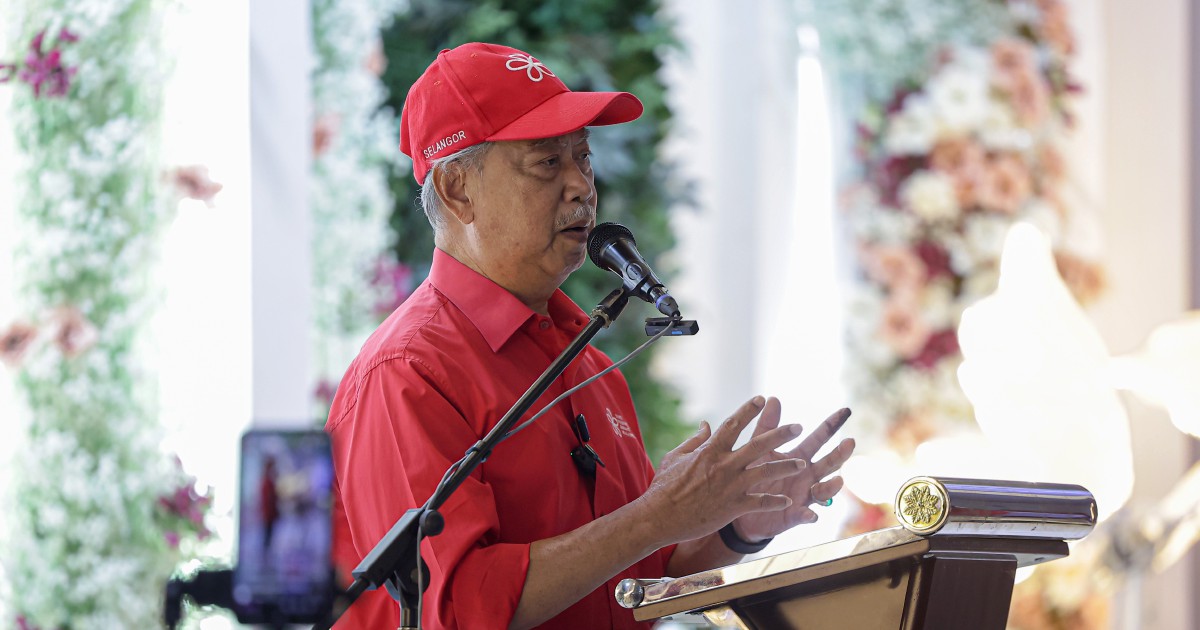
The escalating tensions between coalition partners came into sharp focus in Seremban when Bersatu's top leadership pushed back firmly against accusations that their party's electoral participation threatens the broader Barisan Nasional project in Negri Sembilan. Tan Sri Muhyiddin Yassin, addressing the criticism directly, rejected the characterisation from Datuk Seri Mohamed Khaled Nordin as unfounded and potentially divisive at a critical moment for the ruling coalition.
The dispute underscores deepening fissures within Barisan Nasional as different component parties jockey for seats and influence ahead of the state election. Umno's suggestion that Bersatu is jeopardising the coalition's collective interests reflects broader anxiety about vote-splitting in crucial constituencies, a concern that has plagued Barisan Nasional in recent electoral cycles across Malaysia. The accusation of being a "spoiler" carries significant political weight, implying that Bersatu's participation could hand seats to opposition candidates by fragmenting the pro-government vote.
Muhyiddin's forceful response signals that Bersatu, despite its smaller footprint compared to Umno, has no intention of playing a subordinate role in coalition negotiations or accepting constraints on its electoral ambitions. Since rejoining the federal government through the Madani administration, Bersatu has increasingly asserted itself as a legitimate power broker within the alliance structure. The party views its participation in state elections as essential to building its grassroots presence and demonstrating relevance to its membership base, particularly in states where it has managed to establish organisational footholds.
Negri Sembilan represents a significant battleground for this intra-coalition power struggle. The state has traditionally been dominated by Umno, but shifting demographic patterns and the reconfiguration of Malaysian politics since 2018 have created openings for other Barisan components. Bersatu's decision to contest in Negri Sembilan reflects the party's strategic ambition to expand beyond its strongholds and establish itself as a truly national party rather than a regional concern. From Bersatu's perspective, withdrawing from the race would constitute a humiliating capitulation to Umno's pressure and would undermine the party's standing within the coalition hierarchy.
The timing of this public spat raises questions about the stability of Barisan Nasional's coordination mechanisms. Effective coalition management requires behind-the-scenes mechanisms to resolve seat disputes and prevent precisely the kind of public finger-pointing now occurring in the Negri Sembilan context. The fact that these disagreements are being aired publicly suggests either a breakdown in internal dialogue or a deliberate strategy by one or both parties to mobilise their supporters by demonstrating toughness in negotiations. Either scenario signals vulnerability within the ruling coalition.
Khaled's "spoiler" accusation reflects Umno's historical tendency to view any threat to its electoral dominance as inherently destabilising. The party has long regarded itself as the natural custodian of Malay-Muslim interests and government formation, often viewing coalition partners as junior entities whose role is to supplement rather than compete with Umno. This mindset has repeatedly caused friction with Bersatu, particularly given Muhyiddin's own background within Umno and his decision to establish a separate party rather than remain in Umno's structures.
For Malaysian voters and observers, this exchange illustrates the precarious balancing act required to maintain Barisan Nasional's cohesion. Unlike the opposition Pakatan Harapan, which faces similar coalition management challenges, Barisan's component parties have not yet developed robust frameworks for managing intra-alliance competition. The lack of a clear dispute resolution mechanism means conflicts like this one in Negri Sembilan can rapidly escalate, potentially damaging the coalition's electoral prospects and voter confidence.
Bersatu's electoral ambitions must also be understood within the context of its need to prove itself indispensable to the government's longevity. With a relatively modest parliamentary contingent, Bersatu depends on maintaining strategic importance through demonstrating electoral appeal and organisational capacity. Withdrawing from contested seats in response to Umno pressure would reinforce perceptions that Bersatu is merely a junior partner dependent on Umno's goodwill, an image the party has actively worked to dispel since joining the federal government in 2023.
The Negri Sembilan situation also reflects broader shifts in Malaysian political geography. States that were once considered Umno strongholds have become competitive arenas where multiple parties pursue victory. The emergence of Bersatu as a secondary force within Barisan, combined with the persistent threat posed by opposition coalitions, has created a genuinely three-cornered contest in many constituencies. Managing these competitions while maintaining coalition unity has proven exceptionally difficult, as evidenced by the current public dispute.
Moving forward, how this conflict is resolved will signal much about Barisan Nasional's capacity for internal governance. If Muhyiddin and Khaled can resolve their differences through quiet negotiation, the coalition can preserve unity and maintain its electoral messaging. However, if the dispute continues escalating, it risks providing opposition parties with evidence of disunity that can be weaponised during campaigning. The Negri Sembilan election thus becomes not merely a contest for state power but a test of the ruling coalition's internal stability at a critical juncture in Malaysian politics.

