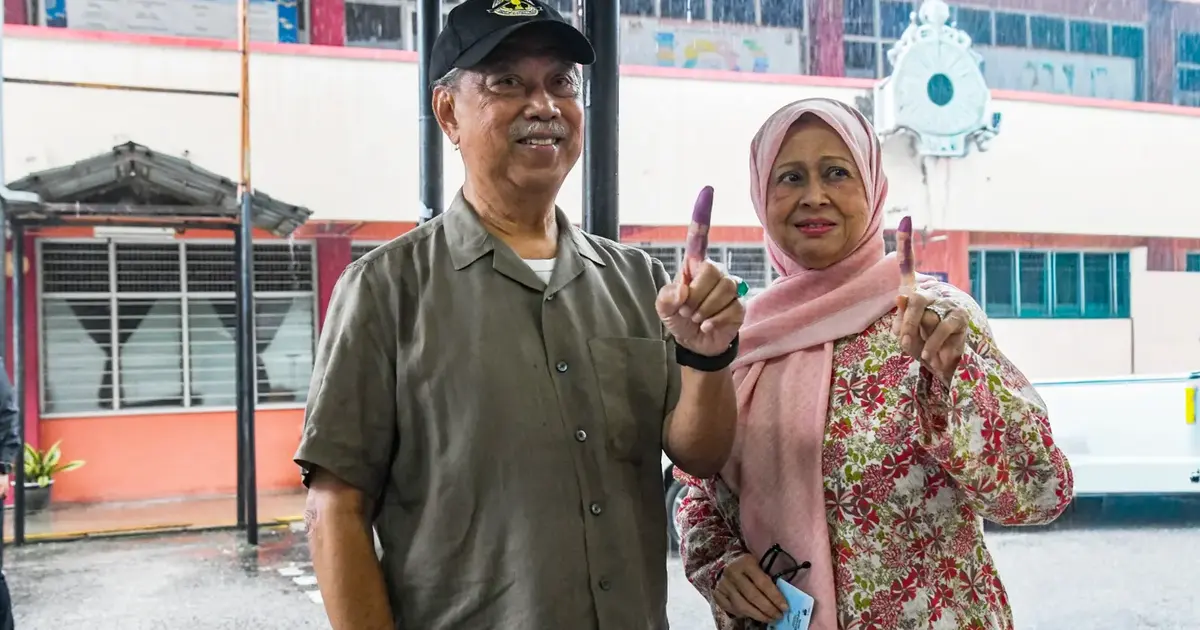
Bersatu president Muhyiddin Yassin has sought to minimise the impact of the Perlis Mentri Besar and a senior party executive stepping back from their positions on the Bersatu Supreme Council, adopting a measured tone that suggests the matter remains under internal review. Muhyiddin's calibrated response indicates an attempt to contain what could develop into a broader governance or representation dispute within the party's top structure, particularly given the symbolic importance of having state-level leadership engaged at the national party level.
The party leader indicated he is currently gathering comprehensive documentation on the circumstances surrounding both resignations, implying that a fuller picture remains to be assembled before any substantive public position is adopted. This deliberate approach of seeking clarification before commentary reflects a wider pattern in Malaysian political management, where senior figures often use the "awaiting full details" framework to avoid premature statements that might inflame intra-party tensions or invite unwanted media scrutiny.
The resignation of Perlis's top administrator from the Supreme Council carries particular weight given that state-level leaders typically serve as critical bridges between national party headquarters and grassroots operations. When such individuals step back from national-level positions, it often signals underlying friction over policy direction, resource allocation, or the balance of power within party structures. For Bersatu, which has undergone considerable organisational turbulence since its formation and subsequent political realignments, any departure from senior councils warrants close observation.
Muhyiddin's statement that the issue will be resolved internally rather than through public dispute or media engagement reflects a preference for maintaining party cohesion publicly even as internal mechanisms work to address the grievances. This strategy, common among Malaysian political leaders, aims to prevent the erosion of party unity that can occur when internal disputes spill into the open. However, internal resolution mechanisms are often less transparent and may not address root causes that prompted the resignation in the first place.
The composition of a party's Supreme Council is significant beyond mere administrative hierarchy. In Malaysian political structure, the Supreme Council typically functions as the principal decision-making body between party congresses, wielding influence over policy formulation, candidate selection, and party direction. When key state leaders distance themselves from this body, whether through resignation or reduced engagement, it can indicate dissatisfaction with how national leadership is steward the party or the degree to which state-level concerns are being incorporated into strategic decisions.
For Perlis in particular, which has historically been considered more stable and less volatile than several other Malaysian states, the resignation may carry additional implications. The state's political landscape, though quieter than Selangor or Johor, remains consequential for Bersatu's broader peninsular footprint. Any indication of disquiet among Perlis leadership could ripple through neighbouring states and potentially affect party morale across the northern corridor.
The broader context of Malaysian coalition politics cannot be overlooked when interpreting such resignations. Party members, particularly those holding executive office at state level, often navigate complex loyalty dynamics between their immediate constituents, their state administration, and national party directions. When these interests diverge, individuals in such positions face difficult choices about whether to remain engaged with national structures or distance themselves to focus on state-level responsibilities.
Muhyiddin's measured response also reflects the precarious balance that Bersatu has maintained within Malaysia's shifting political coalitions. The party, having undergone significant membership fluctuations and realignments since its foundation, remains attentive to any perception of internal instability that might be weaponised by rival parties or used to question leadership credibility. By downplaying the resignations and framing them as matters for internal resolution, Muhyiddin seeks to project an image of steady stewardship even as questions arise about representation within party councils.
The coming weeks will be significant in determining how thoroughly and transparently Bersatu processes these resignations. The nature of the internal resolution mechanism—whether it involves dialogue with the departed members, examination of the underlying concerns, or simply administrative acceptance of the departures—will offer clues about how the party intends to handle internal dissent moving forward. The completeness of Muhyiddin's eventual explanation will indicate whether genuine efforts are being made to address structural concerns or whether the party is content with surface-level resolution.
For Malaysian political observers, this incident underscores the ongoing importance of watching state-level dynamics within national political structures. While Muhyiddin's public posture remains steady, the fact that senior Perlis figures have opted to step back from the Supreme Council suggests that tensions or disagreements of some substance prompted their departure. The ultimate trajectory of these resignations and their resolution will be among the important indicators of internal stability within Bersatu as the party navigates its role within Malaysia's broader political ecosystem.

