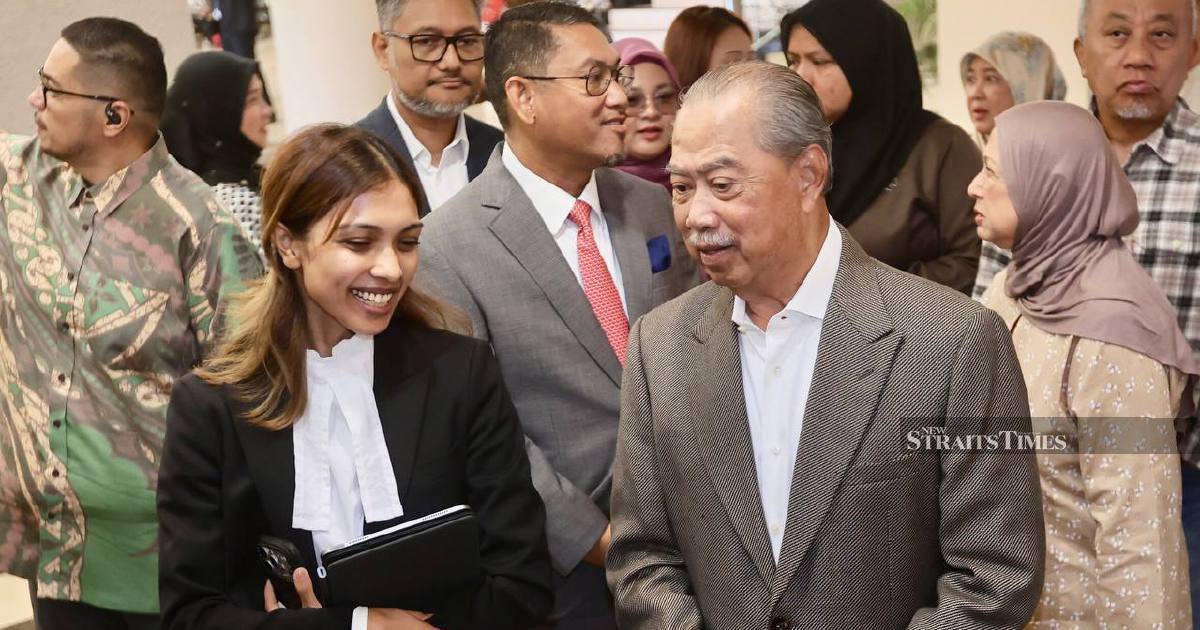
Tan Sri Muhyiddin Yassin's defence against charges connected to the Jana Wibawa donation matter strengthened in the High Court here as a prosecution witness provided testimony contradicting key allegations against the former prime minister. The witness explicitly stated that Muhyiddin at no point requested financial contributions, whether intended for his personal use or channelled to his political party Bersatu. This assertion carries particular weight as the prosecution had hinged its case partly on claims that the accused had solicited funds from Jana Wibawa investors.
The Jana Wibawa case centres around alleged improper financial dealings and potential abuse of power during Muhyiddin's tenure as prime minister from 2020 to 2021. The donation trail and circumstances surrounding how funds flowed to various recipients have formed the crux of the prosecution's argument. The court's examination of witness testimony has become instrumental in establishing whether Muhyiddin actively sought out investors and pressured them for contributions, as prosecutors have contended, or whether any financial transfers occurred through other channels and motivations.
Muhyiddin's legal team has consistently maintained that the former premier never exploited his position to extract money from business interests or investment schemes. The defence strategy hinges on demonstrating that if donations were made to Bersatu or related entities, they came voluntarily without coercion or improper solicitation. Witness accounts therefore become crucial in corroborating this narrative and undermining the prosecution's theory of deliberate and systematic fundraising misconduct.
The significance of this trial extends beyond Muhyiddin personally. It touches on wider questions about political financing in Malaysia, the intersection of government office and party fundraising, and the standards of conduct expected from those holding the highest executive positions. The case has attracted considerable public attention given Muhyiddin's prominence in Malaysian politics and his role during a tumultuous period marked by political instability and government transitions.
For Malaysian citizens and regional observers, the proceedings serve as a barometer of judicial independence and the strength of Malaysia's accountability mechanisms. How the courts handle high-profile political cases involving former leaders affects public confidence in the rule of law and the impartiality of legal institutions. The detailed examination of witness statements and documentary evidence demonstrates the deliberate pace at which complex financial allegations are resolved through the criminal justice system.
The charge of solicitation—if proven—would have carried serious implications for Muhyiddin's political legacy and personal standing. Such conduct would constitute abuse of his position as prime minister and potential breach of anti-corruption laws. The testimony presented thus far, however, appears to introduce reasonable doubt about whether the prosecution can meet its evidentiary burden on this critical element of its case.
Bersatu, the political party Muhyiddin founded and led, has also been scrutinised as part of this investigation. The party's financing mechanisms and how it received funds from various sources have come under judicial review. Understanding whether party officials or the party leader solicited contributions versus accepting voluntary donations affects both the criminal liability assessment and the broader political narrative about how Malaysian political parties fund their operations.
The High Court proceedings continue to attract interest from political analysts, legal scholars, and citizens concerned with governance standards. Each witness statement and piece of evidence enters the public record, contributing to the overall assessment of whether Muhyiddin's conduct during his premiership fell within acceptable bounds or crossed into illegality. The court's final judgment will likely have ramifications for how future political leaders approach fundraising and the management of donations during their tenure in office.
As the trial progresses through examination and cross-examination of witnesses, the fundamental question remains whether the prosecution can establish beyond reasonable doubt that Muhyiddin actively solicited funds. Today's witness testimony, suggesting he did not make such requests, represents a setback for the prosecution's narrative and potentially signals the direction the case may ultimately take. The credibility and reliability of all witnesses—both those called by the prosecution and the defence—will ultimately determine the court's findings.

