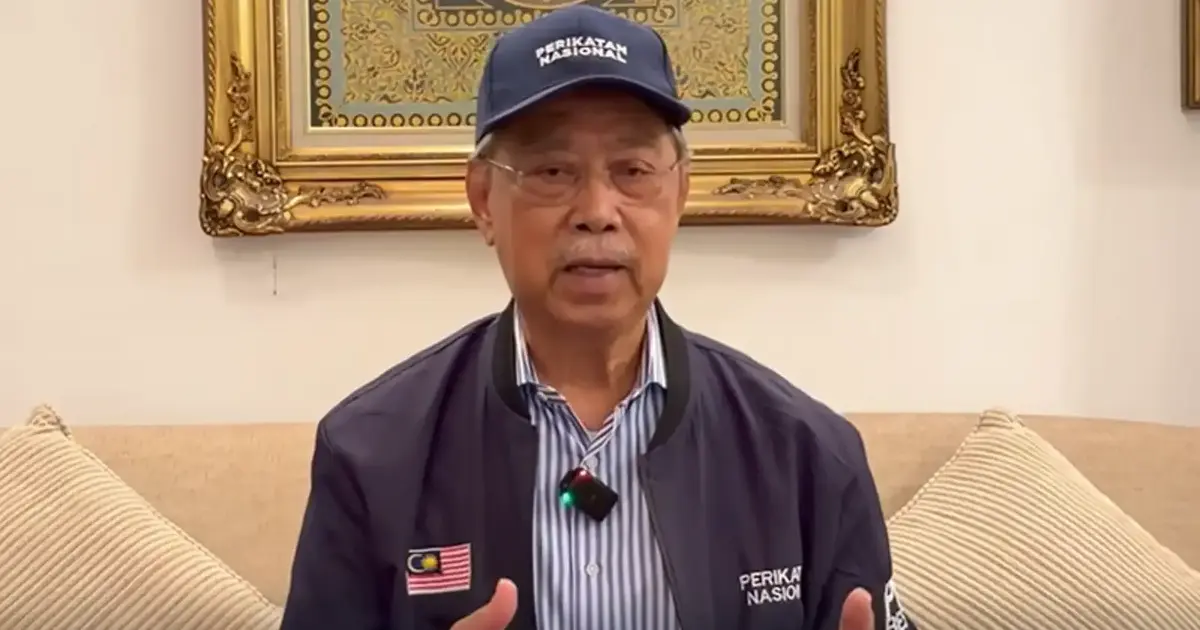
Bersatu president Muhyiddin Yassin is making a direct appeal to voters in his home state of Johor, drawing on his history as the region's menteri besar to argue that Perikatan Nasional deserves another opportunity to lead. His pitch emphasises the deep connection he maintains with Johor and positions his political trajectory as fundamentally shaped by a commitment to the state's welfare and its residents' aspirations.
Muhyiddin's strategy reflects a calculated attempt to reclaim political ground in a crucial state that has become increasingly competitive in Malaysia's fractious electoral landscape. By explicitly invoking his status as a son of Johor and invoking his previous executive experience in the state, he is signalling that Perikatan Nasional's leadership understands the specific needs and character of Johor's communities. This approach resonates with a broader pattern in Malaysian politics where regional identity and local rootedness remain potent factors in voter decision-making, particularly in wealthy and politically significant states like Johor.
The Perikatan Nasional coalition has faced considerable headwinds in recent years as Malaysia's political map has become increasingly fragmented. The alliance seeks to differentiate itself by emphasizing continuity, competence rooted in prior administrative experience, and a commitment to people-centred policies. Muhyiddin's invocation of his menteri besar tenure serves this narrative by providing tangible evidence of his engagement with state-level governance and familiarity with the machinery of power.
Johor holds particular significance in Malaysian politics due to its economic weight, substantial population, and historical influence within the federation. The state has traditionally been a bellwether for broader national trends, and control over Johor's legislative assembly matters enormously for any coalition seeking to demonstrate national viability. Perikatan Nasional's performance in Johor will likely influence perceptions of the coalition's electoral prospects more widely across Malaysia.
Muhyiddin's messaging also underscores a deeper theme in his political communications: that his years in public service have been animated by a desire to improve the lives of ordinary Malaysians rather than by personal ambition or factional interest. This framing attempts to position him as a leader whose primary motivation remains developmental and service-oriented, an argument that seeks to counter criticism that Perikatan Nasional is primarily a vehicle for political manoeuvring among elite factions.
The appeal to Johor voters carries implicit recognition that Perikatan Nasional cannot afford to perform poorly in the state if the coalition hopes to remain a competitive force in future national elections. Muhyiddin's personal engagement in courting Johorean support signals the seriousness with which the coalition regards the state, even as other major political groupings mount their own campaigns to win over voters there.
Johor's electorate encompasses diverse constituencies—from the prosperous urban and industrial zones around Johor Bahru to the more rural agricultural regions inland—and any political leader seeking support must demonstrate understanding of this heterogeneity. Muhyiddin's appeal attempts to speak to the entirety of Johor's communities by framing his political identity as inseparable from the state itself, a rhetorical move designed to transcend purely partisan divisions.
The broader context for Muhyiddin's outreach involves the significant realignment that has occurred in Malaysian politics over the past several years. Traditional coalitions have fractured, new alliances have formed, and voters have demonstrated willingness to shift allegiances based on perceived performance and trustworthiness. In this volatile environment, Perikatan Nasional must continuously reinforce its claim to voter confidence, and mobilising support in strategically important states like Johor forms a core element of that effort.
Muhyiddin's emphasis on his roots in Johor also reflects a tactical calculation about electoral strategy. Voters may be more inclined to support a candidate or coalition led by someone they perceive as sharing their regional identity and understanding their particular concerns. By positioning himself as intrinsically connected to Johor's interests and identity, Muhyiddin attempts to build emotional and political bonds with voters that transcend purely issue-based or ideological appeals.
For Malaysian observers and analysts tracking the nation's political development, Muhyiddin's campaign in Johor provides insight into how established leaders are adapting their messaging to navigate an increasingly complex and unpredictable electoral landscape. His reliance on claims of personal and regional authenticity, combined with references to prior administrative experience, represents an effort to offer voters something tangible in terms of proven governance capability rather than abstract promises.
The success of Perikatan Nasional's push in Johor will ultimately depend on whether voters find the coalition's platform compelling and whether they believe that backing the coalition serves their interests. Muhyiddin's personal appeal and invocation of his ties to the state constitute important elements of this persuasion effort, yet they operate within a broader context of voter expectations regarding economic management, service delivery, and political integrity that will ultimately determine electoral outcomes.

