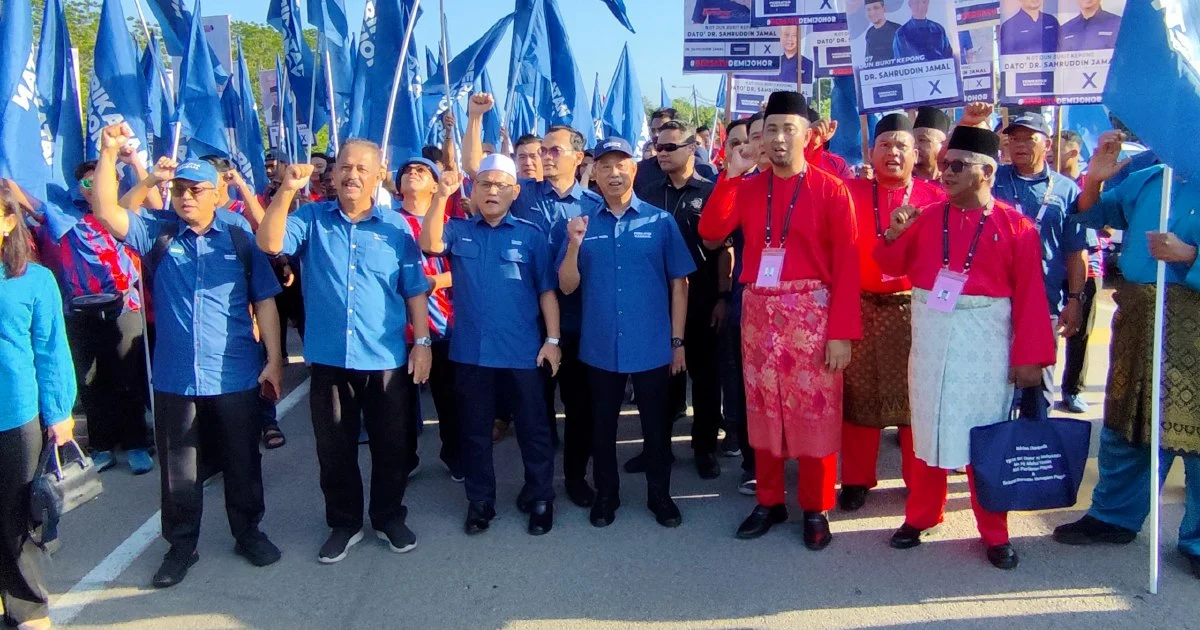
Tan Sri Muhyiddin Yassin, president of Bersatu, made an early arrival at the nomination centre for the Bukit Kepong constituency, touching down at the Pagoh Sports Complex Hall just before 8.45 am. His presence underscores the party's strategic commitment to the seat as the Johor election campaign gains momentum.
The timing of Muhyiddin's appearance carries considerable weight within Bersatu's organisational hierarchy. By accompanying Sahruddin to the nomination proceedings, the party leadership demonstrated unified backing for the candidate, a gesture that historically signals confidence in both the individual contender and the electoral prospects of that particular seat. In Malaysian politics, such high-profile party figure attendance at nomination centres frequently sets the tone for campaign intensity and resource allocation.
Johor remains a crucial battleground for Bersatu and its coalition partners. The state has traditionally served as a power base for various political movements, and control of key constituencies directly influences the party's standing within both state and national politics. Bukit Kepong, as a nominated constituency, suggests strategic importance to the party's overall election strategy in the state.
Muhyiddin's active participation in campaign events reflects the broader competitive landscape facing all political parties contesting the Johor election. The nomination process itself represents the formal entry point for candidates, where their credentials are officially registered and their eligibility confirmed. The presence of senior party figures during this phase typically aims to energise grassroots supporters and generate media attention for their preferred candidates.
Bersatu has undergone significant strategic repositioning in recent years, navigating complex coalition mathematics at both state and federal levels. Johor elections provide an opportunity for the party to demonstrate electoral resilience and expand its legislative representation. The Bukit Kepong nomination indicates the party's intention to contest this particular seat actively rather than cede ground to coalition partners or opposition forces.
The Pagoh Sports Complex Hall venue choice reflects standard electoral procedures in Malaysia, where such public facilities serve as neutral nomination centres. These locations accommodate the administrative requirements of the Election Commission while remaining accessible to candidates, their supporters, and media contingents. The early morning timing, with Muhyiddin's arrival at 8.45 am, allowed sufficient time for the formal nomination process and subsequent media engagement.
Candidates in Malaysian elections must navigate several procedural requirements during nomination, including submission of documentation, endorsements, and statutory declarations. Senior party figures often accompany nominees to reinforce legitimacy and demonstrate party discipline. Sahruddin's selection for the Bukit Kepong seat suggests he meets Bersatu's internal candidate vetting criteria and enjoys support from the party machinery.
For Malaysian voters in Johor, the presence of such high-level political figures at nomination centres provides opportunities to assess party seriousness about specific constituencies. The optics of leadership involvement frequently influence voter perception regarding candidate viability and party commitment to particular regions. This dimension of election management operates beneath headline-grabbing policy announcements but significantly affects ground-level campaign dynamics.
Bersatu's electoral strategy in Johor must contend with competitive pressure from multiple directions. UMNO, PKR, DAP, and other parties similarly field candidates across constituencies, each deploying comparable organisational tactics to demonstrate momentum. The appearance of party presidents and senior leaders becomes a normalised component of modern Malaysian election campaigns, with each party leveraging leadership visibility to establish credibility.
The nomination phase represents merely the opening salvo in what typically becomes an intensive campaign period. Candidates nominated on the same day often travel extensively across their constituencies, attending ceramah events, walkabouts, and community engagements. The support structure visible during nomination frequently extends throughout the campaign, with party machinery mobilising resources, volunteers, and messaging infrastructure.
Muhyiddin's involvement in Bukit Kepong reflects broader calculations about resource deployment within Johor. Political parties typically prioritise certain seats based on historical performance, demographic trends, incumbent strength, and coalition arrangements. Bersatu's decision to have its president attend Sahruddin's nomination indicates this constituency warrants high-level attention, though the extent of campaign resources ultimately committed depends on subsequent strategic assessments.
The Johor election itself carries implications extending beyond state politics. Performance in this major state influences narrative-building around political parties' national prospects, coalition stability, and leadership credibility. Strong showings enhance claims to legitimacy and influence in federal-level negotiations, while poor results trigger internal reassessments and potentially alter coalition configurations. Consequently, contests over individual constituencies like Bukit Kepong represent microcosms of larger political struggles unfolding across Malaysian politics.

