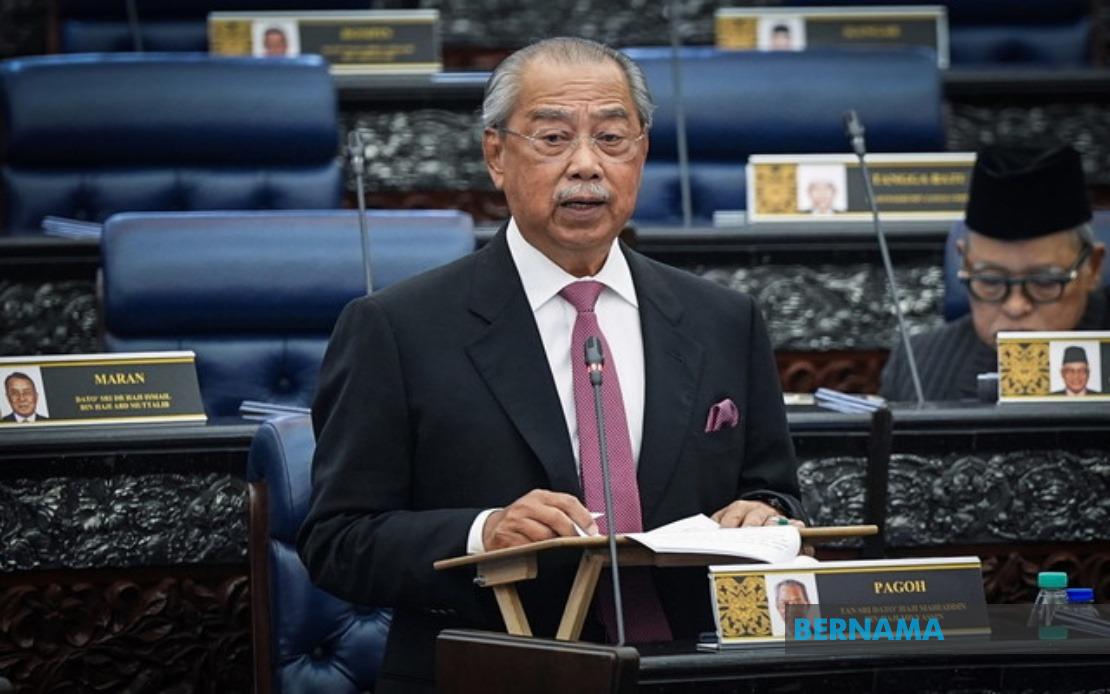
Tan Sri Muhyiddin Yassin has thrown his weight behind calls for a thorough forensic examination of Lembaga Tabung Haji's operations, arguing that an independent investigation into the institution's financial management must commence without delay and conclude within twelve months. Speaking during parliamentary debate on the Royal Commission of Inquiry report into TH, the Pagoh MP and Bersatu president stressed that such an audit represents an essential step in understanding how the pilgrimage fund's resources were deployed and potentially misappropriated over recent years.
The RCI report, released publicly on July 29, exposed a troubling pattern of governance failures at the institution responsible for managing savings for Malaysian pilgrims. Between 2014 and 2020, TH accumulated estimated losses ranging from RM10 billion to RM12.6 billion—a staggering sum that demands accountability and remedial action. Muhyiddin's intervention reflects growing parliamentary consensus that the inquiry's findings cannot simply be shelved; they must trigger concrete measures to recover losses and prosecute wrongdoing.
Muhyiddin emphasized that any forensic audit must be designed to accomplish multiple objectives simultaneously. Beyond merely identifying where money went, the investigation should illuminate patterns of fraud, instances of power abuse, and examples of negligent decision-making that contributed to the fund's deterioration. He argued that tracing the complete flow of funds through the institution's various investment vehicles and business dealings would provide the evidentiary foundation necessary for legal proceedings against those responsible for the losses.
Crucially, the former prime minister underscored that consequences must follow findings. He stated unequivocally that individuals proven to have caused financial harm to TH—whether through deliberate fraud, misuse of authority, or dereliction of duty—must face the full force of justice. This position carries particular weight given Muhyiddin's own experience in high office and his access to the levers of government accountability. His call reflects an understanding that without credible prosecution of wrongdoers, public confidence in institutional reform remains fragile.
The parliamentary focus on TH extends beyond forensic accounting. Syed Saddiq Syed Abdul Rahman, the MUDA member representing Muar, proposed establishing a Multi-Agency Task Force specifically charged with investigating fourteen problematic investments that the RCI identified as particularly troublesome. This approach recognizes that no single enforcement body possesses the full range of expertise and authority needed to unravel what appears to be a complex web of questionable transactions.
Syed Saddiq's proposal envisions the Malaysian Anti-Corruption Commission, the Royal Police, and the Inland Revenue Board working in coordinated fashion rather than pursuing separate lines of inquiry. By consolidating investigative efforts, the task force could develop a comprehensive understanding of how TH's billions flowed into investments that failed to deliver promised returns or contained structural flaws from inception. The suggestion reflects frustration with compartmentalized investigations that may miss connections between seemingly isolated transactions.
The MUDA member also called for forensic audits of the fourteen investments themselves, moving beyond examining TH's decision-making processes to scrutinize the projects and entities that received the funds. Syed Saddiq further suggested extending the investigation's scope to other government-linked entities including Felda, FGV, and Eagle High, institutions that have faced similar concerns about fund management and investment decisions. This broader approach acknowledges that governance and transparency problems may represent systemic weaknesses across multiple government bodies rather than isolated institutional failures.
Datuk Seri Hasni Mohammad, representing Simpang Renggam for the Barisan Nasional, added another dimension to the oversight framework by proposing that enforcement agencies provide regular progress updates within defined timeframes. Rather than allowing investigations to proceed opaquely over years, parliament should receive periodic briefings on what investigators have discovered, what leads they are pursuing, and what evidence they have gathered. This transparency mechanism would enable MPs to maintain pressure on enforcement authorities and ensure investigations proceed with urgency rather than becoming mired in bureaucratic delays.
HashiMohammad further advocated for establishing permanent bipartisan parliamentary oversight of TH's reform process. He proposed that today's special sitting mark the beginning of sustained, multiparty scrutiny of how TH implements the RCI's twenty-five recommendations. This suggestion acknowledges that parliamentary attention cannot be a one-off event; rather, watchdog oversight must become institutionalized to ensure that promised reforms actually occur and produce measurable improvements in fund management and governance standards.
The RCI report indicates that as of July 30, TH had implemented approximately 75 percent of the commission's recommendations. However, implementation rates do not necessarily reflect the quality or effectiveness of reforms undertaken. Oversight mechanisms ensuring that implemented measures genuinely address underlying governance weaknesses remain essential. The parliament's sustained attention would provide both incentive for thorough implementation and a forum for assessing whether changes produce genuine institutional improvement.
For Malaysian pilgrims and their families, whose savings constitute the TH fund, these parliamentary interventions carry profound significance. The accumulated losses of RM10 billion to RM12.6 billion represent retirement security and hajj financing that many individuals contributed to over decades. Understanding how institutional failures allowed such substantial deterioration, prosecuting those responsible, and implementing reforms that prevent recurrence are not merely technical matters of governance—they represent obligations owed to millions of Malaysians who entrusted their resources to a public institution.
The parliamentary debate also signals broader concerns about governance across government-linked entities. If TH's management failures could accumulate over six years before generating sufficient public pressure for an RCI, similar problems may be developing elsewhere in the government-linked company ecosystem. The call for extending investigations to Felda, FGV, and Eagle High suggests parliament recognizes that transparency and accountability standards across state-owned enterprises require urgent strengthening throughout the system.

