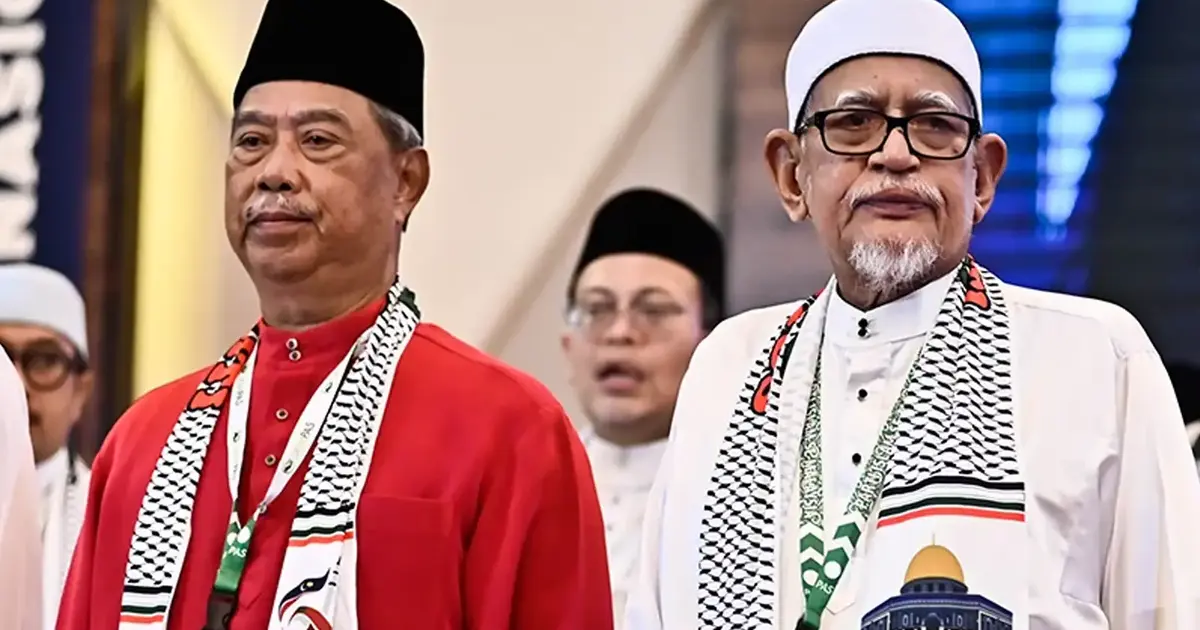
Bersatu president Tan Sri Muhyiddin Yassin has launched a stinging rebuke against PAS, accusing the Islamic party of pursuing clandestine negotiations with Barisan Nasional in what he characterises as a significant breach of coalition protocol. The outburst underscores deepening fractures within Perikatan Nasional, the opposition alliance that has sought to position itself as an alternative governing coalition since the 2022 election. Muhyiddin's criticism points to fundamental disagreements about how the three-party coalition should operate, particularly regarding the transparency and consultation mechanisms that should govern high-level political manoeuvres.
The tensions between Bersatu and PAS reflect broader instability within Perikatan Nasional, which has struggled to maintain a coherent political direction amid competing interests and ideological differences. PAS, as the Islamic party within the alliance, maintains its own political base and religious constituency that does not always align with Bersatu's positioning or strategic calculations. When PAS engages in separate talks with other political actors—especially Barisan Nasional, which commands significant parliamentary representation—the move creates complications for alliance messaging and unity. Muhyiddin's objection suggests that such negotiations were conducted without prior consultation with other PN components, a practice that he views as undermining collective decision-making within the coalition.
Barisan Nasional's continued relevance in these negotiations demonstrates the ongoing fluidity of Malaysian politics at the national level. Despite the shifts that brought Perikatan Nasional to prominence, BN—particularly through UMNO and MCA—retains considerable parliamentary influence and continues to attract overtures from various political actors seeking to build viable governing coalitions or opposition blocs. For PAS, maintaining options with BN may reflect strategic hedging; the party recognises that its long-term political prospects depend not solely on Perikatan Nasional but on cultivating relationships across the political spectrum, particularly with organisations that can offer ministerial positions, development allocations, and policy influence.
Muhyiddin's criticism carries particular weight given his role as Bersatu president and his previous tenure as Prime Minister under the earlier PN administration. His standing within the coalition gives his condemnation considerable political significance, as it signals that senior leaders within PN view PAS's independent moves as problematic and potentially destabilising. The accusation that PAS made unilateral decisions contrary to Perikatan Nasional's interests frames the matter as one of breach of trust and coalition discipline rather than merely different political preferences. This framing suggests that the disagreement extends beyond policy differences into questions of governance and the operational principles that should govern multi-party alliances.
The implications for Malaysian political stability are noteworthy. A fractious opposition coalition weakens the parliament's ability to provide effective scrutiny of government activities, and it diminishes the credibility of alternative governance models. For Malaysian voters, alliance instability raises questions about whether opposition coalitions can govern effectively or whether internal cohesion would collapse under the pressures of actually holding executive office. The constant jockeying between PN components and their external contacts—whether with BN or other players—creates an impression of political actors prioritising short-term advantage over sustained principle or collective purpose.
For Southeast Asian observers, these developments illustrate the challenges that coalitions face in maintaining unity without resorting to authoritarian top-down control. Unlike single-party systems, coalition governments must balance the interests of multiple stakeholders with divergent constituencies and leadership ambitions. The tension between PAS and Bersatu reflects broader regional patterns where Islamist parties negotiate their role within secular-nationalist or multi-religious coalitions, and where the incentives for smaller parties to cultivate multiple external relationships often outweigh the benefits of strict coalition loyalty.
The controversy also highlights the centrality of PAS within Malaysian opposition politics. As the largest Islamic party and a significant parliamentary force, PAS possesses considerable leverage within any coalition it joins. Its willingness to engage BN independently signals confidence in its own political standing and perhaps some scepticism about Perikatan Nasional's long-term viability as an opposition force. This confidence—or defiance, depending on perspective—reflects PAS's solid electoral base, particularly in rural and semi-rural constituencies where Islamic credentials remain electorally valuable.
Muhyiddin's public criticism suggests that private attempts to address the matter failed, necessitating a more confrontational stance. Coalition leadership typically attempts to resolve disagreements quietly to avoid public perception of disunity, so the decision to speak openly indicates either desperation to reverse the situation or an acceptance that the coalition's fracturing is now visible and must be addressed frontally. Either interpretation suggests that Perikatan Nasional faces serious structural challenges that may prove difficult to resolve through conventional dialogue.
Looking forward, this episode will likely influence how opposition components calibrate their strategic relationships and political messaging. Other parties may feel emboldened to pursue their own negotiations if PAS faces only rhetorical consequences. Conversely, Muhyiddin's willingness to publicly rebuke PAS might encourage tighter internal discipline if coalition leaders fear similar public criticism. The outcome will substantially shape whether Perikatan Nasional can evolve into a more cohesive political force or whether it remains primarily a temporary electoral arrangement without deep institutional commitment from its member parties.

